Thursday, April 11, 2024

10.03.24: More practice with prepositions [1]: ablative with ā (ab), ex (ē), in, cum

Read the text for understanding and note the prepositions all of which are followed by the ablative case.

  • ā / ab: (away) from
  • ē / ex: out of
  • in: in; on
  • cum: (together) with

[The Road to Latin (Chesnutt) 1932]

Laeca Poēta I

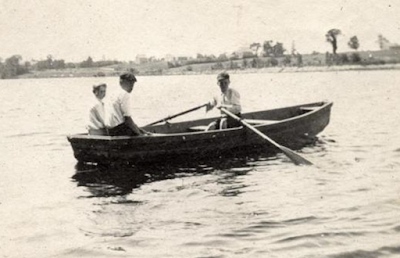
Laeca poēta vīllam pulchram in Italiā habet. In vīllā Laeca cum fīliā Iūliā habitat. Aqua est proxima vīllae. In aquā poēta nāviculam rubram habet. Poēta ex vīllā saepe properat. Nunc in nāviculā est. Tum ab ōrā poēta nāvigat. Silvae quoque sunt proximae vīllae. In silvīs Laeca saepe ambulat. Poētae silvās et aquam maximē amant quod in silvīs et in aquā multās et pulchrās pictūrās poētae vident. Poētae ā silvīs et ab aquā properant et fābulās nārrant. Iūlia in vīllā labōrat. Fēminae et puellae Rōmānae in vīllīs saepe labōrant. Noctū Iūlia ex vīllā properat. Tum Iūlia cum Laecā in silvīs ambulat. Interdum poēta et fīlia ex silvīs properant et in ōrā stant. Laeca et Iūlia stēllās et lūnam spectant. Tandem Laeca et Iūlia ab ōrā ambulant et in vīllā iterum sunt.

Servae Claudiae

Claudia est domina multārum servārum. Servae Claudiae in terrā et in vīllā cotīdiē labōrant. Claudia servīs cāra est quod est domina benigna. Servae cēnam parant et vīllam ōrnant. Sed servae Claudiae nōn semper labōrant. Noctū servae ē casīs properant et in ōrā et in silvīs ambulant. Lūna clāra et stēllae pulchrae servīs dēfessīs sunt grātae. Tandem Claudia servās vocat. Tum ex silvīs et ab ōrā servae properant.

Vocabulary

interdum: meanwhile

iterum: again, a second time

tandem finally, at length

Notes

[1] ē / ex refers to movement physically out of a place i.e. from somewhere inside to somewhere else:

Interdum poēta et fīlia ex silvīs properant. │ Meanwhile the poet and the daughter hurry out of the forests.

ē: used when the noun begins with a consonant

ex: used when the noun begins with a vowel or a consonant

[2] ā / ab refers to movement physically away from a place with no suggestion that the movement began inside anywhere: think of a train departing from a platform:

Tandem Laeca et Iūlia ab ōrā ambulant. │ Laeca and Julia finally walk (away) from the seashore.

ā: used when the noun begins with a consonant

ab: used when the noun begins with a vowel or a consonant

[3] in: with the ablative case it means ‘in’ or ‘on’ a place:

poēta vīllam pulchram in Italiā habet │ the poet has a beautiful villa in Italy

[4] cum: (together) with e.g. with a person; other meanings of ‘with’ in English are expressed differently in Latin

Iūlia cum Laecā ambulat │ Julia is walking with Laeca

Here are three other prepositions that are followed by the ablative case :

[5] : down / away from, but it also conveys a useful non-spatial meaning of 'about; concerning':

 quō ¦ cōgitās? │ About what are you thinking? = What are you thinking about?

[6] sine: without; a fun way of remembering it is this one line from a Mediaeval drinking song:

Bibunt omnēs ¦ sine mētā. │ They all drink without a limit.

[7] sub: under

sub umbrā castaneae │ under the shade of a chestnut tree

Some prepositions can take more than one case and they can have more than one meaning, but don't run before you can walk; familiarise yourself with the basic meanings of the prepositions.


10.03.24: Talking about free time [2]: likes and dislikes

Latin has several different ways of expressing likes and dislikes, some of which you have already seen. In this post we will look at a few in more detail.

You can like / dislike [i] things or [ii] doing things.

[1] libenter: this is an adverb meaning ‘willingly’, ‘gladly’, ‘with enthusiasm’ and so, used with a verb, it can convey the idea of ‘to like doing something’:

Fābulās nārrō. I tell stories.

> Fābulās libenter nārrō. Literally: I tell stories with enthusiasm = I like telling stories.

  • Cēnam libenter parō. I like getting dinner ready.
  • In forō libenter dēambulō. I like taking a walk in the market place.
  • Plantās libenter irrigō. I like to water the plants (shrubs).

[2] amāre (to love):

  • Vīnum amō. I love wine.

As in English, the verb can be used with an infinitive i.e. to like to do / doing something or to be accustomed to doing something; amāre has a much wider meaning than merely ‘to love’.

Note that the verb goes to the end of the sentence.

  • Puerī in fluviō natāre amant. The boys like to swim / swimming in the river.
  • In oppidō ¦ [i] errāre ¦ et templa [ii] spectāre amō. I like [i] to wander ¦ in the town and [ii] look at the temples.

[3] Constructions with the accusative case

[i] dēlectāre (to delight): this is most often found in the 3rd person singular or plural because what delight(s) you becomes the subject of the sentence and you become the direct object [accusative]; the verb will agree in number i.e. if what delights you is singular the verb will be dēlectat, and if it is plural the verb will be dēlectant.

Lingua Anglica multum ¦ mē [accusative] ¦ dēlectat. The English language delights me a lot = I like the English language a lot.

Fābulae antīquae valdē mē dēlectant: Literally: Ancient tales really delight me = I am very fond of ancient tales.

Fābulae antīquae mē maximē dēlectant; maximē (especially; particularly) = I especially like ancient tales.

Līberōs [accusative] ¦ lūdī pilārum ¦ in arēnā ¦ dēlectant. Literally: Ball games ¦ on the sand ¦ delight ¦ the children = The children love ball games on the sand.

In this construction the infinitive can also be used. As has been discussed before, begin with a literal translation and then, once you see how the sentence works, rephrase it into more fluent English while still retaining the sense.

Coquināre* mē dēlectat. Literally: It delights me to cook To cook / cooking delights me = I really enjoy cooking.

*coquināre in Classical Latin refers to working professionally as a cook. However, for communication purposes, it will work for now.

Fābulās nārrāre mē dēlectat. Literally: It delights me to tell stories = To tell / telling stories delights me = I take pleasure in telling stories.

Quantopere mē dēlectat undās caeruleās spectāre. Literally: How greatly it delights me to look at the blue waves = How I so love looking at the blue waves.

[ii] iuvāre has two meanings [i] to help, and [ii] to delight; please. It functions in the second meaning in the same way as dēlectāre although it is most usually found with an infinitive

Mē nōn iuvat lūdōs spectāre. Literally: It does not please me to watch the games = I don’t like watching the games.

From an earlier post, the boy described what he and his friends enjoyed doing on the beach.

  • Ut iuvat castella contrā undās spūmiferās aedificāre!
  • How it delights to build castles against the foamy waves.

Yes, this kind of literal translation can sound stilted and so, at times, you need to ‘play around’ with the translation along the lines of We love building castles to stop the foamy waves. Remember, though, that ‘playing’ with translation is a skill that comes gradually. If in doubt, stick rigidly to the Latin construction because it is the grammar that matters, not, at this stage, the art of translation.

[4] Constructions with the dative case:

[i] placēre: to please; to be pleasing to(somebody)

Like dēlectāre, what is pleasing to you is the subject of the sentence, and the verb will have a singular or plural ending depending on whether one thing or more than one thing pleases you:

Mihi [dative] placet hic liber. Literally: This book is pleasing to me = I like this book. (Fr. Ce livre me plaît; the Modern French clearly reflects the original Latin structure)

Mare mihi placet. Literally: The sea is pleasing to me = I like the sea. (Gmn: Das Meer gefällt mir; the German construction again reflects the Latin one.)

Monumenta antīqua mihi (nōn) placent. Literally: ancient monuments are (not) pleasing to me = I (don’t) like ancient monuments.

Quid tibi (nōn) placet? Literally: What is (isn’t) pleasing to you? = What do you (not) like?

Placetne tibi hoc oppidum? Literally: Is this town pleasing to you? = Do you like this town?

Similarly: Placentne tibi monumenta antīqua? Literally: Are ancient monuments pleasing to you? = Do you like ancient monuments?

How would you answer these questions?

  • Placetne tibi lingua Latina?
  • Placetne tibi mūsica?
  • Placetne tibi vīnum?

Placet can also be used with an infinitive:

Mihi placet cum meā familiā cēnāre. I like to have dinner with my family.

Placetne tibi in silvā dēambulāre? Do you like to go for a walk / walking in the forest?

Placetne tibi lūdōs in amphitheātrō spectāre? Do you like watching the games in the amphitheatre?

How would you answer these questions?

  • Placetne tibi in piscīnā natāre?
  • Placetne tibi in oppidō dēambulāre?
  • Placetne tibi cēnam parāre?
  • Placetne tibi scapham rēmigāre?

Remember that Latin word order is flexible, and so the question may be rephrased as in the example below:

Tībine in silvā ¦ dēambulāre ¦ placet? Literally: Is it pleasing to you ¦ to walk ¦ in the forest? = Do you like walking in the forest?

[ii] libet (lubet)

This occurs almost always in the 3rd person singular, is used with the dative and, again expresses the idea of something being pleasing to somebody. However, its meaning is more “to have a mind to do something” rather than specifically referring to something that you generally like. Here’s an example from the Roman author Plautus:

Ego ibi prō tē, sī tibi nōn libet. I’ll go instead of you if it isn't pleasing to you [to go] = … if you don’t have a mind to go.

And, in the end, if you really cannot be bothered telling people what you like, you can quote Plautus:

“Quod tibi lubet, idem mihi lubet” What is pleasing to you, the same is pleasing to me = I like what you like.

09.03.24: vocabulary revision

Revise the vocabulary and phrases from the previous post by looking at the images and describing what you do in your free time.


09.03.24: Talking about free time: ōtium [1]

ōtium: free time; leisure

The Romans did not have skateboards, nor did they spend hours involved in online gaming! However, there is already a lot of vocabulary you know that can express free time activities. When you study the third conjugation of verbs, which you’ll be doing very soon, then you will have a much wider range of activities from which to choose. However, as always, work slowly and carefully focussing on a limited number of words and expressions. Become familiar and confident with the structures and then you can apply them when more topical vocabulary is introduced. The aim is to practise structures in some meaningful context even if they do not immediately correspond to your own personal experience. And so, if you are an obsessive online gamer, you can either try to find a New Latin expression for it, or alternatively say that you go horseriding in the forest – which the Romans certainly did do!

ambulāre: to walk; also dēambulāre: to go for walk

  • In forō dēambulō. I go for a walk in the market.

cantāre: to sing

  • Māne ¦ in balneō ¦ cantō: In the morning ¦ I sing ¦ in the bathroom.

cūrāre: to take care of; look after

  • Equum meum cotīdiē cūrō. I take care of my horse every day.

equitāre: to ride on horseback

  • In silvā diū equitō. I go riding in the forest for a long time.

errāre: to wander

  • In agrīs errō: I wander in the fields.

irrigāre: to water

  • Plantās in hortō semper irrigō. I always water the shrubs in the garden.

natāre: to swim

  • In fluviō / piscīnā natō: I swim in the river / swimming pool.

nāvigāre: to sail

  • Ad īnsulam nāvigō. I sail to an island.
  • Nōnnumquam ¦ in scaphā ¦ cum amīcō meō ¦ nāvigō. Sometimes I sail ¦ in a little boat ¦ with my friend.
  • Ūnā ad īnsulam nāvigāmus. We sail to an island together.

rēmigāre: to row

  • Scapham ad īnsulam rēmigō. I row the boat to an island.

saltāre: to dance

  • In caupōnā cum amīcīs saltō. I dance with friends in the bar.

spectāre: to watch

  • Lūdōs vesperī spectō. I watch the games in the evening. (You can still watch “gladiators” fighting on TV!)

vīsitāre: to visit

  • Monumenta antīqua vīsitō. I go to visit ancient monuments.

habēre: to have

  • Multōs librōs habeō. I have many books.

Here, we can add a new verb: lēctitāre which has the specific meaning of 'to read often'; the more usual verb meaning 'to read' is legere but this belongs to a verb conjugation that you have not yet seen and so, for now, we will omit it, but you can say:

  • Librōs fābulāsque lēctitō. I often read books and stories.

Similarly, the verb meaning 'to write' - scrībere - belongs to a different conjugation, but we can use the verb scrīptitāre meaning 'to write often':

  • Litterās longās scrīptitō. I often write long letters.

iacēre: to lie

  • Noctū in lectō iaceō dum lūnam stēllāsque ex fenestrā spectō. At night I lie in bed while I look out the window at the moon and the stars.

sedēre: to sit

  • Sub umbrā ¦ castaneae ¦ sedeō. I sit ¦ under the shade ¦ of a chestnut tree.

09.03.24: Ora Maritima

Read the text for understanding and then look at the words and phrases in bold, all of which are discussed in the note.

Dēlectāmenta puerōrum

[Ora Maritima: Sonnenschein (1902)]

In numerō amīcōrum meōrum sunt duō puerī. Marcus, puer quattuordecim annōrum, mihi praecipuus amīcus est. Prope Dubrās nunc habitant, sed ex Calēdoniā oriundī sunt. Nōbīs puerīs fēriae nunc sunt; nam condiscipulī sumus. Inter fēriās līberī sumus scholīs. Amīcī meī mē saepe vīsitant, et ego amīcos meōs vīsitō. Magna est inter nōs amīcitia. Ūnā ambulāmus, ūnā in undīs spūmiferīs natāmus, cum nōn nimis asperae sunt. Quantopere nōs puerōs lūdī pilārum in arēnā dēlectant! Ut iuvat castella contrā undās spūmiferās aedificāre!

Nōbīs puerīs fēriae plēnae sunt gaudiōrum ā māne usque ad vesperum. Nōnnumquam in scaphā cum Petrō nāvigāmus. Petrus est adulescentulus vīgintī annōrum. Petrī scapha nōn sōlum rēmīs sed etiam vēlīs apta est. Plērumque rēmigāmus, sed nōnnumquam vēla damus, cum ventus nōn nimis asper est. Petrus scapham gubernat et vēlīs ministrat. Nōs puerī scapham bellam laudāmus et amāmus.

Vocabulary

dēlectāmentum: amusement

praecipuus, -a, um: chief, especial, particular

condiscipulus: schoolmate

amīcitia: friendship

ūnā: together

castellum: castle

spūmifer, -a, -um: foamy

gaudium: joy

nimis: too

asper, -a, -um: rough

lūdus: game

pila: ball

ut: how

iuvat: it delights

contrā: against

ā māne: from morning

usque ad vesperum: right on until evening

nōnnumquam: sometimes (lit. not never)

adulescentulus: a young man

nōn sōlum ... sed etiam: not only ... but also

rēmus: oar

vēlum: sail (of a ship)

aptus, -a, -um: fitted; adapted; suitable

plērumque: mostly; generally

rēmigāre: to row

gubernāre: to steer

ministrāre: to attend

Notes

[1] puer quattuordecim annōrum: lit: a boy ¦ of fourteen years [genitive plural] = a 14 year old boy

[2] amīcus praecipuus: a special friend; you can also say amīcus optimus: a very good friend / best friend

[3] Nōbīs puerīs fēriae nunc sunt: a good example of the dative of possession being used with a pronoun and a noun. Literal meaning: to us boys [there] are now holidays = we boys now have holidays = we boys are now on holiday.

[4] Inter fēriās līberī sumus scholīs: During the holidays we are free from the schoolsscholīs is in the ablative case. Again, you see another use of the ablative called the ablative of separation i.e. when X is, in some way, separated from Y. This is commonly found with the verb liberāre (to free somebody from something) and, as here, the adjective līber, -a, -um.

[5] Ut iuvat castella contrā undās spūmiferās aedificāre! The verb iuvāre has two meanings [i] to help, and [ii] to please / delight; here it is the second meaning and is used with an infinitive aedificāre: How it pleases to build … A more fluent translation would be “How (we) like building… / How fun it is to build …

Remember the rule of translation: [i] Translate as closely as possible to the original to analyse how the sentence is structured and [ii] when you have that clear in your mind, rework the sentence if necessary into more fluent English. There will soon be more information on iuvāre.

[6] Nōbīs puerīs fēriae plēnae sunt gaudiōrum...The holidays are full of joys for us boys i.e. the dative is being used to express for whose benefit something exists. Again, “full of joys” sounds somewhat stilted; “full of fun” would convey the same meaning.

[7] Petrī scapha … vēlīs apta est: Peter’s boat is fitted for sails; the adjective aptus, -a, -um is, like amīcuscārusgrātus and proximus, one which is followed by the dative case.

[8] nōnnumquam vēla damus: sometimes we set the sails i.e. unfurl sails and raise them; the phrase can also mean ‘set sail’

[9] Petrus ... vēlīs [dative plural] ministrat. Peter attends to / takes care of the sails.


09.03.24: notes on the previous post

[1] Expressing likes / dislikes: grātus, -a, -um

The default expressions in English are, for example, I (don’t) likelove, enjoy etc. However, other European languages can use expressions which do not make the person the subject of the ‘liking’ but rather the person / thing that is pleasing to that person. In the three examples below, all three languages use an indirect object, which in German and Russian, are specifically expressed – as they are in Latin – by the dative case.

(Fr.) Cette robe me plaît. This dress is pleasing to me. = I like this dress.

(Gmn.) Dieser Mann gefällt mir: This man is pleasing to me. = I like this man.

(Russ.) Eto vino mne nravitsya. This wine is pleasing to me. = I like this wine.

In the text, we see a similar pattern with adjectives:

grātus, -a, -um: agreeable; pleasing (an adjective, not a verb)

Servus dominō grātus est. The slave is pleasing to the master = The master likes the slave.

Hic liber nōn mihi grātus est. This book is not pleasing to me = I don’t like this book.

Haec īnsula est grāta mihi. This island is pleasing to me = I like this island.

From a previous post:

Magnum domicilium est dominō et dominae grātum. The large residence is pleasing to the master and mistress = The master and mistress like the large dwelling.

When translating – anything – from Latin into English, it is advisable at the early stages, to stick as closely as possible to the Latin original, even if it sounds a little stilted, so that you see exactly how the grammar of Latin is working.

Servus dominō grātus est.

[i] The slave is pleasing to the master. [ii] The master likes the slave.

While, of course, [i] above is a way of expressing the idea in English, it would not be the one that we would usually choose. After you become confident with any construction and you know how it is working, then you can [ii] be more ‘loose’ in translation provided that you still convey the meaning.

Hortī pulchrī puerīs et puellīs grātī sunt.

[i] Beautiful gardens are pleasing to boys and girls. [ii] Boys and girls like / enjoy beautiful gardens.

Tabernae et puellīs et servīs sunt grātae.

[i] The shops are pleasing to both the boys and the slaves. [ii] Both the boys and the slaves like the shops.

Soleae et tunicae novae servīs sunt grātae.

[i] The sandals and new tunics are pleasing to the slaves. [ii] The slaves like the sandals and new tunics.

Tunicae rubrae sunt Cornēliae grātae sed tunicae albae Secundae sunt grātae.

Cornelia likes the red tunics but Secunda likes the white tunics.

Soleae rubrae et Cornēliae et Secundae sunt grātae.

Both Cornelia and Secunda like the red sandals.

Look carefully at the use of two cases in this sentence:

Statuae ¦ deārum [genitive plural] ¦ puellīs [dative plural] sunt grātae.

[i] The statues ¦ of the goddesses ¦ are pleasing to the girls. [ii] The girls like the statues of the goddesses.

Praemia dīligentiae sunt grāta discipulīs.

[i] Prizes for hard work are pleasing to the pupils [ii] Pupils like [getting] prizes for their hard work.

The second option is a better rendering of the sentence, but it is important not to bypass [i] so that you are sure how the Latin sentence is formed.

From a previous post:

Domicilia pulchra dominīs Rōmānīs semper sunt grāta.

[i] Beautiful residences are always pleasing to the Roman masters. [ii] The Roman masters always like beautiful residences.

And here is the opening of a letter from Cicero – you met him when he was talking about Aristotle in an earlier post:

Gratae mihi vehementer tuae litterae fuerunt.

Your letter was exceedingly pleasing to me [litterae is plural but it is commonly used to refer to one letter] = I was exceedingly pleased with your letter.

[2] The other three adjectives, namely [i] amīcus, -a, -um: friendly [ii] cārus, -a, um: dear and [iii] proximus, -a, -um: next; very near; near by, also, like grātus, belong to a small group of adjectives which are followed by the dative and are all conveyed by English equivalents with the preposition to or towards:

Cornēlia et Secunda ¦ servīs ¦ sunt amīcae.

Cornelia and Secunda are friendly ¦ to / towards the slaves.

Īnsula nōn est ¦ Italiae ¦ proxima. Īnsula est Graeciae proxima.

The island is not ¦ close ¦ to Italy. The island is ¦ very near ¦ toGreece.

Graecia pulchra ¦ Rosae ¦ est cāra.

Beautiful Greece is dear ¦ to Rosa.

Cornēlia quoque ¦ Annae ¦ est cāra.

Cornelia is also dear ¦ to Anna. Again, other translations are possible e.g. Anna feels / has affection for Cornelia.

Servae ¦ fīliābus ¦ sunt cārae.

[i] The slave-girls are dear ¦ to the daughters. [ii] The daughters feel affection for the slave-girls.


09.03.24: the dative with adjectives

Read the text for understanding and [i] focus on the four adjectives in bold:

amīcus, -a, -um: friendly; kind

cārus, -a, -um: dear

grātus, -a, -um pleasing

proximus, -a, -um: next, very near, near by

[ii] Then look at the nouns in bold. The nouns to which these adjectives refer are in the dative case. However, there is a ‘match’ with English:

amīcus: friendly towards somebody

cārus: dear to somebody

grātus: pleasing to somebody

proximus: next to something / somebody

[The Road to Latin (Chesnutt) 1932]

Domina Benigna I

Rosa, serva Secundae, nōn est Rōmāna. Patria Rosae est Graecia. Rosa est serva dominae Rōmānae quod Graecia est prōvincia Rōmāna. Graecia pulchra Rosae est cāra. Rosa patriam saepe dēsīderat; sed Rosa est laeta quod domina est serva amīca. Secunda, domina parva, servae est cāra. Anna est serva Cornēliae. Crēta est patria Annae. Crēta est īnsula magna. Īnsula nōn est Italiae proxima. Īnsula est Graeciae proxima. Anna Crētam amat et Crēta Annae est cāra. Sed Cornēlia quoque Annae est cāra et cotīdiē Anna Cornēliam cūrat. Cornēlia et Secunda servīs sunt amīcae. Saepe puellae et servae parvās tabernās intrant. Tabernās paene cotīdiē intrant. Tabernae et puellīs et servīs sunt grātae. Soleae et tunicae novae servīs sunt grātae. Statuae deārum puellīs sunt grātae quod deae fīliābus Tulliae sunt cārae.

Domina Benigna II

Hodiē Tullia et fīliae novam tabernam intrant. Taberna nova est proxima tabernae Galbae. Cornēlia et Secunda tunicās et soleās maximē dēsīderant. Tunicae rubrae sunt Cornēliae grātae sed tunicae albae Secundae sunt grātae. Puellae sunt Tulliae cārae. Itaque Tullia fīliābus multās et novās tunicās dat. Hodiē Tullia Cornēliae tunicam rubram et Secundae tunicam albam dat. Soleae rubrae et Cornēliae et Secundae sunt grātae. Itaque Tullia puellīs novās et rubrās soleās dat. Interdum domina benigna Rosae et Annae novās tunicās dat, quod servae fīliābus sunt cārae. Itaque Tullia puellīs novās et rubrās soleās dat. Interdum domina benigna Rosae et Annae novās tunicās dat, quod servae fīliābus sunt cārae. Tunicae novae servīs sunt grātae quod servae novās tunicās rārō habent. Interdum Tullia servīs soleās novās quoque dat. Soleae novae Rosae et Annae sunt grātae quod paucae servae Rōmānae soleās habent.

Vocabulary

Crēta: Crete

Graecia: Greece

maximē: especially, very greatly

paene: almost, nearly, hardly

patria: native land, country

paucī, -ae, -a: few

prōvincia province

serva: slave girl

solea: sandal

Wednesday, April 10, 2024

08.03.24: the ablative of description / quality

A feature of Latin with which you need to become familiar is that the cases very often operate without prepositions, whereas other languages e.g. English and French, which do not have case systems, need prepositions to convey the same idea. The absence of prepositions can sometimes make case usages more challenging to spot.

The ablative of description, also known as the ablative of quality, is used to describe a person’s personal qualities or physical features; English conveys this idea with the prepositions with and of, for example ‘a man of great wisdom’ or ‘a man with long hair’. This is generally expressed in Latin by using a noun and an adjective in the ablative case:

nāsus: nose

> vir ¦ magnō nasō: a man ¦ with a big nose

barba; capillus

> vir ¦ [i] barbā albā et [ii] capillō prōmissō: a man ¦ [i] with a white beard and [ii] long hair

oculī

> fēmina ¦ oculīs caeruleīs: a lady ¦ with blue eyes

prudentia: wisdom

> vir ¦ magnā prudentiā: a man ¦ of great wisdom

statūra: height; size of the body

Puerī ¦ statūrā parvā ¦ sunt. The boys are ¦ small in stature.

statūrā parvā / haud magnā: small / not big in stature

statūrā procerā / magnā: tall / big in stature

statūrā mediā: medium height; medium build

A good way of remembering case usages is to learn a quotation which illustrates the point; the quotation from Cicero in the previous post well illustrates this particular use.

summus, -a, -um: highest

ingenium: intelligence; genius; natural character

scientia: knowledge; learning

cōpia: abundance; (here) ability

Aristotelēs, vir ¦ [i] summō ingeniō, [ii] scientiā, [iii] cōpiā

Aristotle, a man of the greatest genius, learning and ability

Look at the image posted and describe the hair using the ablative of description. Here are the adjectives to use:

cōmptus, -a, -um: taken care of; combed

incōmptus, -a, -um: untidy; messy

ōrnātus, -a, -um: adorned; decorated

tōnsus, -a, -um: shaved; clipped

[1] puella ¦ capill__ __________

[2] puerulus …

[3] fēmina …

[4] discipulus …

08.03.24: describing Aristotle

In preparation for the next post on the ablative case, a quotation from the Roman lawyer and statesman, M. Tullius Cicero ...


08.03.24: the ablative of source / material

In this post and the next one we will look at two uses of the ablative case which are useful in terms of describing things or people.

The ablative case is used to show the source from which something / someone comes or the material of which something is made. You have already seen an example of the ablative of source with the preposition ē / ex:

Ex Aegyptō oriundus sum. I come from Egypt.

Ex Italiā oriunda est. She’s from Italy.

As an alternative to using adjectives to describe objects which has been discussed in previous posts, the same construction with ē / ex + noun can be used i.e. X is made of Y:

nummī (coins) ¦ argentum (silver) > nummī ex argentō: coins made of silver

ōlla (pot) ¦ argilla (clay) > ōlla ex argillā: a pot made from clay

Use the nouns listed below with ē / ex to describe what each object is made of, for example:

fistula ¦ plumbum > fistula ē / ex plumbō: a water pipe made of lead

armilla ¦ aurum: armilla ex __________ (a bracelet made of gold)

gladius ¦ ferrum: ….. (a sword made of iron)

mēnsa ¦ lignum: ….. (a table made of wood)

pōculum ¦ argilla: ….. (a cup made of clay)

speculum ¦ vitrum: ….. (a mirror made of glass)

Many of the ablative uses do not involve detailed explanation. There are, however, many of them and so it is better to become familiar with them gradually.

The image shows part of the title page of a book printed in Venice in 1683:

THESAVRVS NVMISMATVM,

Antīquōrum & Recentiōrum,

Ex Aurō, Argentō, & Aere

A treasure trove of ancient and more modern coins made of gold, silver and bronze; aes (bronze / copper) is not a 1st or 2nd declension noun and declines differently) but you can still see the use of the abative of source / material

The second image shows a necklace made of gold and amethysts:

Monīle ex aurō et amethystīs


08.03.24: practice with adjectives of material

Look again at the adjectives of material in previous posts and choose the best adjective to describe each of the objects in the images below.


08.03.24: equus ligneus: the wooden horse

In Vergil’s Aeneid, the Greeks, after a fruitless ten year siege of the walled city of Troy, construct a large wooden horse, leave it outside the walls of the city and pretend to sail away. They leave behind Sinon, a Greek warrior, who misleads the Trojans into believing that the horse is an offering; if it is taken into the city, the Trojans can conquer Greece. The Trojans take the horse into the city but inside the horse there are Greek soldiers hiding and, at night, they emerge from the horse, open the city gates and allow the Greek army to massacre the Trojans. Aeneas, a Trojan hero, is one of the few who survive the slaughter. Commanded by the gods to flee, he searches for a new home, finally arriving in Italy. Aeneas is regarded as the ancestor of Romulus and Remus, the founders of Rome.

The Mykonos vase (750-650 BCE) is the earliest depiction of the Trojan horse; on the side of the horse are the faces of the hidden Greek warriers.


08.03.24: plumbum (lead); plumbeus (made of lead)

Pompeii harboured a deadly threat long before Vesuvius erupted. Lead piping was used as a water conduit throughout the Roman world which, although less corrosive than other metals, is now known to be a poor choice for distributing drinking water. Lead particles could accumulate in the body leading to lead poisoning to which babies and young children were particularly susceptible. Tests of a lead water pipe fragment from Pompeii show evidence of antimony, a highly toxic metallic element.


08.03.24: Roman pottery


08.03.24: a hopeful house owner

In the previous post, the word lucrum (profit; gain) was introduced. At the threshold of a house in Pompeii is the phrase SALVE LVCRV(M) with the /m/ omitted: Welcome, gain! At the risk of sounding cynical, it seems that the owner was especially happy to welcome guests with cash!


08.03.24: Ora Maritima

[Ora Maritima: Sonnenschein (1902)]

Monumenta antiqua

Agellus patruī meī in Cantiō est, inter Dubrās et Rutupiās situs. Dubrae et Rutupiae oppida antīqua sunt. Multa sunt monumenta antīqua in Britanniā, multa vestīgia Rōmānōrum. Reliquiae villārum, oppidōrum, amphitheātrōrum Rōmānōrum hodiē exstant. Multae viae Rōmānae in Britanniā sunt. In Cantiō est via Rōmāna inter Rutupiās et Londinium. Solum Britannicum multōs nummōs aureōs, argenteōs, aēneōs et Britannōrum et Rōmānōrum occultat. Rusticīs nummī saepe sunt causa lucrī, cum arant vel fundāmenta aedificiōrum antīquōrum excavant. Nam nummōs antīquōs magnō pretiō vēnumdant. Patruō meō magnus numerus est nummōrum Rōmānōrum.

Vocabulary

monumentum: monument

situs, -a, -um: situated

vestīgium: vestige, trace

reliquiae: relics; 1st declension but almost always plural

exstāre: exist, remain

solum: soil

nummus: coin

Britannus: a Briton

occultāre: to hide

causa: cause, source

lucrum: gain; profit

fundāmentum: foundations

excavāre: excavate

pretium: price

vēnumdare: to offer for sale

Notes

[1] Town names in Roman Britain:

Although Julius Caesar invaded Britain in 55 and 54 BCE as part of his Gallic Wars, it did not become a Roman province until 43CE, the occupation lasting until 410CE.

There are many place names in Britain which originally had different Roman names:

Cantium: Kent; the name is believed to be of Celtic origin but Roman sources referred to the location as Cantium or Cantia

Londinium: London; capital of Roman Britain during most of Roman rule

Eboracum: York; largest town in northern Britain and a provincial capital

Camulodunum: Colchester; first capital of Roman Britain

Some town names in Latin are plural:

Dubrae: Dover

Rutupiae: Richborough

Athēnae: Athens

These place names have plural endings in all cases.

inter + accusative: inter Dubrās et Rutipiās (between Dover and Richborough)

[2] magnō pretiō: at a great price; this is one of many uses of the ablative case and it is worth noting these uses as you come across them. This, unsurprisingly, is known as the ablative of price i.e. when something is sold at a certain price, that price is expressed in the ablative case

[3] 2 uses of the dative:

[i] Rusticīs nummī saepe sunt causa lucrī. The coins are often a source of profit for the people living in the countryside. The dative can express for whose benefit something exists or is done.

[ii] dative of possession: patruō meō est… [literally: to my uncle there is…] = my uncle has…

[4] adjectives of material

From the text:

aureus, -a, um: golden; made of gold

argenteus, -a, -um: silver; made of silver

aēneus, -a, -um: copper; made of copper

suffix: -eus

Most adjectives referring to material are created by the combination of the noun + the suffix -eus, -a, -um i.e. a 1st/ 2nd declension adjective which indicates ‘made of’; some of the adjectives e.g. aureus and argenteus can refer to the material or the colour.

aes: copper; bronze > aēneus, -a, -um : (made of) copper; bronze

argentum: silver > argenteus: made of silver; silver-coloured

aurum: gold > aureus: made of gold; gold-coloured

ferrum: iron > ferreus: (made of) iron

lāna: wool > lāneus: woollen

although not obvious from statues or images, togas were made of wool

lignum: firewood > ligneus: wooden

wood used for building was known as materia

marmor: marble > marmoreus : (made of) marble

plumbum: lead > plumbeus: (made of) lead

saxum: rock; stone > saxeus: rocky; stony; of rock

scortum: skin; hide > scorteus: leather

testa: earthenware jar > testeus: earthenware

vitrum: glass (material) > vitreus: (made of) glass