Monday, April 21, 2025

10.07.25: Level 3; the ablative absolute [16]: practice (5)

Translate into English:

  1. Claudiō et Aemiliō praetōribus, nūllī latrōnēs damnātī sunt.
  2. Tarquiniō rēge Rōmānī Cloācam Maximam cōnstrūxērunt.
  3. Boudiccā rēgīnā Britannī Camulodūnum expīlāvērunt.
  4. Fīlō ductōre Thēseus ē labyrinthō effūgit.
  5. Tempestāte grave, nāvis ad īnsulam portāta est.
  6. Saxīs nōn parvīs, moenia hodiē aedificantur.
  7. Tempore brevī, in pāce vīvere dēbētis.
  8. Nūllā lūce in carcere, nēminem vidēre poterit.

expīlō, -āre, -āvī [1]: plunder

ductor, ductōris [3/m]: (here) guide

fīlum, -ī [2/n]: thread

____________________

  1. When Claudius and Aemilius were praetors no robbers were convicted.
  2. When Tarquin was king the Romans constructed the Cloaca Maxima (Great Sewer).
  3. With Boudicca as queen the Britons sacked Colchester.
  4. With a thread as his guide Theseus escaped from the labyrinth,
  5. Since the storm was serious, the ship was carried to the island.
  6. Because the rocks are not small, a rampart is being built today.
  7. Since time is short, you (pl.) ought to live in peace.
  8. Since there is no light [there being no light] in the prison s/he will be able to see no one.


10.07.25: Level 3; the Labours of Hercules; [VII] Hercules captures the Cretan Bull and carries him living to Eurystheus; the flesh-eating horses of Diomedes

[VII] HERCULES CAPTURES THE CRETAN BULL AND CARRIES HIM LIVING TO EURYSTHEUS

Tum Eurystheus iussit Herculem portāre vivum ex īnsulā Crētā taurum quendam saevissimum. Ille igitur nāvem cōnscēndit—nam ventus erat idōneus—atque statim solvit. Postquam trīduum nāvigāvit, incolumis īnsulae adpropinquāvit. Deinde, postquam omnia parāta sunt, contendit ad eam regiōnem quam taurus vexābat. Mox taurum vīdit ac sine ūllō metū cornua eius corripuit. Tum ingentī labōre mōnstrum ad nāvem trāxit atque cum hāc praedā ex īnsulā discessit.

trīduum, -ī [2/n]: space of three days

THE FLESH-EATING HORSES OF DIOMEDES

Postquam ex īnsulā Crētā domum pervēnit, Herculēs ab Eurystheō in Thrāciam missus est. Ibi Diomēdēs quīdam, vir saevissimus, rēgnum obtinēbat et omnēs ā finibus suīs prohibēbat. Herculēs iussus erat equōs Diomēdis rapere et ad Eurystheum dūcere. Hī autem equī hominēs miserrimōs dēvorābant dē quibus rēx supplicium sūmere cupiēbat. Herculēs ubi pervēnit, prīmum equōs ā rēge postulāvit, sed rēx eōs dēdere recūsāvit. Deinde ille īrā commōtus rēgem occīdit et corpus eius equīs trādidit. Itaque is quī anteā multōs necāverat, ipse eōdem suppliciō necātus est. Et equī, nūper saevissima animālia, postquam dominī suī corpus dēvorāvērunt, mānsuētī erant.

[1] omnēs ā finibus suīs prohibēbat│(he) kept everybody from his territory; ablative of separation:

https://adckl.blogspot.com/2025/03/170625-level-3-summary-of-of-uses-of.html

https://www.facebook.com/groups/latinforstarters/posts/821880310423239/

[2] ipse eōdem suppliciō necātus est │ he himself was killed by the same punishment

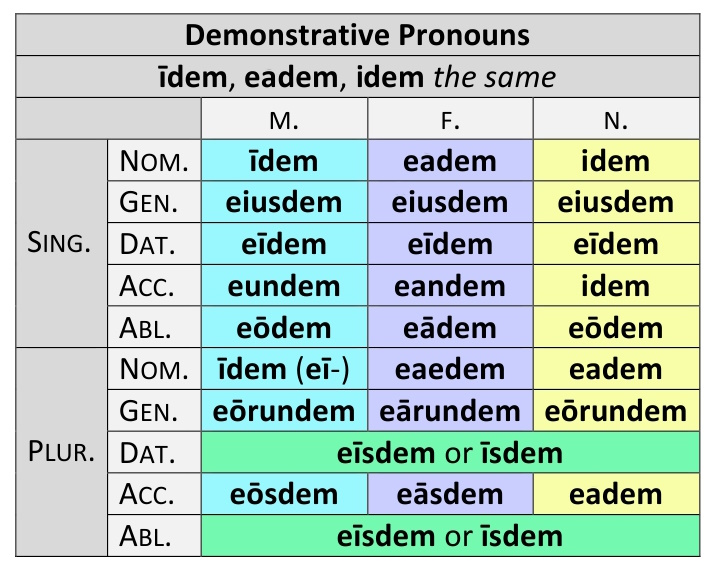
Image: īdem, eadem, idem: the same

personal pronouns is, ea, id + dem

is + dem > īdem; ea + dem > eadem; id + dem > idem

Note the spellings in the image, in particular:

Accusative singular: eundem / eandem

Genitive plural: eōrundem / eārundem

[3] equī … mānsuētī erant │ the horses … had been tamed

mānsuēscō, -ere, mānsuēvī, mānsuētus [3]: tame


09.07.25: Level 2; Sonnenschein: Rōbur et Aes Triplex [2](ii); listening

[1]

[Tum nautam veterānum dē nōminibus nāvium longārum interrogāvimus. In classe Britannicā mīlitāverat, sed tum mīlitiā vacābat, et custōs erat ōrae maritimae. Nōmina nāvium, ut affirmābat, erant Grandis, Rēgālis, Magnifica, Tonāns, Arrogāns, Ferōx; omnibus tegimen erat lāminīs ferreīs fabricātum. In Grandī praefectus classis nāvigābat.]

The boys asked the old sailor about __________ (2)

The old sailor had served in __________ (1) but was now working as a __________ (1)

All the ships were manufactured with __________ (2)

The __________ sailed in the Majestic (Grandis) (1)

[2]

[Omnēs ad ancoram dēligātae erant. Tum Alexander "Cur nōn" inquit "ad nāvēs in scaphā nāvigāmus?" Mihi et Marcō prōpositum pergrātum erat; et nauta ad nāvigandum parātus erat. Itaque patruus meus "Sērō domum adventābimus" inquit; "sed sī vōs puerī cupidī estis nāvem longam spectandī, ego nōn dēnegābō."]

Alexander suggested that they __________ (2) because the ships were __________ (1). Mark and the writer __________ (1) the proposal, and the sailor was __________ (2). The uncle said that they would __________ (2) but if the boys were __________ (2) he would not __________ (1).

[3]

[Tum nauta "Exspectāte" inquit "dum omnia parō"; et vēla rēmōsque in scapham portāvit. Quam dulce erat in marī tranquillō nāvigāre! Ventus lēnis flābat, et brevī tempore ad Rēgālem appropinquāvimus. Tum classiāriī nōbīs nāvem ingentem mōnstrāvērunt cum māchinīs, tormentīs, rostrīs, cēterīs.]

The sailor told them to __________ (1) until he had __________ (1) and he brought __________ (2) onto the boat. It was __________ (1) sailing because the sea was __________ (1) and a __________ (2) was blowing. It only took a __________ (1) for them to approach the Royal Sovereign. They were __________ (1) different parts of the __________ (1) ship by the __________ (1).

09.07.25: Level 2; Sonnenschein: Rōbur et Aes Triplex [2](i); text and exercises

Tum nautam veterānum dē nōminibus nāvium longārum interrogāvimus. In classe Britannicā mīlitāverat, sed tum mīlitiā vacābat, et custōs erat ōrae maritimae. Nōmina nāvium, ut affirmābat, erant Grandis, Rēgālis, Magnifica, Tonāns, Arrogāns, Ferōx; omnibus tegimen* erat lāminīs ferreīs fabricātum. In Grandī praefectus classis nāvigābat. Omnēs ad ancoram dēligātae erant. Tum Alexander "Cur nōn" inquit "ad nāvēs in scaphā nāvigāmus?" Mihi et Marcō prōpositum pergrātum erat; et nauta ad nāvigandum parātus erat. Itaque patruus meus "Sērō domum adventābimus" inquit; "sed sī vōs puerī cupidī estis nāvem longam spectandī, ego nōn dēnegābō." Tum nauta "Exspectāte" inquit "dum omnia parō"; et vēla rēmōsque in scapham portāvit. Quam dulce erat in marī tranquillō nāvigāre! Ventus lēnis flābat, et brevī tempore ad Rēgālem appropinquāvimus. Tum classiāriī nōbīs nāvem ingentem mōnstrāvērunt cum māchinīs, tormentīs, rostrīs, cēterīs.

*tegimen, tegiminis [3/n]: cover(ing); protection

[i] Vocabulary review: match the Latin and English

affirmō, -āre, -āvī, -ātus [1]

arrogāns, arrogantis

classiārius, -ī [2/m]

dēligō, -āre, -āvī, -ātus [1]

dēnegō, -āre, -āvī, -ātus [1]

dulcis, -e

fabricō, -āre, -āvī, -ātus [1]

ferōx, ferōcis

ingēns, ingentis

interrogō, -āre, -āvī, -ātus [1]

lēnis, -e

mīlitō, -āre, -āvī, -ātus [1]

praefectus, -ī [2/m]

prōpositum, -ī [2/n]

sērō

tonō, -āre, -uī, tonitus [1]

arrogant; ask / enquire; fasten; furious; gentle; huge; late; manufacture; proposal / suggestion; commander; say no / deny; seaman / man of the fleet; serve in the military; thunder; sweet / pleasant; state / affirm

[ii] Find the Latin:

  1. admiral
  2. coastguard
  3. he was free / retired from the military
  4. they all had a covering
  5. they all had a covering ¦ made from iron plates
  6. they had all been anchored [literally: … fastened / tied at anchor]
  7. Marcus and I really liked the suggestion [literally: the suggestion / proposal was very pleasing to me and (to) Marcus]
  8. the sailor was ready to sail
  9. but if you are eager to look at the battle ship [literally: … desirous of looking at …]
  10. wait while I get everything ready
  11. how pleasant it was to sail …
  12. within a short time


08.07.25: Level 1; Road to Latin [8]; Marcella; Puellae Laetae; notes and exercises

Marcella

Puella est Marcella. Marcella est fīlia Terentiae. Terentia est domina vīllae. Marcella est laeta quod novam tunicam habet. Tunica Marcellae est longa et alba. Marcella corbulam portat. Marcellae corbula est pulchra. Marcella statuās deārum amat. Vīlla est plēna statuārum deārum. Corbula Marcellae est rosārum albārum plēna. Marcella statuās deārum ōrnat; corōnae deās dēlectant.

Puellae laetae

Cornēlia et Secunda sunt fīliae Tulliae. Tullia et fīliae vīllam pulchram et ancillās multās habent. Vīta fīliārum Tulliae est laeta quod Tullia fīliās amat. Ancillae Tulliae sunt laetae quod Tullia est benigna domina. Vīta Tulliae est laeta quod et fīliae et ancillae sunt bonae. Ancillae nōn semper labōrant. Saepe puellae et ancillae ambulant. Tullia est magistra fīliārum et ancillārum. Puellae sunt laetae; puellae Tulliam magistram amant.

The genitive case

In English, we say "My friend's book" using an 's apostrophe to indicate possession; one small spelling change makes that plural i.e. "My friends' teacher". However, we don't tend to use it with inanimate nouns i.e. we would more likely say "The windows of the house are all broken" rather than "The house's windows are all broken". In French, all possessions are indicated with the preposition 'de' (of): My brother's book > The book of my brother > Le livre de mon frère. In German and Russian, the possession is also indicated by placing the 'possessor' after the thing 'possessed' and, in fact, both those languages - as in Latin - use the genitive case. The apostrophe 's in English is also a genitive case; it was in Anglo-Saxon as -es (cyninges > Modern English king's) and it is one of the few remaining examples of when the original English language had a full case system.

The genitive case in Latin is used to indicate the possessor:

Marcella est fīlia ¦ Terentiae. │ Marcella is the daughter ¦ of Terentia = Marcella is Terentia's daughter.

Terentia est domina ¦ vīllae. │ Terentia is the mistress ¦ of the villa.

Tunica ¦ Marcellae est longa et alba. │ The tunic ¦ of Marcella is long and white = Marcella's tunic is long and white.

You can see that, when translating, it is more natural to use apostrophe 's when the possessor is animate and of when it is referring to something inanimate, but that is merely a question of translation style rather than a rule.

The genitive case normally follows the noun that is 'possessed' but it can precede it:

[i] Marcellae [ii] corbula est pulchra. │ [ii] The basket [i] of Marcella is beautiful = Marcella's basket is beautiful.

In practice, however, the genitive will most often occur after the noun.

Cornēlia et Secunda sunt fīliae ¦ Tulliae. │ Cornelia and Secunda are Tullia's daughters [i.e. the daughters ¦ of Tullia]

Ancillae ¦ Tulliae sunt laetae. │ Tullia's maidservants [i.e. the maidservants ¦ of Tullia] are happy.

Vīta ¦ Tulliae est laeta. Tullia's life [i.e. the life ¦ of Tullia] is happy.

The genitive singular of 1st declension nouns looks the same as the nominative plural: -ae

Nominative singular: puella

Genitive singular: puellae

The genitive plural of 1st declension nouns is -ārum

Nominative plural: puellae

Genitive plural: puellārum

Marcella statuās deārum amat. │ Marcella loves the statues of the goddesses.

Marcella statuās deārum ōrnat. │ Marcella decorates the statues of the goddesses.

Tullia est magistra fīliārum et ancillārum. │ Tullia is the teacher of the daughters and (of) the maidservants = Tullia is the daughters' and maidservants' teacher.

The genitive is not used only to express possession; it is used in many other circumstances where English uses of e.g. in quantities 'a bottle of wine' (which we look at in a later post) and, in the use in this text with the adjective plenus, -a, -um meaning 'full':

Corbula Marcellae est rosārum albārum plēna. │ Marcella's basket is full of white roses.

You can also see in the example above:

[i] the adjective endings are the same as the noun

[ii] two genitive cases in the same sentence

Corbula [i] Marcellae est [ii] rosārum albārum plēna. │ [i] Marcella's basket is full [ii] of white roses

Further examples of this are in:

Vīta [i] fīliārum [ii] Tulliae est laeta. │ The life [i] of the daughters [ii] of Tullia is happy = The life [ii] of Tullia's [i] daughters is happy.

Vīlla est plēna [i] statuārum [ii] deārum. │ The villa is full [i] of (the) statues [ii] of (the) goddesses.

Exercise [1]

  1. Cuius fīlia est Marcella? *Cuius = interrogative pronoun in the genitive singular: whose?
  2. Cuius tunica est longa et alba?
  3. Cuius corbula est pulchra?
  4. Nōnne Marcella statuās deārum amat?
  5. Estne vīlla plēna statuārum?
  6. Nōnne corbula Marcellae est plēna rosārum?
  7. Ōrnatne Marcella statuās?
  8. Quārum statuās Marcella ōrnat? *Quārum = interrogative pronoun in the genitive plural: whose?
  9. Quās corōnae puellae dēlectant?

Unit [4]: Grammar exercise

Supply the proper case endings:

  1. Fīliae agricol___ (pl.) sunt laetae.
  2. Vīlla Tulli___ est pulchra.
  3. Statua fēmin___ (sing.) Rōmān___ est magna.
  4. Casa ancill___ (pl.) dominam dēlectat.
  5. Ancilla corbulam Marcell___ portat.
  6. Corbula est plēna ros___.

08.07.25: Level 1; Road to Latin [7]; Marcella; Puellae Laetae; reading and vocabulary

[First Declension, Genitive Case]

Marcella

Puella est Marcella. Marcella est fīlia Terentiae. Terentia est domina vīllae. Marcella est laeta quod novam tunicam habet. Tunica Marcellae est longa et alba. Marcella corbulam portat. Marcellae corbula est pulchra.

​Marcella statuās deārum amat. Vīlla est plēna statuārum deārum. Corbula Marcellae est rosārum albārum plēna. Marcella statuās deārum ōrnat; corōnae deās dēlectant.

Puellae Laetae

Cornēlia et Secunda sunt fīliae Tulliae. Tullia et fīliae vīllam pulchram et ancillās multās habent. Vīta fīliārum Tulliae est laeta quod Tullia fīliās amat. Ancillae Tulliae sunt defessae quod semper laborant. Vīta Tulliae est laeta quod fīliae sunt bonae. Ancillae nōn semper labōrant. Saepe puellae et ancillae ambulant. Tullia est magistra fīliārum et ancillārum. Puellae sunt laetae; puellae Tulliam magistram amant.

alba: white

ambulat: he/she/it walks, takes a walk

ambulant: they walk, take a walk

benigna: kind

corbula: little basket

corōna: garland, wreath

dea: goddess

laeta: happy, cheerful

Marcella: Marcella, daughter of Terentia

ōrnat: he/she/it adorns, decorates

ōrnant: they adorn, decorate

plēna: full

portat: he/she/it carries, brings​

portant: they carry, bring

rosa: rose

saepe: often

semper: always

statua: statue

Terentia: Terentia

tunica: tunic (a kind of Roman clothing)

vīta: life

Sunday, April 20, 2025

20.04.25: Vincent; dē grātiīs agendīs et aliīs rēbus [5] notes

[1] Audītisne strepitum āeroplanōrum? Mihi displicet et quādam causā: nunc eōdem tempore in caelō sunt multa āeroplāna. │ Do you hear the noise of the aeroplanes? I don’t like it [lit: it is displeasing to me] for a certain / specific reason: at the same time there are many planes in the sky.

[2] Salvēte, sodālēs latīnē loquentēs. Vincentius loquor. Modo advēnī domum et iterum cum cane meō dēambulō. │ Hello, Latin speaking friends. This is Vincent speaking [lit: I, Vincent, am speaking]. I’ve just arrived home and again I’m going for a walk with my dog.

[3] Mihi est in animō facere brevem pelliculam ad exercendum quia est modus exercendī meus. │ I’m planning [lit: I have in my mind] to make a short film to practise because it’s my way of practising.

[4] Hīs mēnsibus cōnor legere plūra carmina Latīna, carmina et alia opera, et scrībere quoque. Adhūc difficile est mihi legere et intellegere carmina. │ During these months I’m trying to read more / a great number of Latin poems, poems and other works, and also to write. It’s still difficult for me to read and understand poems.

[5] Ergō grātiās agere velim professōribus meīs quī semper mē adiuvant et gaudeō mē posse colloquī latīnē cum aliīs ērudītīs saltem semel in septimānā quia apud ūniversitātem meam habēmus conventiculum Latīnum quod appellātur mēnsa Latīna, semel in septimānā. Ergō beātus sum. │ Therefore, I would like to thank my professors who always help me and I am really pleased [lit: I rejoice] that I am able to converse talk in Latin together with other educated people at least once a week because at my university we have a Latin meeting which is called the Latin table, once a week. Therefore, I am happy / fortunate / blessed.

[1] Mihi [dative] displicet: (literally) it is displeasing to me, an impersonal construction which we would normally rework into I don’t like (it)

[2] quīdam, quaedam, quiddam: a certain or a specificquādam causā │ for a specific reason

Discussed in detail here:

https://www.facebook.com/groups/latinforstarters/posts/597986606145945/

https://adckl.blogspot.com/2024/09/301124-comenius-in-17th-century-school_29.html

[3] īdem, eadem, idem: the same

personal pronouns is, ea, id + dem

is + dem > īdem; ea + dem > eadem; id + dem > idem

Note the spellings in the image, in particular:

Accusative singular: eundem / eandem

Genitive plural: eōrundem / eārundem

However, the main feature to recognise is the addition of -dem.

eōdem tempore │ at the same time

[4] sodālēs latīnē loquentēs │ Latin speaking friends [literally: friends (who are) speaking Latin

See files section in the group: 29.03.25: Uploaded to files; the present active participle (Level 2); all posts

[5] mihi est in animō │ I have in my mind = I intend

Mihi est in animō [ + infinitive] facere brevem pelliculam │ I’m planning to make a short film

[6] ad exercendum; est modus exercendī meus

Exercendum is an example of a gerund, sometimes referred to in English grammar as a verbal noun since it refers to the performing of the action which the verb describes.

facere brevem pelliculam ad exercendum │ to make a short film in order to practise / for the purpose of practising

est modus exercendī meus │ it’s my way of practising (training)

Gerunds were briefly discussed here:

https://www.facebook.com/groups/latinforstarters/posts/611381141473158/

https://adckl.blogspot.com/2024/10/121224-level-1-topic-school-4-arts.html

They were discussed in greater detail here:

https://adckl.blogspot.com/2025/03/270525-level-3-gerund-1.html

https://adckl.blogspot.com/2025/03/270525-level-3-gerund-2-practice.html

[7] plūra carmina │ more poems; plūs does not always specifically mean ‘more’ but can have a general meaning of a (fairly) large number (of)

Discussed in detail here:

https://www.facebook.com/groups/latinforstarters/posts/586538670624072/

https://adckl.blogspot.com/2024/09/241124-level-2-degrees-of-comparison-11.html

[8] gaudeō ¦  posse (colloquī) │ I’m really pleased ¦ that I can (converse)

We say in English:

He said that he lived in Italy, the equivalents in other languages being, for example:

French: il a dit que 

German: er sagte, dass …

Russian: on skazal, chto 

Classical Latin does not use this construction (although Mediaeval Latin does), but a rather unusual construction called the accusative-infinitive.

Discussed here: 07.02.25; Speaking Latin on Campus (University of Dallas) [7]: notes [iv]; introduction to the accusative-infinitive

https://www.facebook.com/groups/latinforstarters/posts/620534037224535/

https://adckl.blogspot.com/2025/02/070225-speaking-latin-on-campus_30.html

[9] quod appellātur │ which is called (passive)


20.04.25: Vincent; dē grātiīs agendīs et aliīs rēbus [4] text, translation and vocabulary

More information on certain features of the text will be given in the next post.

[1] Audītisne strepitum āeroplanōrum? Mihi displicet et quādam causā: nunc eōdem tempore in caelō sunt multa āeroplāna. │ Do you hear the noise of the aeroplanes? I don’t like it [lit: it is displeasing to me] for a certain / specific reason: at the same time there are many planes in the sky.

[2] Salvēte, sodālēs latīnē loquentēs. Vincentius loquor. Modo advēnī domum et iterum cum cane meō dēambulō. │ Hello, Latin speaking friends. This is Vincent speaking [lit: I, Vincent, am speaking]. I’ve just arrived home and again I’m going for a walk with my dog.

[3] Mihi est in animō facere brevem pelliculam ad exercendum quia est modus exercendī meus. │ I’m planning [lit: I have in my mind] to make a short film to practise because it’s my way of practising.

[4] Hīs mēnsibus cōnor legere plūra carmina Latīna, carmina et alia opera, et scrībere quoque. Adhūc difficile est mihi legere et intellegere carmina. │ During these months I’m trying to read more / many Latin poems, poems and other works, and also to write. It’s still difficult for me to read and understand poems.

[5] Ergō grātiās agere velim professōribus meīs quī semper mē adiuvant et gaudeō mē posse colloquī latīnē cum aliīs ērudītīs saltem semel in septimānā quia apud ūniversitātem meam habēmus conventiculum Latīnum quod appellātur mēnsa Latīna, semel in septimānā. Ergō beātus sum. │ Therefore, I would like to thank my professors who always help me and I am really pleased [lit: I rejoice] that I am able to converse talk in Latin together with other educated people at least once a week because at my university we have a Latin meeting which is called the Latin table, once a week. Therefore, I am happy / fortunate / blessed.

[6] Nunc pergam lūdere cum cane. Valēte. │ Now I’ll carry on playing with (my) dog. Good bye.

vocabulary

ad exercendum: for practising < exerceō, -ēre [2]: practise [see next post]

āeroplānum, -ī [2/n]: (Neo-Latin) aeroplane

alius, -a, -ud: other

beātus, -a, -um: blessed; happy; fortunate

brevis, -e: short

carmen, carminis [3/n]: poem; song

conloquor, conloquī (or: colloquor, colloquī) [3/deponent]: converse; talk together; discuss

cōnor, cōnārī [1/deponent verb]: try

conventiculum, -ī [2/n]: meeting

displiceō, -ēre, -uī [2]: displease

ērudītus, -a, -um: educated; learned

grātiās agō: I give thanks / I thank

īdem, eadem, idem: the same

loquēns, loquentis: [who is / are] speaking

modus, -ī [2/m]: way; manner (e.g. of doing something)

opus, operis [3/n]: work (e.g. of literature)

pellicula, -ae [1/f]: (in Neo-Latin) film; movie

pergō, -ere, perrēxī [3]: continue

quīdam, quaedam, quiddam: a certain

septimāna, -ae [1/f] (Late Latin) week

strepitus, -ūs [4/m]: noise; din

20.04.25: Vincent; dē grātiīs agendīs et aliīs rēbus [3] find the Latin (ii)

Find in the wordcloud the Latin for these words as they are used in the text:

Audītisne strepitum āeroplanōrum? Mihi displicet et quādam causā: nunc eōdem tempore in caelō sunt multa āeroplāna. Salvēte, sodālēs latīnē loquentēs. Vincentius loquor. Modo advēnī domum et iterum cum cane meō dēambulō. Mihi est in animō facere brevem pelliculam ad exercendum quia est modus exercendī meus. Hīs mēnsibus cōnor legere plūra carmina Latīna, carmina et alia opera, et scrībere quoqueAdhūc difficile est mihi legere et intellegere carmina. Ergō grātiās agere velim professōribus meīs quī semper mē adiuvant et gaudeō mē posse colloquī latīnē cum aliīs ērudītīs saltem semel in septimānā quia apud ūniversitātem meam habēmus conventiculum Latīnum quod appellātur mēnsa Latīna, semel in septimānā. Ergō beātus sum. Nunc pergam lūdere cum cane. Valēte.

(at) the same

a certain / specific

again

also

always

at least

because

just

now

once

still

therefore

these

which

who

____________________

adhūc; eōdem; ergō; hīs; iterum; modo; nunc; quādam; quī; quia; quod; quoque; saltem; semel; semper

20.04.25: Vincent; dē grātiīs agendīs et aliīs rēbus [2] find the Latin (i)

Audītisne strepitum āeroplanōrum? Mihi displicet et quādam causā: nunc eōdem tempore in caelō sunt multa āeroplāna. Salvēte, sodālēs latīnē loquentēs. Vincentius loquor. Modo advēnī domum et iterum cum cane meō dēambulō. Mihi est in animō facere brevem pelliculam ad exercendum quia est modus exercendī meus. Hīs mēnsibus cōnor legere plūra carmina Latīna, carmina et alia opera, et scrībere quoque. Adhūc difficile est mihi legere et intellegere carmina. Ergō grātiās agere velim professōribus meīs quī semper mē adiuvant et gaudeō mē posse colloquī latīnē cum aliīs ērudītīs saltem semel in septimānā quia apud ūniversitātem meam habēmus conventiculum Latīnum quod appellātur mēnsa Latīna, semel in septimānā. Ergō beātus sum. Nunc pergam lūdere cum cane. Valēte.

  1. at the same time
  2. Do you hear?
  3. during these months
  4. friends speaking Latin
  5. I am really pleased [literally: I rejoice] that I can talk in Latin together (with …); note: more on this in a later post
  6. I don’t like it [literally: it is displeasing to me]
  7. I intend / I have in mind
  8. I’ve come home
  9. I would like to thank
  10. which is called

____________________

Audītisne strepitum āeroplanōrum? Mihi displicet et quādam causā: nunc eōdem tempore in caelō sunt multa āeroplāna. Salvēte, sodālēs latīnē loquentēs. Vincentius loquor. Modo advēnī domum et iterum cum cane meō dēambulō. Mihi est in animō facere brevem pelliculam ad exercendum quia est modus exercendī meus. Hīs mēnsibus cōnor legere plūra carmina Latīna, carmina et alia opera, et scrībere quoque. Adhūc difficile est mihi legere et intellegere carmina. Ergō grātiās agere velim professōribus meīs quī semper mē adiuvant et gaudeō mē posse colloquī latīnē cum aliīs ērudītīs saltem semel in septimānā quia apud ūniversitātem meam habēmus conventiculum Latīnum quod appellātur mēnsa Latīna, semel in septimānā. Ergō beātus sum. Nunc pergam lūdere cum cane. Valēte.

20.04.25: Vincent; dē grātiīs agendīs et aliīs rēbus [1] listening and comprehension

[1] Audītisne strepitum āeroplanōrum? Mihi displicet et quādam causā: nunc eōdem tempore in caelō sunt multa āeroplāna.

What does Vincent not like?

[A] aeroplanes

[B] the noise of an aeroplane

[C] an aeroplane in the sky

[D] lots of aeroplanes flying at the same time

[2] Salvēte, sodālēs latīnē loquentēs. Vincentius loquor. Modo advēnī domum et iterum cum cane meō dēambulō.

[i] Who specifically does Vincent greet?

[ii] When did Vincent get home?

[A] yesterday

[B] very recently

[C] a few days ago

[iii] True or false? This is the first time Vincent has ever had the chance of walking his dog.

[3] Mihi est in animō facere brevem pelliculam ad exercendum quia est modus exercendī meus.

[i] What is Vincent planning to do? (1)

[ii] What are his reasons? (2)

[4] Hīs mēnsibus cōnor legere plūra carmina Latīna, carmina et alia opera, et scrībere quoque. Adhūc difficile est mihi legere et intellegere carmina.

[i] Vincent is trying to:

[A] read poems

[B] understand poems

[C] write poems

[D] all of the above

[ii] Does Vincent find this easy?

[5] Ergō grātiās agere velim professōribus meīs quī semper mē adiuvant et gaudeō mē posse colloquī latīnē cum aliīs ērudītīs saltem semel in septimānā quia apud ūniversitātem meam habēmus conventiculum Latīnum quod appellātur mēnsa Latīna, semel in septimānā. Ergō beātus sum.

[i] Why does Vincent thank his professors? (2)

[ii] How does Vincent feel about speaking in Latin? (1)

[iii] He has the chance to do this:

[A] at least once a week

[B] more than once a week

[C] only once a week

[iv] He has the chance to do this:

[A] during a lecture

[B] at a meeting

[C] at the dinner table

[D] during a convention

[v] How do we know that Vincent feels fortunate to be able to do this?

[6] Nunc pergam lūdere cum cane. Valēte.

Vincent will continue to [A] run [B] walk [C] play with his dog.


Tuesday, April 8, 2025

07.07.25: Level 3; the ablative absolute [15]: noun + noun; consular dating

In Rome two consuls were elected each year, serving together, each with veto power over the other's actions. Roman years were customarily denoted according to the names of the two consuls who held office that year, which is not an immediate answer to a modern reader. The names of holders of the post and the post itself are expressed using the ablative absoute:

[i] C. Asiniō C. Antistiō (nouns) [ii] cōnsulibus (nouns) ¦ nōnus Tiberiō annus erat compositae reī pūblicae, flōrentis domūs … (Tacitus: Annālēs 4.1)

Literally: [i] (with) C. Asinius and (with) C. Antisitius ¦ [ii] (being) consuls …

> When / while C. Asinius and C. Antistius were consuls ¦ it was for Tiberius the ninth year of an orderly state and flourishing household …

Here Tacitus pays no more than lip-service to consular dating by employing the ablative absolute construction to detach the consular year from the main action thereby underlining the limitation of the consuls’ role; there is juxtaposition with nōnus Tiberiō annus i.e. the ninth year was already in progress (began the previous August) but the consuls were not in any way the cause of the positive conditions of the reign of Tiberius.

Some examples include both the names of the consuls and the number of years since the founding of the city (ab urbe conditā) traditionally considered as 753BC:

C. Fabiō et L. Virgīniō cōnsulibusDuring the consulship of Gaius Fabius and Lucius Virginius [ablative absolute: literally with GF and LV being consuls i.e. while they were the consuls]

L. Genuciō et Q. Servīliō cōnsulibus mortuus est Camillus. │ Camillus died during the consulship of Lucius Genucius and Quintus Servilius

[i] M. Tulliō Cicerōne ōrātōre et C. Antōniō cōnsulibus, ¦ [ii] annō ab urbe conditā sexcentēsimō nōnāgēsimō primō … │[i] During the consulship of Marcus Tullius Cicero, the orator and Gaius Antonius ¦ [ii] in the 691st year from the founding of the city

[i] C. Fabiō Liciniō C. Claudiō Canīnā cōnsulibus ¦  [ii] annō urbis conditae quadringentēsimō sexāgēsimō prīmō ¦ lēgātī Alexandrīnī ā Ptolemaeō missī Rōmam vēnēre et ā Rōmānīs amīcitiam quam petierant obtinuērunt. │ [i] During the consulship of Gaius Fabius Licinius and Gaius Claudius Canina ¦ [ii]  in the 461st year of the founding of the city ¦ ambassadors from Alexandria sent by Ptolemy came to Rome and obtained the friendship that they had sought.

07.07.25: Level 3; the ablative absolute [14]: noun + noun; noun + adjective: formation

As with the nouns plus the participles, the construction with noun + noun or noun + adjective is exactly the same i.e. take the two words and transfer both of them into the ablative case:

  • with [1] Caesar ¦ [2] being leader

Begin with the nominative singular:

[1] Caesar [2] leader

> [1] Caesar [2] dux

[ii] Transfer both words into the ablative case:

[1] Caesare [2] duce = ablative absolute = (with) Caesar (being) leader = while / when / since Caesar was leader; depending on context, the entire phrase could be reworked: under Caesar’s leadership

Boudiccā rēgīnā │ with Boudicca as queen; when Boudicca was the queen; since (because) Boudicca was / is queen

caelō obscūrō │ with the sky being dark; when the sky was / is dark; since (because) the sky is / was dark; beneath a dark sky

07.07.25: Level 3; the ablative absolute [13]: noun + noun; noun + adjective

Given that esse has no present active participle, absolute phrases can be constructed with [noun | pronoun] + noun or [noun | pronoun] + adjective.

Begin with a basic construction “with X ¦ being Y” e.g. Caesare duce: (with) Caesar (being) leader, and then, reword the phrase to a more fluent translation if it is appropriate to the context, for example:

[i] Caesare ¦ [ii] duce:

  • With Caesar as leader, ..
  • Because / since Caesar was / is leader, ...
  • When Caesar was leader, …
  • Caesar was leader and …

Remember that tense sequencing will still apply in translation:

Caesare duce, Gallia invāsa est. │ (with) Caesar (being) leader = when Caesar was leader, Gaul was invaded.

Caesare duce, Galliā invādētur. │ (with) Caesar (being) leader = because Caesar is leader, Gaul will be invaded.

Examples:

noun + noun

[i] fēminā [noun] + [ii] fūre [noun] │ [i] (with) the woman [ii] (being) a thief

[i] fēminīs [noun] + [ii] fūribus [noun] │ [i] (with) the women [ii] (being) thieves

[i] virō [noun] + [ii] fūre [noun], hominēs discessērunt   [i] (with) the man [ii] (being) a thief, the people departed = since the man was a thief …

[i] virīs [noun] + [ii] fūribus [noun] hominēs conveniunt │[i]  (with) the men [ii] (being) thieves, the people come together = since the men are thieves …

noun + adjective

[i] incendiō [noun] + magnō [adjective] │ [i] (with) the fire [ii] (being) large …

[i] cōnsule [noun] + [ii] novō [adjective] │ [i] (with) the consul [ii] (being) new

[i] duce [noun] + bonō [adjective], mīlitēs bene pugnant │ [i] (with) the commander [ii] (being) good, the soldiers fight well = since the commander is good …

[i] rēge [noun] + [ii] salvō [adjective] cīvēs fuērunt fēlīcissimī │ [i] (with) the king [ii] (being) safe, the citizens were very happy = since the king was safe …

Rēge salvō, cīvēs laetissimī sunt. │ Because the king is safe, the citizens are very happy.

07.07.25: Level 3; the Labours of Hercules; [VI] Hercules cleans the Augean Stables and kills the Stymphalian Birds

[VI] HERCULES CLEANS THE AUGEAN STABLES AND KILLS THE STYMPHALIAN BIRDS

Deinde Eurystheus Herculī hunc labōrem multō graviōrem imperāvit. Augēas quidam, quī illō tempore rēgnum Ēlidis obtinēbat, tria milia boum habebat. Hī ingentī stabulō continēbantur. Hoc stabulum, quod per trīgintā annōs nōn pūrgātum erat, Herculēs intrā spatium ūnīus diēī purgāre iussus est. Ille negōtium alacriter suscēpit, et prīmum labōre gravissimō maximam fossam fōdit per quam flūminis aquam dē montibus ad mūrum stabulī dūxit. Tum partem parvam mūrī dēlēvit et aquam in stabulum immīsit. Hōc modō fīnem operis fēcit ūnō diē facillimē.

Post paucōs diēs Herculēs ad oppidum Stymphālum iter fēcit; nam Eurystheus iusserat eum avīs Stymphālidēs occīdere. Hae avēs rōstra ferrea habēbant et hominēs miserōs dēvorābant ille, postquam ad locum pervenit, lacum vīdit in quō avēs incolēbant. Nūllō tamen modō Herculēs avibus adpropinquāre potuit; lacus enim nōn ex aquā sed ē līmō cōnstitit. Denique autem avēs dē aliquā causā perterritae in aurās volāvērunt et magna pars eārum sagittīs Herculis occīsa est.

[1] Ēlis, Ēlidis [3/f]: Elis, an ancient Greek city-state

[2] tria milia boum habebat │ (he) had 3,000 head of cattle

image: declension of bōs, bovis [3 m/f]: head of cattle (cow, ox, bull); note the genitive and dative / ablative plurals

[3] hī ingentī stabulō continēbantur │ these were contained by a huge stable; ablative of means but can translate as “in a huge stable”

[4] intrā spatium ūnīus diēī │ within a period of one day

ūnus declines like any other 1st / 2nd declension adjective except in the genitive and dative singular:

genitive: ūnīus

dative: ūnī

[5] nūllō … modō │ in no way

nūllus, -a, -um: not any; no

Note: ūnus and nūllus belong to a group of nine words known as pronominal adjectives which will be discussed in detail in later posts; for the moment, simply recognise the meanings

[6] ē līmō cōnstitit │ consisted of mud

cōnstō, -āre, cōnstitī, cōnstātus [1] (here) consist; be composed of

līmus, -ī [2/m]: mud

[7] dē aliquā causā perterritae │ frightened for some reason

aliquis / aliquī [m], aliqua [f], aliquid [n]: [i] pronouns someone; anyone; something; anything [ii] adjectival: some; any

aliquis is normally a pronoun whereas aliquī acts likes an adjective but that usage is not consistent

Note: ali-, a prefix used to give a sense of indefiniteness, for example:

aliquandō: at some / any time; sometimes / now and then; at one time (in the past)

aliquot: some; several; a few

aliquotiē(n)s: several times

06.07.25: Level 2; Sonnenschein: Rōbur et Aes Triplex [1](ii); listening

[1]

[Tum Marcus "ō gentem fortem et admīrābilem Britannōrum!" inquit. "Nam insigne erat facinus quod contrā Rōmānōs, victōrēs orbis terrārum, tam fortiter et nōnnumquam prosperē pugnāvērunt. Nōn mīrum est, sī Rōmānī victōriam reportāvērunt." Nōs sententiam Marcī comprobāvimus.]

[i] To which people – the Romans or the Britons – do the following statements refer?

admirable

victorious

distinguished deed

sometimes successful

world conquerers

[ii] What do the others think of Mark’s opinion?

[2]

[Sed iam nōna hōra erat, cum Alexander, digitō ad orientem monstrāns, "Nōnne nāvēs procul ā lītore spectātis?" inquit. Et patruus meus "Ita est" inquit; "nam illīc est statiō tūta nāvibus. Sed illae nāvēs, ut putō, nāvēs longae sunt ex classe Britannicā; nam pars classis nostrae nunc in fretō Gallicō est."]

[i] In what direction does Alexander point? (1)

[ii] Where are the ships and why are they there? (3)

[iii] What kind of ships does the writer’s uncle think they are? (2)

[iv] Why does he think that? (2)

[3]

[Tum ego "eugē, optimē!" inquam; "nāvem longam adhūc nōn spectāvī. Sed nōn tam grandēs sunt quam putāvī." "Pergrandēs sunt," inquit patruus meus "sed procul ā lītore sunt; omnēs lāminīs ferreīs, nōnnullae arietibus vel turribus armātae sunt."]

[i] Why is the writer happy? (1)

[ii] What does he say about the size of the ships? (2)

[iii] What explanation does the uncle give for that? (2)

[iv] How does the uncle describe the ships? (3)

06.07.25: Level 2; Sonnenschein: Rōbur et Aes Triplex* [1](i); text and exercises

Tum Marcus "ō gentem fortem et admīrābilem Britannōrum!" inquit. "Nam insigne erat facinus quod contrā Rōmānōs, victōrēs orbis terrārum, tam fortiter et nōnnumquam prosperē pugnāvērunt. Nōn mīrum est, sī Rōmānī victōriam reportāvērunt." Nōs sententiam Marcī comprobāvimus. Sed iam nōna hōra erat, cum Alexander, digitō ad orientem monstrāns, "Nōnne nāvēs procul ā lītore spectātis?" inquit. Et patruus meus "Ita est" inquit; "nam illīc est statiō** tūta nāvibus. Sed illae nāvēs, ut putō, nāvēs longae sunt ex classe Britannicā; nam pars classis nostrae nunc in fretō Gallicō est." Tum ego "eugē, optimē!" inquam; "nāvem longam adhūc nōn spectāvī. Sed nōn tam grandēs sunt quam putāvī." "Pergrandēs sunt," inquit patruus meus "sed procul a lītore sunt; omnēs lāminīs ferreīs, nōnnullae arietibus vel turribus armātae sunt."

* The title of the text - rōbur et aes triplex – is a quotation from the Roman poet Horace which symbolises great strength and courage and used here to refer both to the Ancient Britons in their battles with the Romans and to the modern British war-ships.

illī rōbur et aes triplex / circā pectus erat (Horace: Odes 1.3) │ Oak and brass of triple fold / Encompass'd sure that heart, … [He had a heart encased in oak and triple bronze, …]

rōbur, rōboris [3/n]: oak tree; strength

aes, aeris [3/n]: brass

triplex, triplicis: triple; three-fold

** statiō, satiōnis [3/f]: (here) roadstead, a partly sheltered area near the shore where ships can anchor

[i] Vocabulary review: match the Latin and English

adhūc

ariēs, arietis [3/m]

comprobō, -āre, -āvī, -ātus [1]

eugē

facinus, facinoris [3/n]

grandis, -e

illīc

insignis, -e

mīrus, -a, -um

nōnnumquam

orbis, -is [3/m] terrārum

pergrandis, -e

prosperus, -a, -um

sententia, -ae [1/f]

turris, -is [3/f]

tūtus, -a, -um

approve; big; deed / action; distinguished; favourable / successful; globe; hurray / bravo!; opinion; over there; ram; safe; sometimes; still / thus far; tower / turret; very big; wonderful / surprising

[ii] Find the Latin:

  1. pointing ¦ with (his) finger ¦ to the east
  2. over there is a safe roadstead for the ships
  3. as I think i.e. in my opinion
  4. they’re not as big as I thought
  5. some are armed with towers


05.07.25: Level 1; Road to Latin [6]; Vīlla Rōmāna; notes and exercises

[i] The enclitic [a small group of letters attached to the end of a word] -ne is used in questions to show a "yes or no" question but the speaker cannot anticipate what the answer will be. It is attached to the most important word of the question for emphasis, usually the verb, and this important word is placed at the beginning of the question.

Labōratne agricola? │ Is the farmer working?

Habetne domina ancillās? │  Does the mistress have female slaves?

[ii] The word nōnne is used to introduce questions to which the speaker expects the answer to be "yes"

Nōnne agricola labōrat? │ Surely the farmer is working? / The farmer is working, isn't he?

Nōnne vīlla Rōmāna columnās habet? │  The Roman villa has columns, doesn’t it? /  Surely the Roman villa has columns?

[iii] The question word num is used to introduce questions to which the speaker expects the answer to be "no"

Num agricola laborat? │ Surely the farmer isn’t working? / The farmer isn't working, is he?

Exercise [1]

  1. Estne vīlla Rōmāna?
  2. Quālis vīlla Corneliāna est?
  3. Habetne vīlla Rōmāna multam terram?
  4. Nōnne vīlla Rōmāna columnās habet?
  5. Num casa columnās habet?
  6. Quid vīlla Corneliāna habet?
  7. Nōnne vīlla Corneliāna est magna?
  8. Num est vīllā parvā?
  9. Habetne domina ancillās?
  10. Nōnne ancillae labōrant?
  11. Nōnne Tullia fīliās habet?
  12. Num puellae stant?
  13. Nōnne agricolae labōrant?
  14. Quid agricolae amant?
  15. Quid nautae amant?

Unit 3; Grammar Exercise

Supply the proper case endings:

  1. Tullia fili___ bon___ amat.
  2. Silva pulchra domin___ Rōmā___ dēlectat.
  3. Fēmin___ vīll___ et ancill___ habet.
  4. Ancill___ labōrant quod domin___ amant.
  5. Vīll___ magn___ est pulchr___.
  6. Agricolae silv___ amant.
  7. Terra et silva agricol___ dēlectant.
  8. Dēlectatne aqua naut___?
  9. Nōnne fenestra est apert___?
  10. Num casae sunt pulchr___?

05.07.25: Level 1; Road to Latin [5]; Vīlla Rōmāna; reading and vocabulary

[Review of the Nominative and Accusative; Latin Questions with "-ne," "nonne" and "num"]

Estne vīlla Americāna? Vīlla nōn est Americāna. Vīlla est Rōmāna. Vīlla Rōmāna casās parvās et multam terram habet. Vīlla Rōmāna est Vīlla Corneliāna. Vīlla Corneliāna est longa et lāta. Nōnne vīlla Corneliāna est magna et pulchra? Vīlla Corneliāna est magna et pulchra. Vīlla columnās habet. Num casa parva columnās habet? Casa parva columnās nōn habet.

Quis est fēmina? Tullia est fēmina. Nōnne Tullia est Rōmāna? Certē Tullia est Rōmāna. Tullia domina est. Domina multās ancillās habet. Ancillae labōrant. Habetne Tullia fīliās? Tullia fīliās habet. Cornēlia et Secunda fīliae sunt. Stantne Cornēlia et Secunda? Puellae nōn stant sed fēmina stat.

Labōrantne agricolae? Agricolae labōrant. Nōnne terra agricolās dēlectat? Terra agricolās dēlectat. Agricolae et terram et silvam amant. Num terram nautae amant? Terram nautae nōn amant. Nautās nōn terra sed aqua dēlectat. Nōnne vīlla Corneliāna et Tulliam et fīliās dēlectat? Villa Corneliāna et Tulliam et fīliās dēlectat.

agricola: farmer

ancilla: slave woman

aqua: water

casa: cottage; hut; shed; little house

certē: certainly; surely; indeed

columna: column

Cornēliāna: belonging to Cornelius; Cornelius'

domina: mistress

fīlia: daughter

labōrat: he/she/it works

labōrant: they work

lāta: wide: broad

multa: much

multae: many

nauta: sailor

pulchra: beautiful; handsome; pretty

Secunda: Secunda (second daughter of Cornelius)

silva: forest; woods

terra: land: earth

Tullia: Tullia (wife of Cornelius)

vīlla: villa; farm; country estate