Tuesday, September 17, 2024
08.11.24: level 2; degrees of comparison [3]; comparative in -ior, -ius (2); comparative of 3rd declension adjectives; magis + adjective
Comparative of 3rd declension adjectives
These take the same endings -ior and -ius but,
as would be expected, are added to the stem of the adjective which is indicated
by the genitive case. Sometimes that makes no difference but often the stem has
changed from the nominative:
[i] fēlix: happy
> genitive singular: fēlīc¦is
> comparative: fēlīcior, fēlīcius (happier)
[ii] ingēns (huge)
> genitive singular: ingent¦is
> comparative: ingent¦ior, ingent¦ius (more
enormous)
[iii] fortis, forte (brave; strong)
> genitive singular: fort¦is
> comparative: fort¦ior, fort¦ius
[iv] ācer, ācris, ācre: sharp
> genitive singular: ācr¦is
> comparative: ācr¦ior, ācr¦ius (sharper)
magis + adjective
There is one brief footnote which applies to a
small group of adjectives which end in a vowel + -us, for example:
ānxi¦us, -a, -um: anxious
assidu¦us, -a, -um: constant; regular
dubius, -ā, -um: doubtful
ēgregius, -a, -um: distinguished
idōneus, -ā, -um: suitable
necessārius, -a, -um: necessary
pius, -a, -um: loyal
strēnuus, -a, -um: active
To form the comparative of these adjectives would
involve the addition of -ior / -ius to a stem ending in a vowel which leads to
difficulties in pronunciation. Therefore, with these adjectives the word magis
(more) is used; a similar
construction is used with the superlative which we’ll cover when the
superlative is discussed. However, this is not consistent among all Roman
writers and some of these – sometimes – are found with the usual comparative endings.
It is not a matter over which you should lose sleep; just look out for magis
when you’re reading in Latin.

07.11.24: Level 1; review; practice in the verbs [12]; reading
Aquilifer tamen nōn timet. In aquam dēsilit. Nostrī stupent, nam in barbarōs aquilam portat, " Vultisne " exclāmat "aquilam barbarīs prōdere? " Tum nostrī ex nāvibus dēsiliunt. Barbarīs vada nōta sunt, nostrīs ignōta. Aliī equōs incitant et cum nostrīs proelium committunt. Aliī in ūniversōs tēla mittunt. Multī Rōmānī summō in perīculō sunt. Caesar id animadvertit. Itaque scaphās armātīs complet et nostrīs auxilium submittit. Mox nostrī in āridō stant. Cum barbarīs proelium committunt et eōs in fugam dant.
Vocabulary and notes
aliī … aliī …: some … others …
animadvertō, -ere [3]: observe; pay attention (to)
aquilifer, -ī [2/m]: standard-bearer (specifically referring
to the officer who held the eagle standard of the legion; aquila, -ae [1/f]:
eagle); also: signifer, -ī [2/m]: standard-bearer
āridus, -a, -um: dry; in āridō: on dry (land)
committō, -ere [3]: (with proelium) begin a battle
in fugam dō, -āre [1]: literally: to give (somebody) into
flight = to make (somebody) flee
prōdō, -ere [3]: (here) betray
scapha, -ae [1/f]: (light) boat
stupeō, -ēre [2]: be astonished
submittō, -ere [3] or summittō, -ere [3]: (here: with auxilium)
supply; provide; despatch (can also suggest secrecy)
Note:
[i] scaphās armātīs [ablative] complet │ he fills the
boats with armed (men)
[ii] nostrīs [dative] auxilium submittit │ he
despatches help to our (men)
Questions
quibus: to whom (plural)?
- Timentne omnēs?
- Quis nōn timet?
- Quid facit aquilifer?
- Cūr stupent nostrī?
- Quid in barbarōs portat?
- Quid exclāmat aquilifer?
- Prōduntne nostrī aquilam barbarīs?
- Quibus vada nōta sunt? Quibus ignōta?
- Quid aliī faciunt? Quid aliī?
- Quis id animadvertit? Quid facit?
- Quibus Mārs victōriam dat?

06.11.24: Level 2; Practice in reading the perfect tense; a First Latin Reader (Vincent) [28]
A Sudden Attack
Dum Rōmānī frūmentum comparant atque nāvēs reparant, pars
legiōnis in agrīs manēbat, pars in castrīs. Inde mīlitēs, quī erant in statiōne
prō portīs castrōrum, quod impetum hostium timēbant, nūntiōs ad Caesarem
mīsērunt. Cōpiae Britannōrum in silvīs sē occultāverant, atque subitō fēcērunt
impetum contrā Rōmānōs incautōs, quī frūmentum comparābant; paucōs necāvērunt
aut vulnerāvērunt; equitēs Britannōrum et esseda multōs perturbāvērunt.
Vocabulary
- incautus, -a, -um: unsuspecting i.e. the idea that the Romans were caught off guard
- pars … pars …: some … others …
- pars, partis [3/f]: part
- perturbō, -āre, -āvī [1]: alarm; confuse
- stātiō, statiōnis [3/f]: (often in a military sense) watch; station; position
Questions
- What were the Romans doing at the beginning of the passage? [2]
- Where were the soldiers stationed? [2]
- Why did the soldiers send messengers to Caesar? [2]
- Where were the Britons hiding? [1]
- How is the attack described? [1]
- How many were killed or wounded? [1]
- What caused many Romans great alarm? [2]
Grammar review: identifying case and usage
This is an exercise that is given in the UK GCSE and A Level
examination: [i] identify the case [nothing else; no need to provide gender or
number] and [ii] explain why that case is being used. [iii] The A Level also
suggests that a translation of the phrase can be provided to help clarify the
meaning.
Which explanation goes with which phrase?
[1] pars legiōnis
[2] Cōpiae Britannōrum
[3] subitō fēcērunt impetum
[4] prō portīs castrōrum
[5] contrā Rōmānōs
[6] Dum Rōmānī frūmentum comparant
- ablative case with preposition [name the preposition; give its meaning]
- accusative case with preposition [name the preposition; give its meaning]
- accusative case; direct object i.e. the person / thing experiencing the action
- genitive case; genitive of possession e.g. something that belongs to somebody else = often translates as ‘of’ someone or something
- genitive case; partitive genitive e.g. a smaller part of something larger; think of “a bottle of wine”
- nominative case; subject of the sentence i.e. the person / thing performing the action

____________________
While the Romans were procuring grain and repairing the ships, some of the legion remained in the fields, and others in the camp. Then the soldiers, who were on watch (were stationed) before the gates of the camp, because they feared an enemy attack, sent messengers to Caesar. The troops of the Britons had hidden themselves in the woods, and suddenly made an attack against the unsuspecting Romans, who were gathering corn; they killed or wounded a few; the cavalry and chariots of the Britons and alarmed many (of them).
05.11.24: Level 1; review; practice in the verbs [11]; reading
Sed barbarī cōnsilium Rōmānōrum cognōscunt. Essedariōs et reliquās cōpiās praemittunt. Ex āridō tēla mittunt. Nōnnūllī equōs incitant et in aquam prōcēdunt. Arma nostrōs opprimunt; membra barbarōrum expedīta sunt. Nostrī nāvēs onerāriās, nisi in altō, cōnstituere nōn possunt. Itaque Caesar nāvēs longās contrā barbarōs mittit. Fundīs, sagittīs, tormentīs barbarōs prōpellunt. Sed mīlitēs nostrī ex nāvibus nōn dēsiliunt. Novum proelium eōs terret.
- altum, -ī [2/n]: the sea; the deep
- dēsiliō, -īre [4]: jump down
- expedītus, -a, -um: (here) unhindered; unencumbered; not restricted
- opprimō, -ere [3]: press down; (here) weigh down
- praemittō, -ere [3]: send ahead
- prōcēdō, -ere [3]: advance
- prōpellō, -ere [3]: drive away
[A]
- Why are the Britons able to send ahead charioteers and troops? [2]
- From where can the Britons fire offensive weapons? [1]
- What do some Britons do with the horses? [2]
- Why are the Britons physically at an advantage compared to the Romans? [2]
- In what way are the ships restricted? [2]
- How does Caesar deal with this problem? [2]
- What weapons do the Romans use against the Britons? [3]
- What do the Romans not do and why? [4]
[B]
- Cognōscuntne barbarī cōnsilium nostrum?
- Quid faciunt?
- Unde tēla mittunt?
- Quid faciunt nōnnūllī?
- Armane nostrōs opprimunt?
- Opprimuntne barbarōs?
- Cūr Caesar nāvēs longās contrā barbarōs mittit?
- Cūr nāvēs onerāriās nōn mittit?
- Quōmodo nostrī barbarōs prōpellunt?
- Dēsiliuntne nostrī ex nāvibus?
- Quid eōs terret?
04.11.24: level 2; degrees of comparison [2]; comparative in -ior, -ius (1); 1st / 2nd declension adjectives
Positive
longus, -a, -um │ long
Comparative
long¦ior (masculine / feminine), longIUS (neuter) │ longer
Adjectives ending in -er e.g. pulcher, pulchra, pulchrum
remove the -a from the feminine i.e. pulchr- before adding the ending >
pulchr¦ior
Therefore, some grammar books will simply say remove the -a
of the feminine of all 1st / 2nd declension adjectives.

04.11.24: level 2; degrees of comparison [1]; introduction
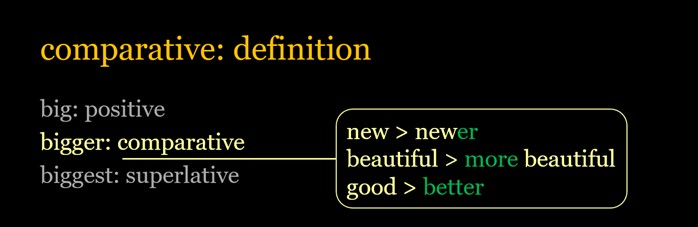
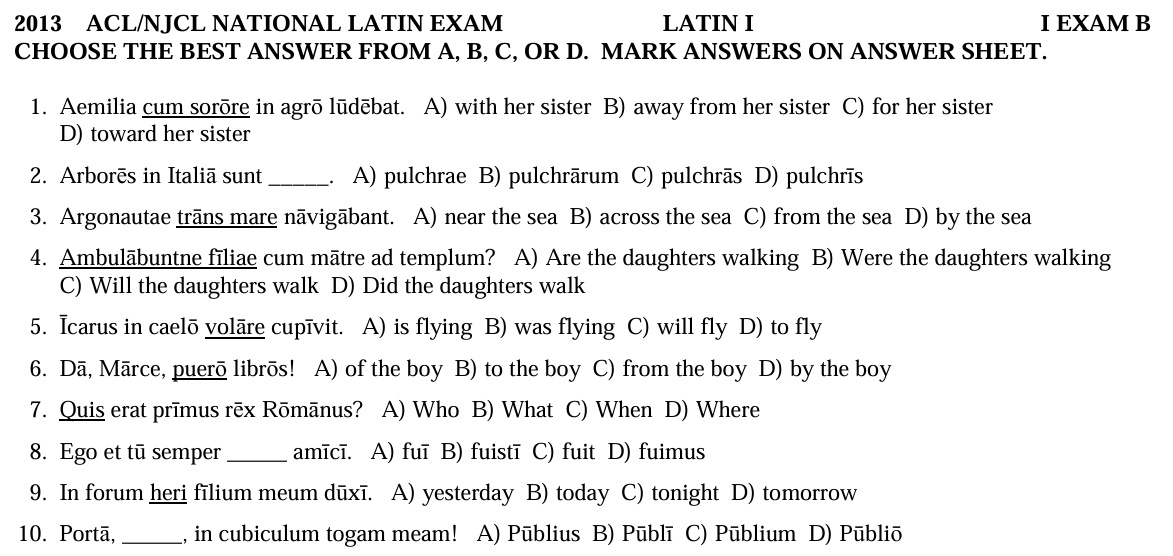
The images from the little schoolbook Principia show the comparative and superlative forms of adjectives.

Adjectives are compared in Latin in the same manner as in
English.
There are three degrees of comparison:
[1] Positive: long │ longus, -a, -um
[2] Comparative: longer │ longior [masculine /
feminine], longius [neuter]
[3] Superlative: longest │ longissimus, -a, -um
[i] In English we sometimes use ‘more’ and ‘most’ +
adjective e.g. more beautiful / most beautiful, and there are a few adjectives
in Latin which need to do this but almost all adjectives form their comparative
and superlative in the way shown above.
[ii] English and Latin also have irregular comparatives that
don’t conform to the endings listed above:
good │ bonus, -a, -um
better │ melior, -ius
best │ optimus, -a, -um
However, the irregular comparatives and superlatives in
Latin are more familiar to us than they might at first appear; more on that in
a later post.


02.11.24: Level 1; review; practice in the verbs [10]; reading
[A] Complete the Latin text by referring to the translation and using the verbs listed.
Rōmānī nāvēs __________. Tertiā
circiter vigiliā Caesar nāvēs __________. Prīmae nāvēs hōrā circiter quārtā
Britanniam __________. Ibi in altīs locīs sunt armātae cōpiae Britannōrum.
Britannōs __________ Rōmānī. Barbarī ex altīs locīs tēla __________. Itaque ibi
mīlitēs ex nāvibus Caesar nōn __________. Reliquās nāvēs ad hōram nōnam __________.
Caesar interim lēgātōs __________. Eīs cōnsilia __________. Ventum secundum __________.
Tum lēgātōs __________. Signum __________. Rōmānī ventō secundō ancorās __________.
Mox in apertō locō nāvēs __________.
The Romans board the
ships. Around the third watch Caesar unties the ships. The first ships reach
Britain around the fourth hour. There in high positions are the armed
troops of the Britons. The Romans see the Britons. The barbarians hurl
missiles from the high positions. Therefore, Caesar does not put the
soldiers ashore there. They wait for the remaining ships until
the ninth hour. Meanwhile, Caesar summons his envoys. He explains
his plans to them. He waits for a favourable wind. Then he dismisses
his envoys. He gives the signal. The Romans raise the anchors [=
weigh anchor] with the favourable wind. They soon line up the ships in
an exposed position.
attingunt; cōnscendunt; cōnstituunt;
convocat; dat; dīmittit; expōnit; exspectant; exspectat; mittunt; ostendit; solvit;
tollunt; vident
[B] Answer the questions in Latin
quotus, -a, -um: which when
asking about the numerical order of things / people i.e. an ordinal
number (1st, 2nd etc) is expected in the answer, for
example:
The answer is: sextā hōrā │ at
the sixth hour
The question was: Quotā hōrā? │
at which hour (the first, second, third etc.?)
The answer is: Augustus prīmus imperātor fuit. │ Augustus
was the first emperor.
The question was: Quotus imperātor
fuit Augustus? │ Which emperor (in sequence) was Augustus?
Therefore:
Quotā vigiliā?
The night watch was divided into
four, and so at which one (in order) does the event happen – the first,
second etc?
- Quid faciunt Rōmānī?
- Quotā vigiliā Caesar nāvēs solvit?
- Quotā hōrā prīmae nāvēs Britanniam attingunt?
- Ubi sunt armātae cōpiae Britannōrum?
- Cūr Caesar mīlitēs ibi nōn expōnit? Quamdiū reliquās nāvēs exspectant?
- Quid interim facit Caesar?
- Quibus cōnsilia ostendit?
- Quid exspectat?
- Estne ventus secundus?
- Quid faciunt Rōmānī?
- Ubi Rōmānī nāvēs cōnstituunt?
____________________
Rōmānī nāvēs cōnscendunt. Tertiā
circiter vigiliā Caesar nāvēs solvit. Prīmae nāvēs hōrā circiter quārtā
Britanniam attingunt. Ibi in altīs locīs sunt armātae cōpiae Britannōrum.
Britannōs vident Rōmānī. Barbarī ex altīs locīs tēla mittunt. Itaque ibi
mīlitēs ex nāvibus Caesar nōn expōnit. Reliquās nāvēs ad hōram nōnam
exspectant. Caesar interim lēgātōs convocat. Eīs cōnsilia ostendit. Ventum
secundum exspectat. Tum lēgātōs dīmittit. Signum dat. Rōmānī ventō secundō
ancorās tollunt. Mox in apertō locō nāvēs cōnstituunt.
Sunday, September 15, 2024
02.11.24: Level 2; Ora Maritima [26](4): distinguishing tenses [2]
Advice from the Connecticut Department of Transportation:
One wrong move can lead to irreversible consequences.
Misreading a Latin verb won’t lead to irreversible consequences, but it can lead to dead ends, traffic jams, frustration and, if you are doing any examinations in the language, loss of marks. Therefore, take the advice from Connecticut and look for the “signs”
Image #1: looks like a tough hill to climb when you see the
verb forms next to one another because they are all very similar. To start,
don’t look at every verb form, but look at the summaries at the top of the
table.
Each of the tenses is formed in a different way and there
are tense markers to look out for:
[i] -ba- / -bā-: they mark the imperfect tense for almost
every verb in Latin
[ii] -bō / -bi- / -bu-: they mark the future tense for the 1st and 2nd conjugation and so that takes you some way in recognising the future tense; the 3rd and 4th conjugations form the future differently and we will review those in a later post.
Now look at the perfect tense:
Three-in-one!
Whatever that stem is (it may not be a -v-), it will
be the same for the perfect, pluperfect and future perfect tenses, and so, what
you’re looking for, is what is added to it:
[iii] perfect tense stem + a set of personal endings = perfect
tense
[iv] perfect tense stem + an entire verb i.e. the
imperfect of esse = pluperfect tense
[v] perfect tense stem + an entire verb i.e. the
future tense of esse apart from the 3rd person plural which
is erint rather than erunt = future perfect tense; even erint
isn’t difficult to spot since it has the same vowel as -eris, -erit
etc.
labōrābam │ I was working; I used to work
labōrābō │ I shall work
labōrāvī │ I worked; I have worked
labōrāveram │ I had worked
labōrāverō │ I shall have worked
For the perfect, pluperfect and future perfect, even if the stem is irregular, it will be formed no differently from any other verb in those tenses e.g.
sum, esse, fuī
perfect tense stem: fu¦ī
> fuī: I was; I have been
> fu¦eram: I had been
> fu¦erō: I shall have been
[A] Here are some of the verbs from the previous post. Take
your time, refer to the table, look at how the verbs have been put together and
identify the tenses that are used for each one:
[1] (a) postulābāmus (b) postulābimus (c) postulāvimus
[3] (a) dederis (b) dederat (c) dederās
[4] (a) dēlectāverant (b) dēlectāvērunt
(c) dēlectāverint
[5] (a) recreāvimus (b) recreāverāmus
(c) recreāverimus
[6] (a) properābimus (b) properāvimus
(c) properābāmus
[7] (a) adventāverimus (b) adventāvimus
(c) adventāverāmus
[8] (a) exspectāvit (b) exspectāverit
(c) exspectāverat
[12] (a) gustāverat (b) gustāveram
(c) gustābam
[13] (a) recreāvī (b) recreāveram
(c) recreāverō
[15] (a) dedī (b) dedistis (c) dedistī
[B] More verbs from the previous post; match the Latin verbs with their English translations:
[2] (a) erit (b) erat (c) erunt
he was / he will be / they will be
[10] (a) erit (b) eris (c) erat
he was / he will be / you (sg.) will be
[14] (a) erō (b) fuerō (c) eram
I was / I shall have been / I shall be
[9] (a) fuerant (b) fuerat (c) fuerit
he will have been / they had been / he had been
[11] (a) fuī (b) fuit (c) fuerit
he will have been / I have been / he has been


01.11.24: Level 1; Maxey [16] (3): reading and comprehension; part 3
Part 3
Complete the
Latin text with the verbs listed below.
Today the boys
don’t have horses. What are the boys doing now? These four boys are hurrying
from the cottages to the forest because animals are there. In the stable are
black horses, and now they are staying there. The boys want to take the animals.
Sometimes the animals are afraid of the boys. They are also afraid of the
arrows. The boys stay in the forest for a long time, but the animals are not
seen for a long time. “There,” says Marcus, “I see the head of a small, black
animal,” Then Marcus takes the first arrows, then a second and a third. The
animal stands and looks at the boy. There is no danger because the boys are tall
and strong men. The boys go home when dinner is ready on the table. They eat
dinner happily.
Hodiē
puerī equōs nōn [1] __________. Quid puerī nunc [2] __________? Hī quattuor
puerī ā casīs ad silvam [3] __________ quod ibi sunt animālia. In stabulō sunt
equī nigrī, et nunc ibi [4] __________. Puerī animālia capere [5] __________.
Interdum animālia puerōs [6] __________. Sagittās quoque [7] __________. Diū
puerī in silvā [8] __________, sed diū animālia nōn [9] __________. “Ibi,” [10]
__________ Mārcus, “caput parvī animālis nigrī [11] __________.” Tum Mārcus
prīmam sagittam [12] __________, tum secundam et tertiam. Animal [13] __________
et puerum [14] __________. Nūllum perīculum est quod puerī nōn sunt virī magnī
et validī. Puerī domum [15] __________ ubi cēna in mēnsā parāta est. Cēnam
laetī [16] __________.
capit; cupiunt;
edunt; eunt; faciunt; habent; inquit; manent; manent; properant; spectat; stat;
timent; timent; videntur; videō
31.10.24: Level 2; Ora Maritima [26](2): cloze
Listen carefully to the recording and identify which verb form is being used; they are all very similar to each other.
Sed nōs puerī prandium iam [1] __________: nam hōra iam septima [2] __________. Quam bella crustula et pōma tū, amita, [3] __________! Quantopere nōs bācae rubrae et nigrae [4] __________!
Tum patruus meus “Cum nōs [5] __________,” inquit “domum [6] __________; nam nōn ante undecimam hōram [7] __________; intereā amita tua, mī Antonī, nōs [8] __________. Nōnne prandiō satiātī estis?” Tum ego “Nulla in mē mora [9] __________.”
Et Alexander “Ego iam parātus sum” inquit; “sed quandō tu, Marce, satiātus [10] __________?” Tum Marcus “Iēiūnus [11] __________” inquit; “nam per quinque horās nihil [12] __________.
Sed cum mē alterō pōmō [13] __________, parātus [14] __________. Tū, Alexander, inter viam crustulīs operam [15] __________; nam puer parvus es.” Nōs cachinnāmus, et mox in viam nōs damus.
[1] (a) postulābāmus (b) postulābimus (c) postulāvimus
[2] (a) erit (b) erat (c) erunt
[3] (a) dederis (b) dederat (c) dederās
[4] (a) dēlectāvērant (b) dēlectāvērunt (c) dēlectāverint
[5] (a) recreāvimus (b) recreāverāmus (c) recreāverimus
[6] (a) properābimus (b) properāvimus (c) properābāmus
[7] (a) adventāverimus (b) adventāvimus (c) adventāverāmus
[8] (a) exspectāvit (b) exspectāverit (c) exspectāverat
[9] (a) fuerant (b) fuerat (c) fuerit
[10] (a) erit (b) eris (c) erat
[11] (a) fuī (b) fuit (c) fuerit
[12] (a) gustāverat (b) gustāveram (c) gustābam
[13] (a) recreāvī (b) recreāveram (c) recreāverō
[14] (a) erō (b) fuerō (c) eram
[15] (a) dedī (b) dedistis (c) dedistī
Sed nōs puerī prandium iam [1] postulābāmus:
nam hōra iam septima [2] erat. Quam bella crustula et pōma tū, amita, [3]
dederās! Quantopere nōs bācae rubrae et nigrae [4] dēlectāvērunt!
Tum patruus meus “Cum nōs [5] recreāverimus,” inquit “domum [6] properābimus;
nam nōn ante undecimam hōram [7] adventāverimus; intereā amita tua, mī
Antonī, nōs [8] exspectāverit. Nōnne prandiō satiātī estis?” Tum ego
“Nulla in mē mora [9] fuerit.” Et Alexander “Ego iam parātus sum”
inquit; “sed quandō tu, Marce, satiātus [10] eris?” Tum Marcus
“Iēiūnus [11] fuī” inquit; “nam per quinque horās nihil [12] gustāveram.
Sed cum mē alterō pōmō [13] recreāverō, parātus [14] erō. Tū,
Alexander, inter viam crustulīs operam [15] dedistī; nam puer parvus
es.” Nōs cachinnāmus, et mox in viam nōs damus.
30.10.24: a poem for Halloween
For anybody who is at the intermediate or advanced level of Latin, I’d like to post this little “ghost story” by the Roman poet Propertius as he sees his beloved Cynthia return from the grave who, at first, looks unchanged but is actually in the form of a skeleton. I think it’s a good example of the possible “two stages” of translation. Latin poetry doesn’t rhyme nor, with a few exceptions, does it adhere to the rhythmic patterns of our poetry now. When looking at this kind of work, a prose translation would be the norm. However, it’s a good challenge to try to render it in some poetic form staying as close as possible to the original sense and mood, allowing the poem to be read aloud.
[1] Here is the original Latin:
Sunt aliquid Manes: letum non omnia finit,
luridaque evictos effugit umbra rogos.
Cynthia namque meo visa est incumbere fulcro,
murmur ad extremae nuper humata viae,
cum mihi somnus ab exsequiis penderet amoris,
et quererer lecti frigida regna mei.
eosdem habuit secum quibus est elata capillos,
eosdem oculos; lateri vestis adusta fuit,
et solitum digito beryllon adederat ignis,
summaque Lethaeus triverat ora liquor.
spirantisque animos et vocem misit: at illi
pollicibus fragiles increpuere manus.
[2] Here’s a prose version of it:
There are Spirits, of a kind: death does not end it all, and
the pale ghost escapes the ruined pyre. For Cynthia, lately buried, beside the
roadway’s murmur, seemed to lean over my couch, when sleep was withheld from
me, after love’s interment, and I grieved at the cold kingdom of my bed. The
same hair she had, that was borne to the grave, the same eyes: her garment was
charred against her side, and the fire had eaten the beryl ring from her
finger, and Lethe’s waters had worn away her lips. She sighed living breath,
and speech, but her brittle hands rattled their finger-bones.
[3] Here’s my attempt to get that prose translation into
some poetic form in English:
There are such things as ghosts, you know,
Not all things Death can slay,
And from the pyre’s vanquished glow,
A sallow spectre flies away.
Scarce buried by the bustling road my Cynthia was seen,
Who o’er my bedpost seemed to lean,
While, since the funeral of my love,
A restless sleep would hang above
My couch –
That cold domain,
That reason for me to complain.
Unchanged her eyes, her hair unmarred
From when they bore her to the grave,
Against her side her clothing charred,
The gemstone ring she always wore
By all-consuming fire craved,
From Lake Oblivion waters pour
To wash away her lips, but still
Her voice with living breath was filled,
A voice that sighed,
A voice –
As if she’d never
Died.
But brittle hands rang out the tones
Of rapid, rattling finger-bones.

30.10.24: Level 1; Maxey [16] (2): reading and comprehension; part 2
Part 2
Quī sunt hī quattuor puerī qui in viā lātā ambulant? Amīcī
sunt et fīliī agricolārum. Quid faciunt? Sagittās portant. Scūta et pila nōn
portantur quod puerī mīlitēs nōn sunt et nōn pūgnant. Iacula nōn habent. Nōmen
huius puerī altī est Mārcus. Medius puer est. Ā dextrā Mārcī est frāter,
Lūcius, puer secundus, quī trēs sagittās portat. Ā sinistrā Mārcī est puer
tertius, Carolus, nōmine. In capite Carolī est galea, sed mīles nōn est. Hic
parvus puer, cuius nōmen est Claudius, post hōs trēs puerōs manet. Parvus est,
sed cum puerīs magnīs ambulāre cupit. Dēfessus est quod puerī magnī properant.
[i] In which order are these statements
first made?
carrying arrows
four boys
not carrying shields
not fighting
sons of farmers
walking in the road
[ii] Which statements apply to which boy? [A] MARCUS [B] LUCIUS
[C] CAROLUS [D] CLAUDIUS
behind the others; carries three arrows; in the middle; Marcus’
brother; not a soldier; on the left; on the right; second boy; small; tall; third
boy; tired; wearing a helmet
29.10.24: Level 2; Ora Maritima [26](1): reading and comprehension
Sed nōs puerī prandium iam postulābāmus: nam hōra iam septima erat. Quam bella crustula et pōma tū, amita, dederās! Quantopere nōs bācae rubrae et nigrae dēlectāvērunt! Tum patruus meus “Cum nōs recreāverimus,” inquit “domum properābimus; nam nōn ante ūndecimam hōram adventāverimus; intereā amita tua, mī Antonī, nōs exspectāverit. Nōnne prandiō satiātī estis?” Tum ego “Nūlla in mē mora fuerit.” Et Alexander “Ego iam parātus sum” inquit; “sed quandō tu, Marce, satiātus eris?” Tum Marcus “Iēiūnus fuī” inquit; “nam per quinque horās nihil gustāveram. Sed cum mē alterō pōmō recreāverō, parātus erō. Tū, Alexander, inter viam crustulīs operam dedistī; nam puer parvus es.” Nōs cachinnāmus, et mox in viam nōs damus.
Vocabulary and notes
cachinnō, -āre, -āvī [1]: laugh
crustulum, -ī [2/n]: small cake / pastry; biscuit
gustō, -āre, -āvī [1]: taste; (here) have a snack; have a
bite to eat
satiātus, -a, -um: satisfied
mora, -ae [1/f]: delay
recreō, -āre, -āvī [1]: refresh; renew; revive
Nūlla in mē mora fuerit: this is an adaptation of a line
from Ovid: nūlla mora est in mē “I am in no mood to tarry” and so, given the tense
of the verb = I won’t have been in the mood to delay / wait around / I won’t
have felt like waiting around
Note: telling the time
The references to hōra septima (7th hour)
and ūndecima hōra (11th hour) are based upon the Roman system
of time-keeping:
Sunrise (sōlis ortus) and sunset (sōlis occāsus)
vary dependent upon the time of year. Therefore, hours were shortened (to about
45 minutes) or lengthened (to about 75 minutes) to compensate so that the hours
would always be aligned to the sunrise and sunset.
Posted is a comparison of the Roman hours and our times.
Note that these are approximate and simplified versions of
research which gives exact modern equivalents in minutes and seconds. You may
come across variations. You do not require such precision to express yourself –
nor did the Romans – but when you read a time in Classical Latin or you wish to
express a time yourself, then the table gives you an indication of what time
they’re talking about.
The whole of this book is set during the boys’ summer
holidays and so we can deduce that the boys are demanding lunch because it’s
already 12.00 noon, and the uncle later says that they won’t get home before
the “11th hour” which, if we go with the approximate times in the
summer, is 5pm.
https://www.facebook.com/groups/latinforstarters/permalink/411050398172901/
https://adckl.blogspot.com/2024/04/220324-ordinal-numbers-2-telling-time.html

Choose the correct statement A, B, C or D; look carefully at
the verbs in the text
[i]
[A] The boys had already had lunch.
[B] The boys wanted lunch later.
[C] The boys were having lunch.
[D] The boys were wanting lunch.
[ii]
[A] The aunt had given them cakes and apples.
[B] The aunt often gave them cakes and apples.
[C] The aunt was giving them cakes and apples.
[D] The aunt would give them cakes and apples later.
[iii] The uncle says:
[A] “We have already revived ourselves and we’ll hurry home
now.”
[B] “We’ll revive ourselves later and then hurry home.”
[C] “When we’ve revived ourselves, we’ll hurry home.”
[D] “We’ll revive ourselves after we’ve hurried home.”
[iv] The uncle says:
[A] “We won’t have reached home at 11pm.”
[B] “We won’t have reached home before 5pm.”
[C] “We’ll have reached home before 5pm.”
[D] “We’ll have reached home by 11pm.”
[v] The uncle says:
[A] “Your aunt has waited for us.”
[B] “Your aunt is waiting for us.”
[C] “Your aunt was waiting for us.”
[D] “Your aunt will have waited for us.”
[vi] Marcus says:
[A] “I am hungry because I haven’t had anything to eat for
five hours.”
[B] “I was hungry because I hadn’t eaten anything for
five hours.”
[C] “I will be hungry because I won’t have eaten anything
for five hours.”
[D] “I’m not hungry because I’ve been eating for five hours.”
[vii] Marcus says:
[A] “I was ready after I revived myself with another apple.”
[B] “I’m ready because I’ve revived myself with another
apple.”
[C] “I’ll be ready when I’ve revived myself with another
apple.”
[D] “When I’m ready, I’ll revive myself with another apple.”
____________________
But we boys were already asking for / demanding lunch, for it was already 12 o’clock. What beautiful cookies and apples you had given (us), aunt! How much the red and black berries delighted us [ = we loved the red and black berries so much!] Then my uncle said, "When we (will) have refreshed ourselves," he said, "we will hurry home; for we will not not have arrived before five o’clock; Meanwhile, your aunt, my Anthony, will have waited for us. You’re satisfied with lunch, aren’t you?” Then I said, "I won’t have felt like delaying.” And Alexander said, "I am already ready." "But when will you be satisfied, Marcus?" Then Marcus said, "I was hungry, for I hadn’t had a bite to eat for five hours. But when I (will) have revived myself with another apple, I will be ready. You, Alexander, paid attention to / took interest in the cakes along the way, for you are a little boy." We laugh, and soon we are on our way.
28.10.24: Level 1; Maxey [16] (1): reading and comprehension; part 1
Colloquium
Part 1
[i]
Quae
arma, mīles Rōmāne, __________?
Galeam et
scūtum __________. __________ est galea __________; __________ est scūtum __________.
Quid __________
scūtum?
Scūtum mē
__________.
__________
facit galea?
Galea __________
meum tegit.
Complete
the text with the words listed below:
caput; facit;
habeō; habēs; haec; hoc; mea; meum; quid; scūtum; tegit
[ii]
Quae
tēla, mīles Rōmāne, habēs?
Tēla mea
sunt gladius et pīlum. Multī mīlitēs sagittās habent sed ego sagittās nōn habeō
quod nōn sum sagittārius.
Ubi
habitās, mīles Rōmāne?
In
castrīs habitō cum est bellum. Castra amō. Castra sunt lāta et longa et multī
mīlitēs Rōmānī in castrīs sunt. Longē ā casā patris meī sunt castra. Patrem et
mātrem nōn videō. Interdum sum dēfessus et patrem et mātrem vidēre cupiō, sed ad
casam nōn eō quod dux hoc dīcit: “Bonus mīles pugnat. Mīles malus domum it.”
- Why does the soldier not have any arrows? [1]
- When does he live in the camp? [1]
- Where is the camp? [2]
- How does he sometimes feel? [1]
- What does he want to do? [1]
- Why can he not go to his cottage? [3]
[iii]
Cūr
cōnsilium nōn capis et domum īs?
Dux meus
est benignus dux sed cōnsilium intellegit. Nōn cupit mīlitēs domum īre.
“Cōnsilium nōn est bonum,” inquit dux. “Est malum. In castrīs manē.” Tum
numquam īre cupiō.
Labōrāsne
semper in castrīs?
Minimē.
Ego et trēs amīcī interdum ad silvam īmus. Cum in silvā sumus, iacula habēmus.
(Iaculum est pīlum sed non longum pilum.) Sagittās quoque habēmus. Interdum ad
castra animālia portāmus. Animālia ad ducem portantur. Cum cēna bona in mēnsā
parāta est, laetī sumus.
[a] Find
the Latin:
- (he) does not want
- (he) understands
- are carried
- Do you (sg.) work?
- stay!
- to go
- we carry
- we go
- we have
- you (sg.) go
- you (sg.) take
[b]
- How does he describe his commander? [1]
- What does the commander think of his own advice? [1]
- How often do they go to the forest? [1]
- What is a iaculum and how is it different from a pilum? [2]
- What do they bring to the camp? [1]
- When are they happy? [3]
27.10.24: Level 2; future perfect tense [5]: practice [3]
Complete the translations with the Latin verbs listed below. Note that the English translations of the Latin future perfect in the first part of each sentence are deliberately varied. The second part of the sentence is always the future tense.
Before you have a go at this exercise – a type that is common in some Latin textbooks – pause. There is a thought process involved in these. The exercise is looking for two things:
[i] future perfect tense verbs
[ii] future tense verbs
Think analytically …
[1] Which of them end in the future tense of sum, esse?
Those are the future perfect tense verbs. They have a “marker” -er- e.g. -erō,
-eris etc. Throw them into one mental or written “box”
sēderō
sēderis
cēperō
cēperis
dūxerint
etc.
[2] Then look at the personal endings which will tell you
will have performed that action
sēderō │ I shall have …
cēperis │ you (sg.) will have …
necāverit │
he will have …
portāverimus
│ we will have …
portāveritis
│ you (pl.) will have …
dūxerint │ they
will have …
[3] Do the first part of each sentence using the information
you’ve worked out in [1] and [2] above
[4] the other verbs left are in the future tense
necābit
vidēbimus
accidet
etc.
[5] Again, look at the personal endings:
interficiēs │ you (sg.) will …
portābimus │ we will …
etc.
[1] Cum nōn iterum [i] __________ [future perfect], │
quid mihi [ii] __________ [future]?
When [i] I don’t sit again [= Lit: When I will not
have sat again], │ what [ii] will happen to me?
[2] Cum nōn iterum __________, │ gladius __________.
When you don’t sit again, │ you will seize a sword.
[3] Cum gladium __________, │ quid mihi accidet?
Once I’ve seized the sword, │ what will happen to me?
[4] Cum gladium __________, │ magistrum __________.
When you seize the sword, │ you’ll kill the teacher.
[5] Cum magistrum __________, │ quid mihi accidet?
When I’ve killed the teacher, │ what will happen to me?
[6] Cum magistrum __________, │ vigilēs tē ad
carcerem __________.
Once you kill the teacher, │ the guards will take you to
prison.
[7] Cum vigilēs mē ad carcerem __________, │ quid
mihi accidet?
Once the guards have taken me to prison, │ what will happen
to me?
[8] Cum vigilēs tē ad carcerem __________, │ carnifex
tē __________.
When the guards take you to prison, │ the executioner will
kill you.
[9] Cum carnifex mē __________, │ quid mihi accidet?
When the executioner has killed me, │ what will happen to
me?
[10] Cum carnifex tē __________, │ tē ad sepulcrum __________.
When the executioner kills you, │ we’ll carry you to the
tomb.
[11] Cum mē ad sepulcrum __________, │ quid mihi
accidet?
When you’ve carried me to the tomb, │ what will happen to
me?
[12] Cum tē ad sepulcrum __________, │ cadāver in
sepulcrum __________.
Once we’ve carried you to the tomb, │ we’ll put the body
into the tomb.
[13] Cum mē in sepulcrum __________, │ quid mihi
accidet?
When you’ve put me into the tomb, │ what will happen to me?
[14] Cum tē in sepulcrum __________, │ nōn iterum tē __________.
When we put you into the tomb, we won’t see you again.
accidet; capiēs; cēperis; cēperō; dūcent; dūxerint; dūxerint; interfēceris; interfēcerō; interficiēs; necābit; necāverit; necāverit; pōnēmus; portābimus; portāverimus; portāveritis; posuerimus; posueritis; sēderis; sēderō; vidēbimus
27.10.24: Level 2; future perfect tense [4]: practice [2]
Image #1: Look at the examples and the translations, noting the difference between the Latin verbs in bold and (i) the literal and (ii) actual possible translations in English.
Mārcus: Salvē, ō Sibylla. Pōtesne mihi rēs futūrās
praedīcere? │ Hello, Sibylla. Can you predict the future for me? [= Can you
predict future things / things that will be?]
Sibylla: Ita vērō. Possum. │ Yes, I can.
Mārcus: Quid igitur crās mihi accidet? │ What, therefore,
will happen to me tomorrow?
Sibylla: Māne ē lectulō surgēs. │ Tomorrow you will get out
of bed.
Mārcus: Cum ē lectulō surrēxerō, quid mihi accidet? │
(i) Lit: When I shall have got out of bed / (ii) = When I get out / have
got out of bed, what will happen to me?
Sibylla: Cum ē lectulō surrēxeris, per scālās
dēscendēs. │ Lit: When you will have got out of bed [ = When you get out
/ have got out of bed], you will go down the stairs.
Mārcus: Cum per scālās dēscenderō, quid mihi accidet?
│ Lit: When I will have gone downstairs [= When I go / have gone
downstairs], what will happen to me?
Sibylla: Cum per scālās dēscenderis, ōvum edēs. │
Lit: When you will have gone downstairs [= When you go / have gone
downstairs], you will eat an egg.

Complete the dialogue with the future perfect tense verbs listed below. One verb is used twice.

ēderō
invēnerō
ieris
ōsculāveris
cecīderit
ēderis
sēderō
ierō
cecīderit
invēneris
ōsculāverō
sēderis
26.10.24: Level 1; review; practice in the verbs [9]; 4th conjugation
venīre [4]│ to come
veniō │ I come
venīs │ you come
venit │ he / she comes
venīmus │ we come
venītis │ you (pl.) come
veniunt │ they come
____________________
aperiō, -īre [4]: open
audiō, -īre [4]: hear
cūstōdiō,-īre [4]: guard
dormiō, -īre [4]: sleep
mūniō, -īre [4]: fortify
veniō, -īre [4]: come
[A]
- Ego captīvōs __________. │ I guard the prisoners.
- Ego castra fossā __________. │I fortify the camp with a ditch.
- Ego ex Galliā __________.│ I come from Gaul.
- Ego in cubiculō __________. │ I sleep in the bedroom.
- Ego portās __________. │ I open the gates.
- Ego tubam __________. │ I hear the trumpet.
aperiō; audiō; cūstōdiō; dormiō; mūniō; veniō
[B]
Complete the sentences
- Nōs castra vāllō __________.
- Dux castra vāllō __________.
- __________nē in cubiculō, Mārce?
- __________nē in cubiculō, puerī?
- Vōs portās __________.
- Tū portam __________.
- Mīlitēs tubam __________.
- Mīles Rōmānus captīvōs __________.
- Mīlitēs Rōmānī captīvum __________.
- Barbarī ē Germāniā __________.
- Barbarus ē Germāniā __________.
- Unde __________, barbare?
[C] Match the English with the Latin verbs in the word cloud
- Are you (pl.) hungry?
- Do you (sg.) know?
- he / she is hungry
- he / she knows
- I know
- I’m hungry
- they are hungry
- they know
- to know
- to not know
- we know
- we’re hungry
- you (pl.) know
- you (sg.) know
- you’re (sg.) hungry


