Monday, April 22, 2024

02.04.24: Review of 3rd declension nouns [4]

Translation in the comments

DĒ CERTĀMINIBUS QUADRĪGĀRUM

[Chesnutt: the Road to Latin (1933)]

Nunc Cornēlius cum fīliīs Circum Maximum intrat. Magnō cum gaudiō puerī in subselliīs sedent. Circus Maximus puerōs dēlectat. Circus Maximus est aedificium longum. In mediō Circō Maximō est magna arēna. Sōl arēnam illūminat. Cirum arēnam sunt subsellia. Dē subselliīs spectātōrēs lūdōs spectant. In Circō Maximō sunt multa genera hominum. Sunt ducēs, mercātōrēs, agricolae, servī. Dē subseliīs puerī magnō studiō arēnam spectant. Arēna mūrō angustō dīviditur. Nōmen mūrī angustī est “spīna.” In spīnā sunt statuae clārōrum aurīgārum et equōrum. Prope terminōs spīnae sunt columnae altae. Columnae sunt mētae. In summā spīnā prope mētās iūdicēs stant. Circum spīnam equī volant.

“Nōnne est tempus certāminis, pater?” rogant puerī.

“Nōndum, meī fīliī,” respondet Cornēlius. “Ante certāmen semper est pompa. Pompa per viās ad Circum Maximum iter facit. In pompā sunt equī, aurīgae, virī clārī, imāginēs pulchrae deōrum. Mox pompa portam intrābit et per arēnam veniet.”

“Porta aperītur,” clāmat Lūcius. “Pompa venit!”

Post pompam spectātōrēs signum certāminis exspectant. Signum ā dominō lūdōrum datur; quadrīgae maximā cum celeritāte in arēnam volant. Per septem spatia equī circum spīnam volant. Vulnera aurīgārum sunt multa. Interdum aurīgae interficiuntur quod super capita et corpora miserōrum reliquae quadrīgae volant.

“Meus aurīga est in spatiō extrēmō,” clāmat Aulus. “Volat circum mētam extrēmam. Reliquōs aurīgās relinquit. Est victor!”

Vocabulary

(a) 3rd declension nouns

dux, ducis [3/m]: leader; commander; ruler

genus, generis [3/n]: type

imāgō, imāginis [3/f]: image

iter, itineris [3/n]: journey

  • iter faciō, facere [3-iō]: make one’s way

iūdex, iūdicis [3/m]: judge

mercātor, mercātōris [3/m]: merchant

nōmen, nōminis [3/n]: name

vulnus, vulneris [3/n]: wound

(b) Other words

angustus, -a, -um: narrow

dīvidō, dīvidere [3]: divide

extrēmus, -a, -um: outermost; furthest

mēta, -ae [1/f]: turning point; winning post (of the racecourse)

nōndum: not yet

relinquō, relinquere [3]: leave behind

reliquus, -a, -um: remaining

sōl, -is [3/m]: sun

spatium, -ī [2/n]: space; distance between two points; period of time; (here) lap (of a race)

spīna, -ae [1/f] [i] backbone; spine [ii] (here) a long low wall along the centre of the racecourse

subsellium, -ī [2/n]: low bench

super + accusative: upon; over; on the top of

terminus, -ī [2/m]: end; boundary line

volō, volāre [1]: fly

Notes

[1]

medius, -a, -um: middle

summus, -a, -um: highest; greatest; top [Engl. deriv. “summit”]

These two are adjectives but, in English, we generally have to rework them into nouns:

  • in mediā urbe: in the centre of the city
  • in mediō Circō Maximō: in the middle of the Circus Maximus
  • in summō monte: at the top of the mountain
  • in summā spīnā: on the top of the “spina”

[2] More examples of the passive; look out for -ur

Portam aperiō: I open the gate

> Porta aperītur: the gate is being opened

Mīles aurīgam interficit: the soldier kills the charioteer

> Aurīgae interficiuntur: the charioteers are killed

[i] signum ¦ ā dominō lūdōrum ¦ datur: the signal is given ¦ by the master of the games

If something is done by a person: ā + ablative

arēna ¦ mūrō angustō ¦ dīviditur: the arena is divided ¦ by a narrow wall

[ii] If something is done by a thing, the ablative alone is used

[3] Mox pompa portam intrābit et per arēnam veniet. Soon the procession will enter the gate and will come through the arena. That’s the first glimpse of the Latin future tense; it’s coming very soon.

____________________

Now Cornelius enters the Circus Maximus with his sons. The boys sit on the benches with great joy. The Circus Maximus delights the boys [= the boys really like …]. The Circus Maximus is a long building. In the middle of the Circus Maximus is a large arena. The sun illuminates the arena. There are benches around the arena. The spectators watch the games from the benches. There are many kinds of people in the Circus Maximus. There are leaders, merchants, farmers, and slaves. From the benches the boys look at the arena with great enthusiasm. The arena is divided by a narrow wall. The name of the narrow wall is the spīna. On the low dividing wall are statues of famous charioteers and horses. Near the ends of the wall are tall columns. The columns are goals. On top of the wall near the goal the judges stand. The horses fly around the spīna.

"It’s time for the contest, isn’t it father?" the boys ask. "Not yet, my sons," answers Cornelius. “There is always a parade before the competition. The parade travels through the streets to the Circus Maximus. In the parade are horses, charioteers, well-known men, beautiful images of the gods. Soon the parade will enter the gate and come through the arena.

"The gate is being opened!" shouts Lucius. "The parade is coming!"

After the parade, the spectators wait for the signal for the contest. The signal is given by the master of the games; the chariots fly into the arena with great speed. For seven laps the horses fly around the low dividing wall. The wounds of the charioteers are many [= The charioteers have …]. Sometimes the drivers are killed because the rest of the chariots fly over the heads and bodies of the poor men.

"My driver is on the last lap," shows Aulus. “He’s flying around the furthest goal. He’s leaving the rest of the charioteers behind. He is the winner!”

____________________ 


02.04.24: vocabulary related to the CIRCUS

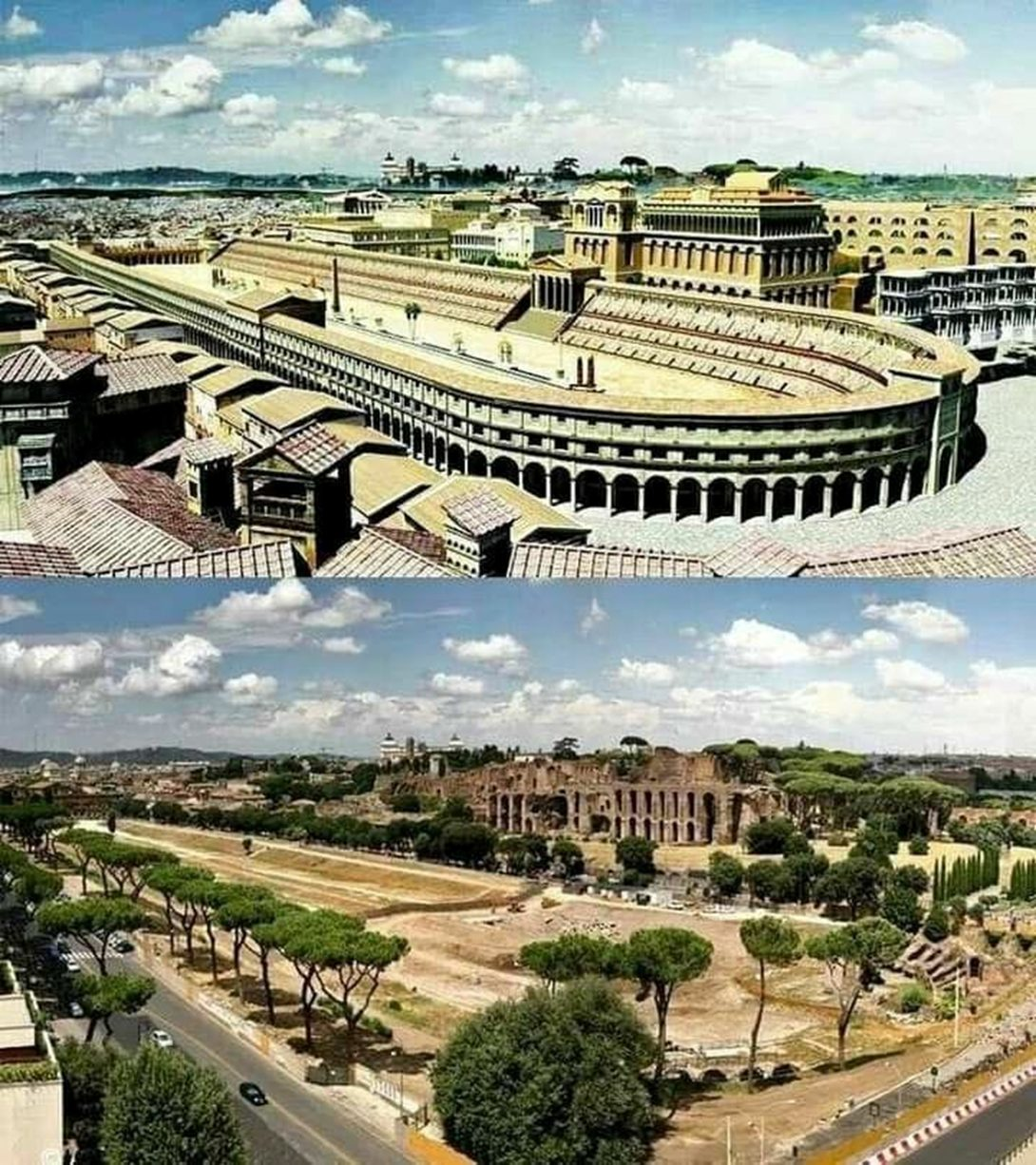
Before the next text, here is a reconstruction illustration and plan of what is now known as the Circus of Maxentius, but was originally called the Circus of Caracalla. The illustratation marks three important words of vocabulary related to Roman chariot racing.

[1] mēta, -ae [1/f]: turning point; goal; winning post

[2] spīna, -ae [1/f]: the “spina”, a long low dividing wall along the centre of the racecourse

[3] carcer, -is [3/m]: the most common meaning of carcer is “jail”, but in the racecourse it means “starting gate”


01.04.24: youtube channels

Many thanks to David Amster for providing a great list of Youtube channels. Here is the link again.

https://lupusalatus.substack.com/p/60-latin-youtube-channels-organized?utm_source=publication-search


01.04.24: Hearing the Romans; unfriendly rivalry

As the Roman historian Tacitus tells us, violence at “sports” events is nothing new:

"About this time [AD 59] there was a serious fight between the inhabitants of two Roman settlements, Nuceria and Pompeii. It arose out of a trifling incident at a gladiatorial show....During an exchange of taunts - characteristic of these disorderly country towns - abuse led to stone-throwing, and then swords were drawn. The people of Pompeii, where the show was held, came off best. Many wounded and mutilated Nucerians were taken to the capital. Many bereavements, too, were suffered by parents and children. The emperor instructed the senate to investigate the affair. The senate passed it to the consuls. When they reported back, the senate debarred Pompeii from holding any similar gathering for ten years. Illegal associations in the town were dissolved; and the sponsor of the show and his fellow-instigators of the disorders were exiled."

That disorder is recorded on a fresco which I’ve posted. And there is a photograph of the same stadium now. [images #1 and #2]

In the images of the inscriptions and in the quotations below, you’ll see the abbreviation CIL with a number which is a unique identifier. The Corpus Īnscrīptiōnum Latīnārum is a collection of Latin inscriptions maintained by Berlin-Brandenburg Academy of Sciences, and the book entitled Scribblers, Sculptors and Scribes by La Fleur also gives a fascinating range of all sorts of inscriptions that give us an insight into the lives of the ordinary Romans themselves.

There are several examples of graffiti from Pompeii that show the kind of animosity between neighbouring towns that may have contributed to, or been the result of, the event that Tacitus describes.

From a grammar point of view, note the frequent use of -īs, the dative plural of 1st and 2nd declension nouns wishing good or bad luck to the respective sides.

PUTEOLANIS FELICITER / OMNIBUS NUC{H}ERINIS / FELICIA ET UNCU(M) POMPEIANIS / PETECUSANIS (CIL IV 2183) [image #3]

  • Good fortune to the Puteolans; good luck to all Nucerians; the executioner’s hook to Pompeians (and) to the Pithecusans.

NUCERINIS / INFELICIA (CIL IV 1329)

  • Ill luck ¦ to the Nucerians.

Take a look at the writing below image #4; there's the preposition cum with the ablative case, which is the same ending as the dative.

CAMPANI VICTORIA UNA / CUM NUCERINIS PERISTIS. (CIL IV 1293)

  • Campanians, in our victory you perished ¦ with the Nucerians.

In the same way that rivalry can escalate now, so too it escalated 2000 years ago.


01.04.24: hearing the Romans

We're sometimes "deafened" by Cicero, Caesar, Catullus and the other grand masters of Latin Literature but we don't hear the "voices" of the ordinary Romans. While we read about gladiatorial fights and victory palms, ordinary citizens drew them on walls in Pompeii 2000 years ago. The third picture shows the victory palm. What it says below the picture I'll talk about in the next post.


01.04.24: Review of 3rd declension nouns [3]; ablative of manner

Same as before: just keep looking at those 3rd declension nouns in bold because they’re so common in the literature. Translation in the comments.

DĒ CERTĀMINIBUS RŌMĀNĪS

[Chesnutt: the Road to Latin (1933)]

Populus Rōmānus lūdōs et spectācula amābat. Erant lūdī gladiatōriī, certāmina quadrīgārum, alia spectācula. Rōmānī lūdōs gladiātōriōs et certāmina quadrīgārum libenter spectābant. Certāmen quadrīgārum in Circō Maximō erat et populō Rōmānō maximē acceptum erat. Multitūdō virōrum et fēminārum et līberōrum certāmen quadrīgārum magnō cum studiō spectābat. Prīncipium certāminis quadrīgārum ā dominō lūdōrum nūntiābātur. Tum spectātōrēs cum studiō aurīgās salūtābant.

Saepe aurīga erat servus. Corpus aurīgae aut rubrā aut albā tunicā tegēbātur. Colōre tunicae Rōmānī corpus aurīgae cernēbant. Pulchra erat aurīgae magnitūdō corporis. Maximā cum celeritāte equī currēbant. Corpora equōrum erant pulchra. Spectātōrēs corpora equōrum laudābant. Victōrī certāminis quadrīgārum palma ā dominō lūdōrum dabātur. Mūnus erat aurīgae grātum. Multa mūnera pulchra victōrī ā spectātōribus dabantur. Hodiē Cornēlius cum fīliīs Lūciō et Aulō Circum Maximum iterum intrant. Ibi puerī certāmen quadrīgārum maximō studiō spectant. Clāmōrēs spectātōrum Circum Maximum complent.

Vocabulary

(a) 3rd declension nouns

  • celeritās, celeritātis [3/f]: speed
  • certāmen, -inis [3/n]: contest; race
  • color, colōris [3/m]: colour
  • corpus, corporis [3/n]: body
  • magnitūdō, magnitūdinis [3/f]: greatness; size
  • magnitūdō corporis: stature
  • mūnus, mūneris [3/n]: gift; reward
  • spectātor, spectātōris [3/m]: spectator

(b) other words

  • acceptus, -a, -um: acceptable; pleasing
  • cernō, cernere [3]: detect; distinguish
  • compleō, complēre [2]: fill; cover
  • gladiatōrius, -a, -um: gladiatorial
  • quadrīga, -ae [1/m]: charioteer
  • quadrigae (plural): a four horse team for chariot racing
  • studium, -ī [2/n]: eagerness; enthusiasm
  • tegō, tegere [3]: protect; cover
  • palma, -ae [1/f]: “ The palm branch bestowed by both Greeks and Romans upon victorious athletes and drivers in the race-course. In works of art, therefore, it symbolizes victory.” (Thurston Peck)

Notes

[1] Keep looking out for the case endings!

Certamen … populō Rōmānō [dative] maximē acceptum erat. The contest … was very greatly pleasing to the Roman people.

Mūnus erat aurīgae [dative] grātum. The gift / reward was pleasing to the charioteer i.e. The charioteer liked the gift.

[2] ablative of manner

  • cum studiō: with enthusiasm
  • magnō cum studiō: with great enthusiasm
  • maximō studiō: with the greatest enthusiasm
  • maximā cum celeritāte: with the greatest / very great speed

In grammar this is known as the ablative of manner

The horse runs with great speed. The sentence describes how the horse runs i.e. the manner in which it runs.

To express this Latin does the following:

preposition cum (with) + ablative

cum celeritāte: with speed; the preposition must be included

When an adjective is involved, the preposition is optional, but, if it is used, it goes between the adjective and the noun:

maximā cum celeritāte: with the greatest speed

Ibi puerī certāmen quadrīgārum ¦ maximō studiō [preposition omitted] ¦ spectant.

There the boys watch the chariot race with the greatest enthusiasm.

[3] Some more examples of the passive in this text:

[i] Prīncipium certāminis quadrīgārum ¦ ā dominō ¦ lūdōrum nūntiābātur.

The start of the chariot race was announced ¦ by the master of the games.

We looked at that in the previous post. The person by whom something is done is expressed by ā + ablative.

Now look at this one:

[ii] Corpus aurīgae aut rubrā aut albā tunicā tegēbātur.

The charioteer’s body was protected by either a red or white tunic.

The thing by which something is done is expressed by the ablative alone.

[iii] Latin word order is flexible and the more involved the sentence becomes, the more you need to look closely at the case endings. Find the nominative first.

Victōrī [dative] certāminis quadrīgārum ¦ [1] palma [nominative] ¦ ā dominō lūdōrum ¦ dābatur.

A palm was given ¦ to the winner of the chariot race ¦ by the master of the games.

Multa [1] mūnera [nominative] pulchra ¦ victōrī [dative] ¦ ā spectātōribus ¦ dabantur.

Many beautiful gifts ¦ were given ¦ to the winner ¦ by the spectators.

____________________

The Roman people loved games and spectacles. There were gladiatorial contests, chariot races, and other spectacles. The Romans enjoyed watching the gladiatorial games and the chariot races. There was a chariot race in the Circus Maximus, ¦ and it was very greatly pleasing to the people of Rome [= the Roman people really liked it]. A large number [a crowd] of men and women and children watched the chariot race with great enthusiasm. The start of the chariot race was announced by the master of the games. Then they greeted the charioteers with eagerness.

Often the driver was a slave. The body of the charioteer was protected by either a red or a white tunic. They distinguished [could make out] the body of the Roman charioteer by the colour of his tunic. The charioteer had beautiful stature. The horses ran with the greatest speed. The bodies of the horses were beautiful. The spectators praised the bodies of the horses. A palm was given to the winner of the chariot race by the master of the games. The gift pleased the charioteer. Many beautiful gifts were given to the winner by the spectators. Today, Cornelius goes again with his sons Lucius and Aulus into the Circus Maximus again. There, the boys watch the chariot race with great eagerness. The shouts of the spectators fill the Circus Maximus.

____________________ 


01.04.24: images relating to the next post

Before the next post, here are a few images to which the text refers.

2 images showing:

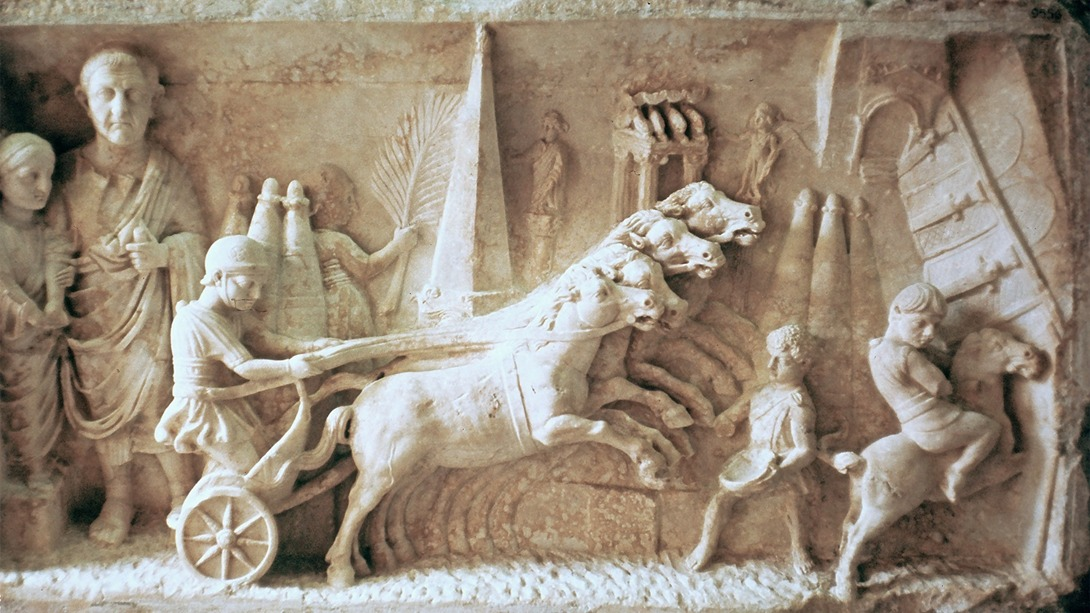
aurīga: charioteer

aurīgae: four horse team for chariot racing

The first image shows the charioteer holding a victory palm and the second shows the victory palm just behind the charioteer

1st century CE relief of the Circus Maximus

the Circus Maximus: then and now

a gladiator helmet from Pompeii


31.03.24: celebrating triumphs

Image #1: A triumph of the Emperor Marcus Aurelius

Image #2: Trajan's Column (Latin: Columna Traiānī) is a Roman triumphal column in Rome commemorating Emperor Trajan's victory in the Dacian Wars.


31.03.24: Review of 3rd declension nouns [2]

Again, most 3rd declension nouns in this text have been covered in earlier posts. Read the text for understanding – the translation is in the comments – and focus on the nouns in bold, work out what cases they are in, and why they are in those cases.

DĒ CAESARE ET LEGIŌNIBUS

[Chesnutt: the Road to Latin (1933)]

Apud Rōmānōs Caesar erat maximus dux. Caesar et legiōnēs in Galliā et Britanniā pugnābant. In legiōne est magnus numerus mīlitum. Bellō Helvēticō multae legiōnēs cum Caesare erant. Decima legiō et in bellō et in pāce Caesarī cāra erat. Virtūs decimae legiōnis erat magna. Hieme Caesaris legiōnēs in hibernīs manēbant. Aestāte Caesar legiōnēs cogēbat et bellum cum Gallīs gerēbat. Saepe imperātor mīlitēsque triumphum agēbant. Multitūdō hominum in Rōmae viās properābat. Per forum Rōmānum victor, mīlitēs, spolia, veniēbant. Clāmōrēs multitūdinis erant magnī. Spectāculum multitūdinem laetam dēlectābat. Triumphus erat mōs antīquus. Hodiē quoque vestīgia mōris antīquī vidēmus; nam in viīs nostrīs pompae magnae videntur.

Vocabulary

(a) 3rd declension nouns

aestās, aestātis [3/f]: summer

clāmor, clāmōris [3/m]: shout; shouting

dux, ducis [3/m or f]: leader; commander

hiems, hiemis [3/f]: winter

homō, hominis [3/m]: man; person; human being; plural hominēs can often refer to “people” rather than specifically men

legiō, legiōnis [3/f]: legion

mīles, mīlitis [3/m]: soldier

mōs, mōris [3/m]: custom; habit; practice

multitūdō, multitūdinis [3/f]: large number of people; crowd; mob

pāx, pācis [3/f]: peace

victor, victōris [3/m]: victor; conquerer

virtūs, virtūtis [3/f]: courage

(b) other words

cogō, cogere [3]: gather together

Helvēticus, -a, -um: pertaining to the Helvētiī; Helvetic

  • The Helvētiī (Helvetians) were a Celtic tribe that occupied the Swiss plateau at the time of their contact with the Roman Republic in the 1st century BCE. [see map posted]

hībernum, -ī [2/n]: [i] a synonym for hiems (winter) [ii] in the plural, as it is used here, winter quarters

pompa, -ae [1/f]: procession; parade

spectāculum, -ī [2/n]: spectacle; exhibition; show

spolium, -ī [2/n] but usually plural: spolia, the “spoils” (of war) i.e. treasures plundered from an enemy

triumphus, -ī [2/m]: the Roman “triumph”, a ceremonial procession to celebrate a victory

https://www.perseus.tufts.edu/hopper/text?doc=Perseus:text:1999.04.0062:entry=triumphus-harpers

vestīgium, -ī [2/n]: trace; footprint

Notes

pompae magnae videntur: great parades are seen; videntur: another example of the passive discussed in the previous reading post. Just add -ur to the 3rd person singular or plural.

videt: he sees

> vidētur: he is seen /long ē/

vident: they see

> videntur: they are seen

This verb in the passive has another meaning i.e. seem(s)

  • Inimīcus mihi vidētur. [Literally: An enemy is seen to me] > He seems to me (to be) an enemy.
  • Sed hoc mihi vidētur rēctum esse cōnsilium. (Vulgate) But this seems to me to be correct advice.

____________________

Among the Romans, Caesar was the greatest leader. Caesar and his legions fought in Gaul and Britain. In the legion there is a great number of soldiers. In the Helvetian War there were many legions with Caesar. The tenth legion both in war and in peace was dear to Caesar. The courage of the tenth legion was great. In the winter Caesar's legions remained in winter quarters. In the summer, Caesar raised legions and waged war with the Gauls. Often the commander-in-chief and his soldiers celebrated a triumph. A large number of people used to hurry into the streets of Rome. Through the Roman forum would come the conqueror, the soldiers, the spoils. The shouts of the crowd were great. The spectacle delighted the happy crowd. The triumph was an ancient custom. Even today we see the traces of ancient customs; for in our streets great parades are seen.

 ____________________


31.03.24: NLE sample paper (introductory level)


31.03.24: the National Latin Examination

https://www.nle.org/Exams/Previous-Exams-Answer-Keys

I can't recommend these highly enough. The National Latin Exam, which is US based, produces multi-choice question papers for all levels and they post the answer keys. I just uploaded the introductory one for 2012 and I'll post more. I used these to test my own knowledge. In the end I only used these. I had a look through it. All the language in it has been covered so far. These papers include some historical / mythological questions but the emphasis is on the knowledge of the language. All the papers are free to download and I've given the link. But if you're new to Latin, then I would just focus on the intro papers. Have a go and see how you do!


31.03.24: review of 3rd declension nouns [1]; introduction to the passive voice

Almost every 3rd declension noun in this text has been covered in earlier posts. They are listed for reference. Read the text for understanding – the translation is in the comments – and focus on the nouns in bold, work out what cases they are in, and why they are in those cases.

DĒ PRĪNCIPIBUS RŌMĀNĪS

[Chesnutt: the Road to Latin (1933)]

In prīncipiō Rōma ā rēgibus regēbātur. Prīmus rēx erat Rōmulus. Frāter Rōmulī erat Remus. Rōmulus et Remus erant geminī. Pater Rōmulī et frātris Remī deus Mārs, māter Rhēa Silvia erat. Rōmae erant statuae patris Mārtis et mātris Rhēae Silviae et frātrum. Rōmulus erat rēx bonus et ā Rōmānīs laudābātur. Erant septem rēgēs Rōmānī. Posteā erant cōnsulēs. Cōnsul Rōmānus ā populō Rōmānō dēligēbātur. Imperium cōnsulis erat maximum. Duō cōnsulēs quotannīs dēligēbantur et cīvitātem regēbant. Posteā imperātōrēs Rōmam regēbant. Imperātor clārus erat Augustus Caesar. Rōmae erat magna statua imperātōris Augustī Caesaris.

Vocabulary

[i] 3rd declension nouns

Caesar, -is [3/m]: Caesar

cīvitās, cīvitātis [3/f]: state; this is a word that can cause a bit of head-scratching since it has a variety of meanings dependent upon context e.g. a city and its surrounding territory, a city state, a kingdom, tribe.

cōnsul, -is [3/m]: consul

frāter, frātris [3/m]: brother

imperātor, imperātōris [3/m]: (here) emperor, but it has other meanings e.g. commander; commander-in-chief; ruler; the title could be given to conferred on a military leader who had won his first great victory. That could be as a result of his own soldiers greeting him that way, or it was decreed by the Senate. You could not use the term “emperor” as we understand it in Republican Rome, because they didn’t have emperors.

Mārs, Mārtis [3/m]: Mars (god)

māter, mātris [3/f]: mother

pater, patris [3/m]: father

prīnceps, prīncipis [3/m]: chief; leader

rēx, rēgis [3/m]: king

[ii] other words

clārus, -a, -um:

dēligō, dēligere [3]: choose

geminus, -ī [2/m]: twin

maximus, -a, um: greatest; very great

prīncipium, -ī [2/n]: beginning

quotannīs: yearly; every year

regō, regere [3]: rule

Notes

[1] Rōmae [locative] erant statuae … In Rome there were statues …

[2] Passive voice: introduction

  • In prīncipiō Rōma ā rēgibus regēbātur. In the beginning Rome was governed by kings.
  • Rōmulus … ā Rōmānīs laudābātur. Romulus … was praised by the Romans.
  • Cōnsul Rōmānus ā populō Rōmānō dēligēbātur. The Roman consul was elected by the Roman people.
  • Duō cōnsulēs quotannīs dēligēbantur. Two consuls were elected every year

What you see here is called in grammar the passive voice (or you can just say passive).

A sentence – both in English and Latin – can be [i] active or [ii] passive.

[i] Active: the subject of the sentence is performing the action.

The teacher punishes the pupil.

[ii] Passive: the subject of the sentence is not performing the action but the action is being done to the subject.

The pupil is punished ¦ by the teacher.

The passive in Latin involves some work – but in stages. The first point to consider is that, when you’re reading the authors, very often they are talking about other people i.e. the 3rd person e.g. he is praised by the king, they were elected by the people. To create those particular forms, all you do is add -ur to the the 3rd person singular or plural of the verb.

laudat: he praises

> laudātur: he is praised; /long ā/: a small point because written Latin did not use the macron sign, but, if you’re aiming for spot-on pronunciation, then it’s quite strongly said: lau-DA-tur

laudant: they praise

> laudantur: they are praised

castīgābat: he was punishing

> castīgābātur: he was being punished /long ā/

regēbant: they used to rule; they were ruling

> regēbantur: they used to be ruled

Magister [nominative: subject of the sentence] discipulum [accusative: direct object] castīgat. The teacher punishes the student.

> Discipulus [now the subject of the sentence: nominative] ¦ ā magistrō [ablative] ¦ castīgātur. The student is (being) punished ¦ by the teacher.

“by the teacher” is known in grammar as the passive agent i.e. the person by whom something is done; in Latin, when you say something is being done by a person, you use ā + ablative.

Rōmānī Rōmulum laudābant. The Romans used to praise Romulus.

> Rōmulus ¦ ā Rōmānīs ¦ laudābātur. Romulus was praised ¦ by the Romans.

That -ur ending stands out from the crowd and marks a passive. Of course, other parts of the verb have a passive too which form in a slightly different way, but, for now, this opens the door to the passive.

A small quiz question: in the text Romulus is described as being a good king and praised by the people. But no further mention is made of Remus. Why is that?

____________________

In the beginning Rome was governed by kings. The first king was Romulus. The brother of Romulus was Remus. Romulus and Remus were twins. The father of Romulus and (his) brother Remus was the god Mars, the mother Rhea Silvia. In Rome were the statues of the father Mars and the mother Rhea Silvia and the brothers. Romulus was a good king and was praised by the Romans. There were seven Roman kings. After that were the consuls. The Roman consul was elected by the Roman people. The consul’s political authority was the greatest. Two consuls were elected every year and governed the city. Afterwards emperors ruled Rome. Augustus Caesar was a famous emperor. In Rome there was a great statue of the emperor Augustus Caesar.

____________________


31.03.24: third declension nouns in dates

I wanted to show a couple of 3rd declension nouns “operating” in a particular construction which you will come across often.

IS DIĒS ERAT [I] A. D. V. ¦ [II] KAL. APR. ¦ [III] L. PĪSŌNE, A. GABĪNIŌ CŌNSULIBUS. (Caesar)

This day was [i] the fifth day before ¦ [ii] the first of April ¦ [iii] when L. Piso and A. Gabinius were consuls.

This matters if you’re planning to read the authors because it shows you part of the Roman system of dates: only part of it!

cōnsul, -is: 3rd declension. The consul was the highest political authority in the Roman republic. Two consuls were elected each year and it is common to find in the literature not a year, but reference to when two particular consuls were in charge. Presumably everyone who was anyone in Rome knew what year was being referred to.

In this case the consuls were L(ucius) Piso and A(ulus) Gabinius.

Pīsō, Pīsōnis: Piso, a third declension proper noun

Gabīnius, -ī: Gabinius, a second declension proper noun

Latin has a special use of the ablative which we’ll cover later but, for the purposes of understanding this construction, take a look at what’s happening in this statement.

L. Pīsōne, A. Gabīniō cōnsulibus: I’ll translate it as “When Piso and Gabinius were the consuls”; it doesn’t mean precisely that but it is fine for the moment. The entire phrase is in the ablative and you can see the ablative plural in cōnsulibus.

For the sake of completeness:

Kal. is an abbreviation of kalendae: the first day of any month

Kal. Apr. = kalendae Aprilis: the first of April

Caesar writes: a. d. V. = ante (before) diem (the day) V = five days before the first of April

So you need to count five days backwards and include the first of April:

[5] April 1st

[4] March 31st

[3] March 30th

[2] March 29th

> [1] March 28th

Caesar doesn’t actually state the year. He assumes you know: but I looked it up! It was 58BCE.

31.03.24: 3rd declension nouns in context [4]

[1] Ominous words from Pliny:

nubēs, nubis [3/f]: cloud

mōns, montis [3/m]: mountain

Nūbēs [nominative] - incertum procul intuentibus ex quō monte [ablative]; Vesuvium fuisse posteā cognitum est - oriēbātur, (Pliny 6.16)

The cloud was rising - at such a distance we couldn't tell from which mountain - but afterwards learned that it was Vesuvius.

[The images show an original Roman fresco of Vesuvius and an illustration of the eruption in 1631]

[2] From the Venerable Bede: it’s a very good example of seeing these 3rd declension nouns in one sentence.

hostis, -is [3/m]: enemy; this noun occurs all the time in the literature since there are so many descriptions of battles and is usually in the plural hostēs.

rēx, rēgis [3/m]: king

Sed tantā vī hostis [nominative] ferrum īnfīxit, ut ¦ per corpus [accusative] ¦ mīlitis occīsī [genitive] ¦ etiam ¦ rēgem [accusative] ¦ vulnerāret.

But the enemy thrust the sword with such force, that ¦ through the body ¦ of the slain soldier ¦ he also wounded the king.

[3] And if you’ve read all the sentences about those 1949 schoolboys kicking and punching each other…

… they stop fighting, and to make up:

  • Sextus canem Mārcō dat. │ Sextus gives Marcus a dog.
  • Mārcus mūrem Sextō dat. │ Marcus gives Sextus a mouse.
  • Ambō iterum amīcī sunt. │ Both are friends again.


31.03.24: 3rd declension nouns in context [3]; ablative

[5] Ablative: this case has many different uses; some uses have already been covered in earlier posts but I’ll recap these briefly here.

[i] Almost all nouns in the ablative singular end in -e, there are some that end in -ī and some where you may see either -e or -ī.

[ii] the ablative plural is -ibus for all genders i.e. the same ending as the dative plural

(a) One of the uses of the ablative is to specify a particular point or period in time, and that one gives you a easy way of remembering the ablative singular.

3 out of the 4 seasons are third declension nouns:

vēr, vēris [3/n]: spring

aestās, aestātis [3/f]: summer

hiems, hiemis [3/f]: winter

  • vēre: in spring
  • aestāte: in summer
  • hieme: in winter

And we can take that a bit further:

vesper, vesperis [3/]: evening > vespere: in the evening

nox, noctis [3/f]: night > nocte: at night; you will also come across noctū but that’s an adverb not a noun

(b) The ablative is used to express by what means something is done:

pēs, pedis [3/m]: foot

Sextus caput [accusatīve] Mārcī ¦ pede [ablatīve] calcat. │ Marcus tramples on Marcus’ head ¦ with (his) foot.

venter, ventris [3/m]: stomach

Mārcus ventrem [accusative] Sextī ¦ pedibus [ablative plural] ¦ calcat. │ Marcus treads on ¦ Sextus’ stomach ¦ with his feet.

mare, maris [3/n]: sea; this is one where the ablative might end in -e or -ī

marī terrāque │ by sea and by land

(c) The ablative is used with certain prepositions e.g. in (in / on); ē/ex (out of); dē (down) from, about (concerning); cum ([together] with)

Ubi est rēx tuus? maximē nunc salvet tē in omnibus urbibus tuīs (Vulgate) │ Where is your king that he may save you in all your cities?

Sextus ex ventre labōrat. │ Sextus has a pain in his stomach [literally: he is suffering by reason of his stomach].

Mārcus ex capite labōrat. │ Sextus has a headache [literally: he is suffering as a cause of his stomach].

And one of Cicero’s friends has been ill:

Caeparius… dīxit tē in lectō esse, quod ex pedibus labōrārēs (Cicero) │ Caeparius … said you were in bed because you were suffering with your feet. [Translated also as: told me you were in bed with the gout]

A charming one from Plautus:

At tū ut oculōs ēmungāre ex capite per nāsum tuōs. (Plautus) │ Aye, that you may blow your eyes out of your head through your nose.

lēx, lēgis [3/f]: law

Title of one of Cicero’s works: Dē Lēgibus │ on / about laws

gladiātor, gladiātoris [3/m]

Lēx scrīpta dē gladiātōribus (Cicero) │ The law (was) written about gladiators.

eques, equitis [3/m]: cavalryman

Here’s a previous quotation but now in full:

Antōnius ¦ [i] cum equitibus [ablative] ¦ [ii] hōrā noctis [genitive] quārtā ¦ sē in castra sua ad Mutinam recēpit. (Cicero) │ At the fourth hour of the night, ¦ Antony withdrew ¦ with the cavalry ¦ to his camp at Mutina.