Listen to the recording
without looking at the transcript.
[1] Choose the
correct answer [A], [B] or [C].
[Caesar formam
et incolās Britanniae in capite duodecimō et tertiō decimō librī quintī
commemorat. Incolae partis interiōris Celtae et barbarī erant; incolae
maritimae partis ex Belgiō praedae causā immigrāverant, sīcut priōre aetāte
trans flūmen Rhenum in Belgium migrāverant.]
[i] Caesar
describes Britannia in the [A] 2nd and 3rd [B] 22nd and 23rd [C] 12th
and 13th chapters of his [A] 15th [B] 5th [C]
25th book.
[ii] The Celts
lived [A] by the sea [B] inland [C] on a small island.
[iii] The migrants
lived [A] by the sea [B] inland [C] on a small island.
[iv] They had
migrated [A] to start a war [B] because of better weather [C] to plunder.
[v] They crossed
the Rhine [A] in winter [B] the previous summer [C] a year before.
[2] Fill in the
blanks with a single word or short phrase.
[Et nōnnulla
nōmina gentium maritimārum, unde nōmina urbium hodiernārum dērivāta sunt, Belgica
vel Gallica sunt. Belgae autem ā Germānīs oriundī erant, ut Caesar in capite
quartō librī secundī dēmonstrat. Itaque pars Britannōrum antīquōrum Germānicā
orīgine erant.]
[i] Belgian and
Gaulish influence is seen in today’s __________.
[ii] The Belgae
were originally from __________.
[iii] Caesar
refers to this in the __________ chapter of his __________ book.
[iv] Some of the __________
were of Germanic origin.
[3]
[Formam insulae
esse triquetram dēclārat. Sed ūnum latus ad Galliam spectāre existimat, alterum
ad Hispāniam atque occidentem, tertium ad septentriōnēs. Itaque dē lateribus et
angulīs laterum errābat. Hiberniam ab occidenteparte Britanniae esse
rectē iūdicat, insulam Mōnam inter Britanniam et Hiberniam esse.]
Which of the three
maps gives the closest representation of Caesar’s description of
Britannia?
And take a second
look: which of the three maps thinks that Brazil is an island off the west
coast of Ireland?
Map A
Map B
Map C
____________________
[3] Map [C]
Formam insulae
esse triquetram dēclārat: shaped
like a triangle
ūnum latus ad
Galliam: one side facing Gaul
alterum ad
Hispāniam: a second side facing Spain
insulam Mōnam
inter Britanniam et Hiberniam: the island of Anglesey between Britain
and Ireland
[A] Listen to the
text and fill in the blanks with the missing words
Gentium
Britannicārum __________
Tum patruus meus
reliqua de __________ Caesaris narrāvit. "Dum __________ nautaeque Rōmānī __________
novīs armīs ornant, Caesar ad reliquās copiās properat. Intereā __________
summum imperium Cassivellaunō mandāverant. Cassivellaunus nōn erat __________
ūniversārum __________ Britannicārum, sed __________ vel __________ __________
Cassōrum.
ab [a] occidentī
[b] occidente [c] occidentis Britannī mediterrāneī.
[C] Fill in the
blanks with the missing nouns:
Superiōre __________
bella continua fuerant inter Cassivellaunum et reliquās __________;
atque __________ auxilium Rōmānōrum contrā Cassivellaunum implōrāverant,
quia __________ suum trucīdāverat. Numerus __________ magnus
erat; nam, ut Caesar affirmat, infīnīta __________ __________ erat in __________
merīdiānā Britanniae.
____________________
[A]
Gentium
Britannicārum Societās [1]
Tum patruus meus
reliqua de expedītiōne Caesaris narrāvit. "Dum mīlitēs
nautaeque Rōmānī classem novīs armīs ornant, Caesar ad reliquās copiās
properat. Intereā hostēs summum imperium Cassivellaunō mandāverant.
Cassivellaunus nōn erat rēx ūniversārum gentium Britannicārum,
sed dux vel princēps gentis Cassōrum.
[B]
Annō tamen quartō
et quinquāgēsimō ante Christum nātum magna pars gentium Britanniae
merīdiānae sē sub Cassivellaunō contrā Rōmānōs consociāverant. Flūmen
Tamesa fīnēs Cassivellaunī ā fīnibusgentium maritimārum
sēparābat; ab oriente erant fīnēs Trinobantium; ab occidente
Britannī mediterrāneī.
[C]
Superiōre tempore
bella continua fuerant inter Cassivellaunum et reliquās gentēs; atque Trinobantēs
auxilium Rōmānōrum contrā Cassivellaunum implōrāverant, quia rēgem
suum trucīdāverat. Numerus hostium magnus erat; nam, ut Caesar affirmat,
infīnīta multitūdōhominum erat in parte merīdiānā
Britanniae.”
The ancient
is placed in the stern. │ Signum (vēxillum) pōnitur in puppī.
On the mast is
the foretop, the watch-tower of the ship and on
the top … a vane, to shew which way the wind standeth.
In mālō est corbis,
specula nāvis et suprā … aplustre, ventōrum index.
[i] Comenius uses
the archaic English word ‘ancient’, a term in heraldry to refer to a flag or
banner or ensign:
signum, -ī [2/n]:
a very general word meaning ‘sign’ or ‘signal’, the phrase signō datō,
for example, meaning ‘after the signal had been given’ i.e. for battle to
commence; in military language it can also refer to the distinctive sign
(emblem, eagle, banner) of an army division
vēxillum, -ī
[2/n]: flag, banner, standard
[ii] corbis, -is
[3m/f]: basket
[iii] specula, -ae
[1/f]: lookout, watchtower
[iv] aplustre, -is
[3/n]: while Comenius refers to aplustre as a weather vane, the word described the
curved and ornamented wooden stern of a Roman ship
Image #1: aplustre
from From: A school dictionary of Greek and Roman antiquities (Smith,
William, Sir, 1813-1893)
[4]
The ship is stayed
with an anchor, │ nāvīs sistitur anc(h)orā,
the depth is
fathomed with a plummet, │profunditās explōrātur bolide,
passengers walk up and down the decks, │nāvigantēs
[participle: those (who are) sailing] dēambulant in tabulātō,
the sea men
run to and fro through the hatches, │nautæ cursitant per forōs,
and thus, even
seas are passed over. │ atque ita, etiam
maria trāiciuntur.
[i] Passives:
nāvis sistitur ¦
ancorā │ the ship is halted ¦ by an anchor
sistō, -ere,
stitī, status [3]: stop, halt
profunditās
explōrātur │ the depth is explored (investigated, tested)
profunditās,
profunditātis [3/f]: depth
maria trāiciuntur
│ seas are crossed over
[ii] bolis,
bolidis [3/f]: this is an interesting choice of word; Comenius refers to measuring
the depth of the water (and determining the characteristics of the sea floor) with
a sounding line or lead line, a thin length of rope to which a
lead weight – a plummet – is
attached. This was a simple and reliable tool used since the 5th
century BC, archaelogical discoveries showing that the method was employed by
Greek and Roman navigators.
sed posteāquam
quartādecimā nox supervēnit nāvigantibus nōbīs in Hadriā circā mediam noctem
suspicābantur nautae appārēre sibi aliquam regiōnem, quī submittentēs
invēnērunt passūs vīgintī et pusillum inde sēparātī invēnērunt passūs quīndecim
(Vulgate)
But after the
fourteenth night was come, as we were sailing in Adria, about midnight, the
shipmen deemed that they discovered some country, who also sounding [literally:
“lowering” i.e. a lead line], found twenty fathoms: and going on a little
further, they found fifteen fathoms.
Image #2: a
sailor and a man on shore both sounding the depth with a line; Olaus Magnus: On
the Vast Depths of the Norwegian Coasts (1554)
However, the word
itself – bolis, bolidis [3/f] – in Classical Latin refers specifically
to “a fiery meteor in the shape of an arrow”; Engl: bolide, an
exceptionally bright meteor; it is one of the words Pliny the Elder uses to
describe different types of meteor although it is difficult to establish precise
English equivalents. The Latin noun is from Greek βολίς (bolís), a javelin or
dart. I can only assume Comenius uses it owing to the pointed shape of a
lead plummet, or the way in which it rapidly and precisely strikes the water.
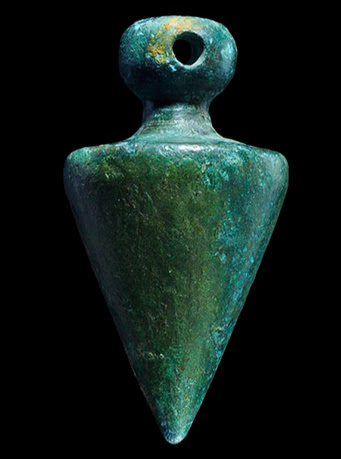
Image #3: plummet
or plumb bob of a Roman mason (1st – 3rd century
AD); the ones used by carpenters and masons do have a pointed end although the
ones used for depth sounding are normally in the shape of a bell; “plumb” is derived from Latin plumbum,
-ī [2/n]: lead, hence plumbārius, -ī [2/m]: plumber
līnea, -ae [1/f]: refers to any form of
line or string or thread, including fishing-line, and is also attested as referring
to a plumbline used by carpenters and masons
[iii] tabulātus,
-a, -um: boarded, having a floor > tabulātum, -ī [2/n]: flooring
constrātum, -ī
[2/n]: any flooring made of planks; Petronius makes specific reference to constrātum
nāvis meaning the deck of a ship
[iv] forus, -ī
[2/m]: gangway of a ship; Comenius uses the word to refer to openings through
the deck of a ship
[v] cursitō, -āre
[1]: run around; this verb has a suffix: –(i)tō; this suffix denotes a frequentative
action i.e. one that is performed more than once:
dictitō, -āre [1]:
repeat, maintain i.e. keep saying something
clāmitō, -āre [1]:
yell i.e. not a single shout but a prolonged action
vēnditō, -āre [1]:
offer something, again and again, for sale
Key vocabulary discussed in earlier posts is highlighted but not discussed. Comenius goes into considerable detail about the parts of 17th century vessels, which may appear quite specialised, but many of the Latin words are common and were all used in relation to ships. I have omitted a couple of small sections where the vocabulary is too rare to be of any value.
[1]
A Merchant-ship
│ Nāvis onerāria
A ship is
driven onward not by oars, but by the sole force of the
winds.
Nāvigium impellitur, nōn rēmīs, sed sōlā vī
ventōrum.
[i] Image #1: late 17th
century Dutch cargo vessel, described as a nāvis mercātōria, the term
used by Plautus:
Ībō in Pīraeum, vīsam ecquae advēnerit / in portum ex Ephesō nāvis mercātōria
│ To the Piraeus will I go;
I'll go see whether any merchant-ship has come into harbour from
Ephesus.
[ii] vīs, vīs [3/f] can be misread, especially in the plural
the word means ‘force’, ‘power’, ‘strength’, ‘violence’, but it is often
used in the plural: vīrēs (strength; physical force) and looks similar
to virī (men) but they are completely different words
Image #2: vīs
is also an example of a defective noun which refers to a noun where not all
the case endings are attested in Classical Latin; the English verb “can” is
defective since there is no infinitive “to can”, “to be able” being used
instead of the original Anglo-Saxon infinitive cunnan (Modern German:
können)
Nāvigium impellitur
│ a ship (vessel) is pushed / driven forward
[2]
In it is
a mast set up, fastened with shrowds, on all sides to
the main-chains, to which the sail-yards are tied, and
the sails to these, which arespread open, to
the wind, …
In illō mālus ērigitur,
firmātus fūnibus, undique ad orās nāvīs, cui annectuntur antennæ,
hīs, vēla quæ expanduntur, ad ventum ...
The beak
is in the fore-deck. │ Rōstrum est in prōrā.
[i] Passives:
Mālus ērigitur
│ a mast is set up
firmātus ¦
fūnibus │fastenedby /with ropes
vēla expanduntur
│ the sails are spread open
annectuntur
antennae │ the sail-yards are tied
[ii] Careful!
mālus, -ī [2/m]:
mast of a ship
mālus, -ī [2/f]:
apple tree
malus, -a, -um:
evil, bad
mālum, -ī [2/n]:
apple
malum, -ī [2/n]:
evil, misfortune, wrongdoing
[iii] shrowds
(archaic) = shrouds = the ropes that are tied around a mast = Latin: fūnis, -is
[3/m], the general word for a rope or a cord
[iv] antenna (CL: antemna),
-ae [1/f]: sail-yard, the horizontal spar or shaft to which a sail is attached
on a sailing vessel, used to spread and support the sail
Image #3: antenna from: A
school dictionary of Greek and Roman antiquities (Smith, William, Sir,
1813-1893)
[v] It’s
interesting that in the 17th century, English is still using the
word “beak” or “beakhead” i.e. the literal translation of Latin rōstrum
which refers to the protruding part of the foremost section of a sailing ship
[vi] An extract
from Livy describing Scipio’s tactics during a naval battle:
Scīpiō … onerāriārum
quadruplicem ōrdinem prō mūrō adversus hostem opposuit │ Scipio … placed
four lines of transport (ships) as a bulwark (“wall”) against the
enemy.
The passage goes
on to describe how Scipio prevented this line of transport ships from being
broken in battle:
malīs antemnīsque ¦ dē nāve in nāvem ¦ trāiectīs
ac validīs fūnibus velut ūnō inter sē vinculō inligātīs
with masts
and (sail-)yards crosswise ¦ from ship to ship ¦ lashed
together with stout ropes as if by a single cable(vinculum,
-ī [2/n]: chain, link, cord i.e. anything used for binding).
There are five
deponent verbs that are followed by the ablative case:
[1] fruor, fruī,
frūctus sum [3/dep]: enjoy
cibōfruitur.
│ He enjoys food.
[2] fungor, fungī,
fūnctus sum [3/dep]: perform (a duty / function)
consulatūfungitur.
│He performs the office of consul.
[3] potior,
potīrī, potītus sum [4/dep]: obtain; take possession of
pīrātae nāvīpotiuntur.
│The pirates take control of the ship.
Rēx Aegyptī bellum
īnfert quī terrāpotītur atque thēsaurōs templī et
rēgiae aufert. │ The king of Egypt wages war and he takes possession of
the land and steals the treasures of the temple and the palace.
[4] ūtor, ūtī,
ūsus sum [3/dep]: use
Vincere scīs,
Hannibal, victōriāūtī nescīs. (Livy) │You know how to
conquer, Hannibal, but you do not know how to use the victory.
Miles gladiōūtitur.
│ The soldier uses / makes use of a sword.
Omnibus cōpiīsūtuntur.
│ They make use of all their forces.
[5] vescor, vescī,
-no perfect- [3/dep]: feed upon
Numidae plērumque
carne vēscuntur. │ The Numidians generally eat / feed on meat.
The price of
something is expressed in the ablative, the price either being a specific
numerical value or referring to a general amount (e.g. high or low price) or,
as in the last quotation a noun which is equated to a value.
Agrum vēndidit
sēstertium sex mīlibus. │ He sold the land for 6000 sesterces.
Nam nummōs
antīquōs magnō pretiō vēnumdant. │ For they offer the ancient
coins for sale at a great / high price.
magnō pretiō:
at a high price
parvō pretiō:
at a low price
sānē [i] magnō
pretiō, [ii] nummīs aureīs quadringentīs (Livy) │
of course [i] at a great price, [ii] for four hundred gold coins
operam Epidicī
nunc mē emere pretiō pretiōsō velim (Plautus) │ I'd be willing to
pay a pretty price for Epidicus's assistance now [literally: I would like to
buy Epidicus’ assistance at an expensive price]
Antōnius rēgna
addīxit pecūniā. │Antony sold kingdoms for money.
Logōs rīdiculōs:
quis cēnā poscit? │ Jokes: who wants them for (at the price of) a
dinner?
The ablative –
sometimes with prepositions – is used when x is “separated” from y, that
separation being physical or abstract, positive or negative. The idea is
conveyed in the following English sentences:
He was freefrom fear.
He was removed from
office.
He was deprived
of water (i.e. he was prevented from having water).
He lacked
food.
[i] hostēs ¦ [ii]
fīnibus prohibuērunt │ They kept [i] the enemy ¦ [ii] from
(their) borders.
[i] praedōnēs ¦
[ii] ab īnsulā prohibuit │ He kept [i] the pirates ¦ [ii] from
the island.
[i] urbem ¦ [ii] ā
tyrannōlīberāvērunt │ They freed
[i] the city ¦ [ii] from the tyrant.
[i] liberāmur ¦
mortis [ii] mētū │ [i] We are freed [ii] from the fear of death.
2 verbs which
express the concept of “deprivation”:
[1] careō, -ēre,
-uī [2]: lack, be without something
Sī versūs hōrum duōrum poētārum neglegētis, magnā parte
litterārum carēbitis. │ If
you neglect the verses of these two poets, you will miss a
great part of literature.
Imperātor mīlitibus proeliō caruit. │ The general lacked / was
without soldiers for the battle.
[2] egeō, -ēre,
-uī [2]: lack, want, be without, need
Cicero needs a lot
of things …
tamen et ipse egeō
argūmentō epistulārum (Cicero) │ still I am in want of
subject matter
cōnsciīsegeō
aliīs (Cicero) │ I need others as accomplices
egeō rēbus omnibus (Cicero) │ I
am in want of everything
tuō cōnsiliōegeō (Cicero) │ I need your advice
But what he
doesn’t need …
sed nōnegeō
medicīnā: mē ipse cōnsōlor et maximē illō sōlāciō, quod eō errōrecareō, quō amīcōrum dēcessū plērīque angī solent. (Cicero)│ But I don’t need a remedy: I
console myself very much by the comfort / in the comforting fact that I am
free from the delusion by which, upon
the departure of friends, most men are usually distressed.
[Postquam
Perseus ad īnsulam nāvem appulit, sē ad locum contulit ubi māter ōlim
habitāverat, sed domum invēnit vacuam et omnīnō dēsertam. Trēs diēs per tōtam
īnsulam mātrem quaerēbat; tandem quārtō diē ad templum Diānae pervēnit. Hūc Danae
refūgerat, quod Polydectem timēbat. Perseus ubi haec cognōvit, īrā magnā
commōtus est; ad rēgiam Polydectis sine morā contendit, et ubi eō vēnit, statim
in ātrium irrūpit. Polydectēs magnō timōre affectus est et fugere volēbat. Dum
tamen ille fugit, Perseus caput Medūsae mōnstrāvit; ille autem simul atque hoc
vīdit, in saxum versus est.]
Mark the following
statements as true (T) or false (F)?
[i] He sailed from
the island.
[ii] There was a
ship on the island.
[iii] He sailed to
the island.
[iv] His mother
was living in the house.
[v] His mother
used to live in the house.
[vi] The house had
been abandoned.
[vii] His mother
was searching for him for three days.
[viii] He spent
three days looking for his mother.
[ix] He found his
mother on the fourth day.
[x] Diana had
taken refuge in the temple.
[xi] Danae had
fled to the temple.
[xii] Danae feared
Polydectes.
[xiii] Polydectes
feared Diana.
[xiv] Perseus was
afraid.
[xv] Perseus was
angry.
[xvi] Perseus
burst into Polydetctes’ bedroom.
[xvii] Polydectes
feared Perseus.
[xviii] Polydectes
was shown the head of Medusa.
[xvix] Polydectes
was turned into stone some time later.
[xx] Polydectes
was immediately turned into stone.
[Post haec
Perseus cum uxōre suā ad urbem Ācrisī rediit. Ille autem ubi Perseum vīdit,
magnō terrōre affectus est; nam propter ōrāculum istud nepōtem suum adhūc
timēbat. In Thessaliam igitur ad urbem Lārīsam statim refūgit, frūstrā tamen;
neque enim fātum suum vītāvit. Post paucōs annōs rēx Lārīsae lūdōs magnōs
fēcit; nūntiōs in omnēs partēs dīmīserat et diem ēdīxerat. Multī ex omnibus
urbibus Graeciae ad lūdōs convēnērunt. Ipse Perseus inter aliōs certāmen
discōrum iniit. At dum discum conicit, avum suum cāsū occīdit; Ācrisius enim
inter spectātōrēs eius certāminis forte stābat.]
[i] Where did
Perseus return to? (1)
[ii] How did
Acrisius react and why? (3); [[1] magnō terrōre affectus est; nam [2] propter
ōrāculum istud ¦ [3] nepōtem suum adhūc timēbat.
[iii] Why is
Thessaly mentioned? (1)
[iv] What did the
king of Larissa organise? (1)
[v] What two
actions did he take when organising this? (3)
[vi] Who came to
this event? (2)
[vii] How was
Perseus involved? (1)
[viii] What
happened to Acrisius and why? (4); [At (1) dum discum conicit, (2) avum suum cāsū
occīdit; (3) Ācrisius enim ¦ (4) inter spectātōrēs eius certāminis (3) forte
stābat.
[C] Find the Latin
either by listening or from the transcript:
[i] accidentally
[ii] by chance
[iii] in vain
[iv] from all the
cities
[v] he had
appointed the day
[vi] after
(conjunction)
[vii] after a few
days
[viii] after this
[ = after these things (events)]
[ix] for three
days
[x] on the fourth
day
[xi] as soon as
he saw this
[xii] he was
moved ¦ by great anger
[xiii] he was
affected ¦ by great fear
[xiv] he was
turned into stone
[xv] completely
deserted
____________________
[A] (i) He sailed
from the island. [F]; (ii) There was a ship on the island. [F]; (iii) He sailed
to the island. [T]; (iv) His mother was living in the house. [F]; (v) His
mother used to live in the house. [T]; (vi) The house had been abandoned. [T];
(vii) His mother was searching for him for three days. [F]; (viii) He spent
three days looking for his mother. [T]; (ix) He found his mother on the fourth
day. [F]; (x) Diana had taken refuge in the temple. [F]; (xi) Danae had fled to
the temple. [T]; (xii) Danae feared Polydectes. [T]; (xiii) Polydectes feared
Diana. [F]; (xiv) Perseus was afraid. [F]; (xv) Perseus was angry. [T]; (xvi)
Perseus burst into Polydetctes’ bedroom. [F]; (xvii) Polydectes feared Perseus.
[T]; (xviii) Polydectes was shown the head of Medusa. [T]; (xvix) Polydectes
was turned into stone some time later. [F]; (xx) Polydectes was immediately
turned into stone. [T]
“Tum patruus meus
reliqua de expedītiōne Caesaris narrāvit. "Dum mīlitēs nautaeque Rōmānī
classem novīs armīs ornant, Caesar ad reliquās copiās properat. Intereā hostēs
summum imperium Cassivellaunō mandāverant. Cassivellaunus nōn erat rēx
ūniversārum gentium Britannicārum, sed dux vel princēps gentis Cassōrum. Annō
tamen quartō et quinquāgēsimō ante Christum nātum magna pars gentium Britanniae
merīdiānae sē sub Cassivellaunō contrā Rōmānōs consociāverant. Flūmen Tamesa
fīnēs Cassivellaunī ā fīnibus gentium maritimārum sēparābat; ab oriente erant
fīnēs Trinobantium; ab occidente Britannī mediterrāneī. Superiōre tempore bella
continua fuerant inter Cassivellaunum et reliquās gentēs; atque Trinobantēs
auxilium Rōmānōrum contrā Cassivellaunum implōrāverant, quia rēgem suum
trucīdāverat. Numerus hostium magnus erat; nam, ut Caesar affirmat, infīnīta
multitūdō hominum erat in parte merīdiānā Britanniae."
[i] What were the
soldiers and sailors doing when Caesar hurried to his forces? (2)
[ii] How do we
know that the Romans’ enemies confided in Casivellaunus? (1)
[iii] Who was
Casivellaunus? (2)
[iv] What happened
in 54BC? (4) [(i) magna pars ¦ (ii) gentium Britanniae merīdiānae
¦ sē (iii) sub Cassivellaunō ¦ (iv) contrā Rōmānōs (i) consociāverant.
[v] Give an accurate
description of the location of the territory of Casivellaunus (5) [(i) Flūmen Tamesa
¦ (ii) fīnēs Cassivellaunī ¦ (iii) ā fīnibus gentium maritimārum (i) sēparābat;
(iv) ab oriente erant fīnēs Trinobantium; (v) ab occidente Britannī mediterrāneī.]
[vi] What had been
the previous situation between Cassivellaunus and other tribes? (2)
[vii] Why did the
Trinobantes seek help from the Romans? (1)
“Tum patruus meus reliqua de expedītiōne Caesaris narrāvit.
"Dum mīlitēs nautaeque Rōmānī classem novīs armīs ornant, Caesar ad
reliquās copiās properat. Intereā hostēs summum imperium Cassivellaunō
mandāverant. Cassivellaunus nōn erat rēx ūniversārum gentium Britannicārum, sed
dux vel princēps gentis Cassōrum. Annō tamen quartō et quinquāgēsimō
ante Christum nātum magna parsgentium Britanniae merīdiānae sē
sub Cassivellaunō contrā Rōmānōs consociāverant.
Flūmen Tamesa fīnēs Cassivellaunī ā fīnibus
gentium maritimārum sēparābat; ab oriente erant fīnēs Trinobantium;
ab occidente Britannī mediterrāneī. Superiōre tempore bella continua fuerant
inter Cassivellaunum et reliquās gentēs; atque Trinobantēs
auxilium Rōmānōrum contrā Cassivellaunum implōrāverant, quia rēgem suum
trucīdāverat. Numerus hostium magnus erat; nam, ut Caesar affirmat,
infīnīta multitūdō hominum erat in parte merīdiānā Britanniae."
"Caesar formam et incolās Britanniae in capite
duodecimō et tertiō decimō librī quintī commemorat. Incolae partis
interiōris Celtae et barbarī erant; incolae maritimae partis ex Belgiō
praedae causā immigrāverant, sīcut priōre aetāte trans flūmen Rhenum in Belgium
migrāverant. Et nōnnulla nōmina gentium maritimārum, unde nōmina urbium
hodiernārum dērivāta sunt, Belgica vel Gallica sunt. Belgae autem ā Germānīs
oriundī erant, ut Caesar in capite quartō librī secundī dēmonstrat.
Itaque pars Britannōrum antīquōrum Germānicā orīgine
erant. Formam insulae esse triquetram dēclārat. Sed ūnum latus ad Galliam
spectāre existimat, alterum ad Hispāniam atque occidentem, tertium ad
septentriōnēs. Itaque dē lateribus et angulīs laterum errābat. Hiberniam ab
occidente parte Britanniae esse rectē iūdicat, insulam Mōnam inter
Britanniam et Hiberniam esse."
[1] Vocabulary review: match the Latin
and English
Ad celeritātem
onerandī subductiōnēsque paulō facit humiliōrēs quam quibus in nostrō marī ūtī
cōnsuēvimus, atque id eō magis, quod propter crēbrās commūtātiōnēs aestuum
minus magnōs ibi flūctūs fierī cognōverat; ad onera, ad multitūdinem iūmentōrum
trānsportandam paulō lātiōrēs quam quibus in reliquīs ūtimur maribus. Hās omnēs
āctuāriās imperat fierī, quam ad rem multum humilitās adiuvat.
For speed of loading,
and for drawing them on shore, he makes them a little lower than those which we
have been accustomed to use in our sea; and that so much the more, because he
knew that, on account of the frequent changes of the tide, fewer swells
occurred there; for the purpose of transporting burdens and a great number of
horses, [he makes them] a little broader than those which we use in other seas.
All these he orders to be constructed for lightness, to which object their
lowness contributes greatly.
āctuārius, -a,
-um: swift, agile
aestus, -ūs [4/m]:
tide
cōnsuēscō, -ere,
cōnsuēvī, cōnsuētus [3]: [i] get used to; [ii] (here): be used to
iūmentum, -ī
[2/n]: can refer to any large animal capable of pulling, for example, carts;
horse, mule, donkey, cow
subductiō,
subductiōnis [3/f]: the act of hauling a ship ashore
Ad ¦ celeritātem ¦ onerandī │ for
the purpose of ¦ speed ¦ of loading
[i] ad [ii]
multitūdinem ¦ iūmentōrum ¦ [iii] trānsportandam │ for the
purpose of transporting … a great number of horses [= [i] for
the purpose of ¦ [ii] a large number ¦ of horses ¦ [iii] to be
transported]
Image: a ship
builder at work on a relief from Ravenna
Going into detail
regarding the types, dimensions, capacity and speed of Ancient Roman ships is
time-consuming and, depending on sources, inconsistent. Comenius uses the term unirēmis:
the English nouns unireme, monoreme (from Greek) refer to galleys
with one bank of oars but the term unirēmis itself is not attested, although
it makes sense since the following are attested:
birēmis, -is [3/f]: bireme, a ship having
two banks of oars
And there were
bigger ships than that: just change the beginning to identify how many banks of
oars a ship had!
[1] In his
description of the events surrounding the eruption of Mount Vesuvius, Pliny the
Younger refers to his uncle (Pliny the Elder) who, out of academic interest, prepares a boat in order to sail across to the location of the volcano:
Iubet
liburnicam aptārī │ He orders a “Liburnian” to be prepared
liburna, -ae [1/f]:
a Liburnian was a type of light and fast ship, two banks of oars (biremes)
on each side.
However, upon
receipt of a letter (this incident is, in my view, highly questionable) from
Rectina, an inhabitant who is unable to escape by land, Pliny the Elder decides
to “upgrade” to a bigger boat, his role in the narrative “evolving” from mere
academic interest to that of a rescuer i.e. the bigger the problem, the bigger
the boat, and the “bigger” the man.
We’ll look at
these letters in more detail in later posts, but note how, in one short
passage, Pliny significantly enhances his uncle’s involvement portraying him as
a decisive and heroic leader.
[i] Vertit ille
cōnsilium et [ii] quod studiōsō animō incohāverat obit maximō. [iii] Dēdūcit quadrirēmēs,
[iv] ascendit ipse [v] nōn Rectīnae modō ¦ sed multīs
(erat enim frequēns amoenitās ōrae) lātūrus auxilium.
[i] He changes his
plan, and [ii] that which he had begun with an attitude of study he takes on
with a spirit of courage. [iii] He draws out quadriremes; [iv] he
himself boards, [v] ready to bring assistance not only to Rectina, but to
many (for the pleasantness of that shore was crowded).
[2] And you didn’t
need to see these ships in battles and rescue missions; you could go and watch
a naval show; Suetonius is referring to a naumachia, -ae
[1/f], the artificial recreation of a sea battle:
nāvālī proeliō in
minōre Cōdētā dēfossō lacū birēmēs ac trirēmēsquadrirēmēsque
Tyriae et Aegyptiae classis magnō pugnātōrum numerō cōnflīxērunt.
A lake having been
dug in the little Codeta, ships of the Tyrian and Egyptian fleets, containing
two, three, and four banks of oars, with a number of men on board, afforded
an animated representation of a sea-fight.
image #1: Phoenician
warship with two rows of oars (Nineveh, ca. 700 BC)
image #2: Liburnians
of the Danube fleet during Trajan’s Dacian Wars (Bas Relief from Trajan’s
column, 118 AD)
A Ship furnished
with Oars, 1. is a Barge, 2. or a Foyst,
&c. in which the Rowers, 3. sitting on Seats, 4. by
the Oar-rings, row, by striking the water with the Oars,
5.
Navis īnstrūcta Rēmīs, 1. est Unirēmis,
2. vel Birēmis, &c. in quā Rēmigēs, 3. cōnsīdentēs pre Trānstra,
4. ad Scalmōs, rēmigant pellendō aquam Rēmīs, 5.
The Ship-master,
6. standing in the Fore-castle, and the Steers-man, 7.
sitting at the Stern, and holding the Rudder, 8. steer
the Vessel │ Prōrēta, 6. stāns in Prōrā, & Gubernātor,
7. sedēns in Puppī, tenēnsque Clāvum, 8. gubernant Nāvigium.
[1]
nāvigium, -ī
[2/n]: vessel, boat, ship
nāvis, -is [3/f]:
ship
nāvis āctuāria:
galley; āctuārius, -a, -um: swift, agile; Caesar uses this adjective to refer
to the construction of lightweight ships (see the next post)
[2]
puppis, -is [3/f]:
stern of a ship
prōra, -ae [1/f]:
prow of a ship; forecastle
prōrēta, -ae
[1/m]: lookout man at the prow of the ship
nāvis īnstrūcta
¦ rēmīs [ablative] │ a ship fitted ¦ with oars
scalmus, -ī [2/m]:
peg to which an oar was strapped; oarlock
trānstrum, -ī
[2/n]: crossbeam; a “thwart”, a seat across a boat which a rower sits on
Notes: present
active participles
rēmigēs cōnsīdentēs
pre trānstra │ the oarsmen [who are] sitting along the seats
prōrēta stāns
in prōrā et gubernātor sedēns in puppī, tenēnsque clāvum │the ship-master standing at the prow
of the ship, and the helmsman sitting at the stern and holding
the rudder
[1] Neuter nouns
ending in -e, -al, -ar undergo the same change in the
genitive plural as the i-stem nouns discussed in the previous post i.e. -ium,
but they also have changes in the ablative singular [-ī] and nominative
/ accusative plural [-ia]; such nouns are few in number and not common.
From the authors:
[1] Eundem in exemplāria
mīlle trānscrīptum per tōtam Ītaliam prōvinciāsque dīmīsit (Pliny) │ Then a
thousand copies were
written of the same memoir, which
he dispersed through all of Italy and the provinces.
[2] Reliquī
disseruērunt sine ūllō certō exemplārī fōrmāque reī pūblicae (Cicero) │ His
successors have discussed the different types of State and their basic
principles without any definite example or model
[3] in eō
conclāvī ego perfōdī parietem (Plautus) │ in that same room I have
dug a hole through the party-wall
[4] Etiam rogitās,
scelestē homō, quī angulōs in omnīs meārum aedium et conclāvium
mihi pervium facitis? (Plautus) │ Do you even ask me, you rascally fellow? You
who've been making a thoroughfare of every corner of my house, and the rooms
under lock and key? (conclāve can refer to a room that is locked)
Note: aedis, aedis
[3/f]: [i] temple, shrine [ii] plural (aedēs): house; i-stem noun (the same
number of syllables in the nominative and genitive singular)
[5] absolūtum
offendī in aedibus tuīs tēctum, quod suprā conclāvia nōn placuerat tibi
esse multōrum fastīgiōrum, id nunc honestē vergit in tēctum īnferiōris porticūs
(Cicero) │ I found the roof on your house finished: the part over the sitting-rooms,
which you did not wish to have many gables, now slopes gracefully towards the
roof of the lower colonnade.
[6] repente
glōriāns mariamontīsque pollicērī coepit (Sallust) │ suddenly, boasting,
he began to promise her seas and mountains
Note: montīs,
the alternative accusative plural of the i-stem noun
[7] Quōs vōs
implōrāre dēbētis ut … hanc omnibus hostium cōpiīs terrā marīque
superātīs ā perditissimōrum cīvium nefāriō scelere dēfendant (Cicero) │ You
ought to implore them … with all the forces of the enemy having been
overcome on land and (on) sea, that they defend her from this wicked
crime of the most dangerous citizens.
[8] Columella on
the management of chickens …
Plūrimī etiam
īnfrā cubīlium strāmenta grāminis aliquid et rāmulōs laurī │ Very many
people also lay a little grass under the litter of the nest-boxes and
small branches of bay
[9] Celsus on,
well, read it for yourself …
perīculōsa etiam,
quae inter febrēs fluēns conquiēscere hominem in cubīlī nōn patitur
(Celsus) │ it is dangerous also during fevers when fluid stools allow the
patient no rest in bed
[10] Celsus on
being bitten …
Dīxī dē iīs
vulneribus, quae maximē per tēla īnferuntur. Sequitur, ut dē iīs dīcam, quae
morsū fīunt, interdum hominis, interdum sīmiae, saepe canis, nōnnumquam ferōrum
animālium aut serpentium │ I have spoken of those wounds which
are mostly inflicted by weapons. My next task is to speak of those which are
caused by the bite, at times of a man, at times of an ape, often of a dog, not
infrequently of wild animals or of snakes.
serpēns, serpentis
[3m/f]: snake; gen pl: serpentium or serpentum
This is a good
example that leads us to the last point about i-stem nouns …
[2] Before we put
this topic “to bed”, remember where we started: The i-declension was
confused even to the Romans themselves, nor was it stable at all periods of the
language (Allen & Greenough).
In Modern English
there can be variations in, for example, plurals and verb forms and so it is
not surprising to find slight variations in the Latin language that was
used for centuries. In the grammar books, look out for words such as
“occasionally” or “(very) rarely” because that is indicating that a form is attested
i.e. it was used by an author but it does not frequently occur.
[i] You will come
across:
different ablative
singular endings for the same noun e.g. mare / marī; nāve
/ nāvī; colle / collī
different genitive
plural endings for the same noun:
apis, apis [3/f]:
bee; gen pl: apium or apum
serpēns, serpentis
[3m/f]: snake; gen pl: serpentium or serpentum
mēnsis, mēnsis
[3/m]: month; gen pl: mēnsium or mēnsum
[ii] a small group
of 3rd declension i-stem nouns have an alternative accusative
singular in -im
Nominative
singular: turris, turris [3/f] tower
Accusative
singular: turrim or turrem
Similarly:
febris, febris
[3/f]: fever > accusative: febrim or febrem
puppis, puppis
[3/f]: stern of a ship > accusative: puppim or puppem
[iii] Some forms
are rare or, in fact not attested in Classical Latin, but are evident in
later Latin:
Quandō māchinam
per verbum suum fēcit Deus caelī, terrae, marium (Mediaeval)│ When by
His Word, God made the system of heaven, earth, seas