In this video, he shows that the perfect tense endings apply to all verbs.
Friday, May 24, 2024
25.05.24: Level 1; Ora Maritima [2](4)
Nominative
- Amita mea … vīsitat: my aunt visits …
- Silva … dēlectat: the forest delights …
- …est silva: … (there) is a forest
- Agricolae … habitant: the farmers live (inhabit) …
- Nautae …. habitant: the sailors live (inhabit) …
- Casae sunt …: the cottages are …
Accusative
- post cēnam: after dinner
- prope vīllam: near the house
- lūnam et stēllās … spectō: I look at the moon and the stars.
- Ō cōpiam bācārum! Literally: Oh (what) an abundance; oh such a large number, such a huge amount …
- undās spectās: You look at the waves
- Undās caeruleās amō: I love the blue waves.
- Nautae │casās albās │habitant: The sailors live in (inhabit) │white cottages.
- Amita mea │casās …│ saepe vīsitat: My aunt often visits │the cottages.


Thursday, May 23, 2024
24.05.24: level 2; perfect tense [5]; first conjugation (4); perfect of sum, esse
2 first conjugation verbs that don’t form the perfect tense
with -v-:
dō, dare, dedī [1]: give
stō, stāre, stetī [1]: stand
And the irregular verb: sum, esse
Sum, esse, fuī: that perfect tense could not be
predicted but, like any other verb, once you have the perfect tense, the same
endings are added
- fuī: I was (have been)
- fuistī: you (sg.) were
- fuit: he / she / it was
- fuimus: we were
- fuistis: you (pl.) were
- fuērunt: they were
Find the Latin
The boy gave me
You didn’t give me
We have given everything
They all gave
You have been (foolish)
We were (happy)
We are (happy)
The place was
There were around one hundred …
Three Romans stood …
Yesterday I stood
The brave cavalryman stood …
____________________
1. Fuērunt enim circiter centum latrōnēs
2. Heri fēlīcēs fuimus; hodiē miserī sumus.
3. Herī in summō saxō stetī.
4. Locus herbōsus fuit.
5. Mihi nōn dedistī.
6. Omnēs gemitum profundum dedērunt.
7. Omnia dedimus.
8. Prō comitibus suīs fortis eques stetit.
9. Puer quī hoc mihi dēdit est Pūblius.
10. Stulta et scelerāta fuistī.
11. Trēs igitur Rōmānī in angustō locō stetērunt.


24.05.24: O Fortuna (Codex Buranus) [2]
This song is packed with aspects of Latin that have been covered in the posts since the group started. If you’ve been following the posts, or the other site, or you’re using your own resources, songs like this really help you to see where you are, and / or point to areas that still need to be looked at.
1st declension nouns
angaria, -ae [1/f]: (original meaning) compulsory service to
a lord (very apt in this song)
c(h)orda, -ae [1/f]: string (of a musical instrument)
fortūna, -ae [1/f]: fortune; fate
hōra, -ae [1/f]: hour
lūna, -ae [1/f]: moon
mora, -ae [1/f]: delay
rota, -ae [1/f]: wheel
hāc in hōrā: (ablative) in this
hour
sine morā: (ablative) without delay
Note: in Mediaeval Latin spelling there is shift from /ae/
to /e/to reflect pronunciation change e.g. saepe (often) > sepe; puellae >
puelle, there’s an interesting example in this song:
Corde pulsum tangite. This is from chorda, -ae
[1/f]: string of a musical instrument.
Chordae pulsum tangite │ literally: touch the
beat of the string; pluck the vibrating string
The other Mediaeval spelling to note is michi;
Classical Latin: mihi
2nd declension nouns
dorsum, -ī [2/n]: back
lūdus, -ī [2/m]: game
pulsus, -ī [2/m]: beat; pulse; strike
per ludum: (accusative) through(out)
/ during the game
3rd declension nouns
mēns, mentis [3/f]: mind
sors, sortis [3/f]: fate
egestās, egestātis [3/f]: poverty; want; need
potestās, potestātis[3/f]: power
virtūs, virtūtis [3/f]: virtue
salūs, salūtis [3/f]: safety; security; health
scelus, sceleris [3/n]: evil deed; wickedness
4th and 5th declension nouns
status, -ūs [4/m]: state; condition
aciēs, aciēī [5/f]: sharpness; keeness
glaciēs, glaciēī [5/f]: ice
statū (ablative) variābilis: changeable in state
/ condition
1st / 2nd declension adjectives
contrārius, -a, -um: contrary; conflicting
malus, -a, -um: bad; evil
nūdus, -a, -um: bare
vānus, -a, -um: vain; empty; deceptive
Note: these words below are not actually adjectives although
they have exactly the same endings
affectus, -a, -um: (here) weakened; impaired
dēfectus, -a, -um: tired; worn out
obumbrātus, -a, -um: darkened; shadowed
vēlātus, -a, -um: wrapped; veiled
In English, if we say, for example, the letter was written,
these words, known in grammar as passive participles, have the same meaning;
they will be discussed in a later post.
3rd declension adjectives
dētestābilis, -e: abominable; detestable
dissolūbilis, -e: dissoluble
fortis, -e: strong; brave
immānis, -e: immense; enormous; (here) inhuman
inānis, -e: empty; meaningless
variābilis, -e: variable; changeable
volūbilis, -e: turning; spinning
1st conjugation verbs
cūrō, cūrāre [1]: take care of; heal; cure
obdūrō, obdūrāre [1]: harden; persist
3rd conjugation verbs
crēscō, crēscere [3]: grow
dēcrēscō, dēcrēscere [3]: decrease
dissolvō, dissolvere [3]: dissolve
plangō, plangere [3]: lament
sternō, sternere [3]: knock to the ground; strike down
tangō, tangere [3]: touch; strike
Irregular
ferō, ferre: bring
The only verb that I’m not going to say anything about is:
michi quoque niteris │you bear upon me too
That involves an aspect of Latin verbs that will take quite
some time to explain. It’s best just to note it.
And take a close look at the image because there are three
verb tenses around the image of the king:
rēgnō, rēgnāre, rēgnāvī [1]: rule; reign
rēgnō: I rule / I am ruling
rēgnābō: I shall rule
rēgnāvī: I (have) ruled

23.05.24: O Fortuna (Codex Buranus; early 13th century) [1]
This isn’t any level 1 or level 2, but I’ll include some original texts from time to time. I used this song to check how I was doing when learning the language. I didn’t jump into the works of Cicero; I went for Mediaeval song lyrics because they still contain all the major points of Latin.
Despite this song
complaining about the vagaries of fate that are beyond our control, whoever
wrote O Fortuna in the early 13th century probably had fate on his side. A
century or so later the Black Death wiped out an estimated 50,000,000 people
including perhaps 50% of the European population; nobody knew what caused it
and nobody knew how to stop it. They just had to accept their fate.
How ironic it is to
listen to this song, with Carl Orff’s towering and dark composition, performed
by the Edinburgh Festival choir – in a silent and locked down Scotland – at the
mercy of a global pandemic which, at first, had no cure. The pleasure in their
faces at the end is probably when restrictions were relaxed a little.
Whatever was going to
happen at that time, it was out of our hands.
Fortuna Imperatrix
Mundi │Fate, the Empress of the World
In this post I have
given the Latin lyrics together with an English translation as close as
possible to the original. In the next post I’ll give vocabulary and notes.
https://www.youtube.com/watch?v=jNwBExn1zgg
O Fortuna │O Fortune
velut luna │just like the moon
statu variabilis
│variable in state
semper crescis │(you are) always growing (waxing)
aut decrescis │ or
decreasing (waning)
vita detestabilis
│detestable life
nunc obdurat │now it oppresses
et tunc curat │and then it soothes (heals)
ludo mentis aciem
│keeness of mind with a game (it plays with mental clarity)
egestatem │poverty
potestatem │power
dissolvit ut glaciem.
│it melts (them) like ice.
Sors immanis │Fate,
monstrous
et inanis │and empty
rota tu volubilis │you
turning wheel
status malus │evil
condition
vana salus │ empty
(worthless) security (a false sense of security / well-being)
semper
dissolubilis│always dissoluble (fading to nothing)
obumbrata │shadowed
et velata │and veiled
michi quoque niteris
│you bear upon me too
nunc per ludum│dorsum
nudum│fero tui sceleris. │Now through the game of your wickedness I bear a
naked back [= my back is bare]
Sors salutis│The fate
of health
et virtutis│and virtue
michi nunc contraria,
│are now against me
est affectus│weakened
et defectus│worn out
(“weighted down” in some translations)
semper in angaria.
│always in slavery
Hac in hora│in this
hour
sine mora│without delay
corde pulsum tangite;
│touch the beat of the string
quod per
sortem│because through fate
sternit fortem, │she
strikes down the strong
mecum omnes plangite! │Everybody weep with me!
23.05.24: level 2; perfect tense [4]; first conjugation (3)
Find the Latin
I pretended
I tried (to tell)
I wasn’t ill
I woke up (everybody)
I’ve already told enough
you didn’t wash
you recited
The verbs are listed at the
end but take a look at the verbs in the sentences first because, even if you’d
never seen any of them, you could work out their meanings. Apart from ‘recite’
which is obvious:
In a flight simulator,
does the pilot go into the air?
If the chocolate cake
looks tempting, what might you do?
What does a narrator do?
If your audience is
sleeping why would you try to excite them?
Where might
you wash your hands in a restaurant?
There’s only one left:
aegrōtō, aegrōtāre, aegrōtāvī [1]: be sick
1. Aegrum simulāvistī.
2. Collum nōn lāvistī.
3. Nōn aegrōtāvistī.
4. Omnēs excitāvī.
5. Sed satis, ut putō, iam
nārrāvī.
6. Temptāvī tibi dīcere …
7. Tū heri recitāvistī.
____________________
aegrōtō, aegrōtāre,
aegrōtāvī [1]: be sick
excitō, excitāre, excitāvī
[1]: wake up (somebody)
lavō, lavāre, lāvī [1]:
wash
nārrō, nārrāre, nārrāvī [1]:
tell (a story); recount
recitō, recitāre, recitāvī
[1]: recite
simulō, simulāre, simulāvī
[1]: pretend
temptō, temptāre, temptāvī
[1]: try
23.05.24: Level 1; Ora Maritima [2](2): match the Latin and English words from the previous text
1. ad
2. apud
3. circum
4. cum (two meanings)
5. ex
6. interdum
7. nōn sōlum … sed etiam
8. nunc
9. post
10. quoque
11. saepe
12. sed
13. ubi
14. vel
____________________
about; around
after
also
at the house of
but
not only … but also…
now
often
or
out of / from
sometimes
to(wards)
when
where
with
23.05.24: Level 1; Ora Maritima [2](1)
The translation is below the text, but focus on the verbs in bold.
3. Ex fenestrīs vīllae
undās spectās. Undās caeruleās amō. Quam magnae sunt,
quam perlūcidae! Post cēnam lūnam et stēllās ex fenestrā meā spectō.
Prope vīllam est silva, ubi cum amitā meā saepe ambulō.
Quantopere nōs silva dēlectat! Ō cōpiam plantārum et herbārum! Ō
cōpiam bācārum! Nōn sōlum nautae sed etiam agricolae circum habitant.
Casae agricolārum parvae sunt. Nautae casās albās habitant.
Amita mea casās agricolārum et nautārum saepe vīsitat.
5. Lȳdia quoque, cōnsōbrīna
mea, apud amitam meam nunc habitat. Lȳdia columbās cūrat:
cūra columbārum Lȳdiae magnam laetitiam dat. Tū, Lȳdia, cum apud
magistram tuam es, linguae Francogallicae et linguae Anglicae
operam dās; sed ego linguīs antīquīs Rōmae et Graeciae operam dō.
Saepe cum Lȳdiā ad silvam vel ad ōram maritimam ambulō. Interdum
cum nautā in scaphā nāvigāmus. Quantopere nōs undae caeruleae dēlectant!
Lȳdia casās agricolārum cum amitā meā interdum vīsitat. Vōs, fīliae
agricolārum, Lȳdiam amātis, ut Lȳdia vōs amat. Ubi
inopia est, ibi amita mea inopiam levat.
____________________
[3] From the windows of the villa you
look at the waves. I love the blue waves. How large they are, how transparent!
After dinner I look at the moon and the stars from my window. There is a forest
near the village, where I often walk with my aunt. How much the forest
delights us! Lots of plants and herbs! What a large number of berries! Not only
sailors but also farmers live around. The cottages of the farmers are small.
The sailors live in white houses. My aunt often visits the cottages of the
farmers and the sailors.
[5] Lydia, my cousin, is also now living with my aunt. Lydia takes care of the doves: the care of the doves gives great happines to Lydia. You, Lydia, when you are with your teacher, give attention to the French language and the English language; but I give attention to the ancient languages of Rome and Greece. I often walk with Lydia to the forest or to the seaside. Sometimes we sail with a sailor in a boat. How the blue waves delight us! Lydia sometimes visits the farmers' cottages with my aunt. You, daughters of farmers, love Lydia, as Lydia loves you. Where there is need / scarcity, there my aunt relieves (their) need.
23.05.24: Level 1; 10 at a time; people [4]

Mocapor is saying hello to anyone passing by –
maybe from his shop sign, but most likely from beyond the grave! Either way, he
wanted us to know what he did for a living.

22.05.24: level 2; perfect tense [3]; first conjugation (2)
One of the skills that Latin develops is the ability to
think around a problem rather than staring at it.
Find the Latin for these verbs in the text:
he watched
he loved
he spurred on
he rushed
he seized
they invited
they rushed (x2)
they carried
If you already know them, then no problem. What are your
options if you don’t? Of course, you can look them up in Wiktionary but, before
you do that, look at them from a different angle. The verbs are listed at the
end.
1. ‘invite’ is obvious
2. What does a porter do?
3. What do spectators do?
4. If you incite somebody to violence, what is
it you do?
5. If somebody is amorous, how would you
describe them?
6. I was listening in rapt attention as the
old man told his story.
I suspect you can thank the Normans for all of that.
____________________
Sed Plūtō, patruus puellae, Deae fīliam procul spectāvit et
statim puellam vehementer amāvit. Subitō equōs caeruleōs incitāvit et
per prāta properāvit, et puellam perterritam raptāvit.
Rōmānī igitur Sabīnōs ad lūdōs magnōs invītāvērunt.
Pāx erat inter Rōmānōs et Sabīnōs. Itaque Sabīnī ad lūdōs Rōmānōrum
libenter properāvērunt. Nec scūta nec gladiōs nec hastās apportāvērunt.
Cum Sabīnīs, virginēs multae et fōrmōsae properāvērunt.
____________________
amō, amāre, amāvī [1]: love
apportō, apportāre, apportāvī [1]: bring
incitō, incitāre, incitāvī [1]: (here) spur on (e.g. a
horse)
invītō, invītāre, invītāvī [1]: invite
properō, properāre, properāvī [1]: hurry
raptō, raptāre, raptāvī [1]: seize; carry off
spectō, spectāre, spectāvī [1]: look at; watch


Monday, May 20, 2024
21.05.24: follow-up on previous post; Misenum
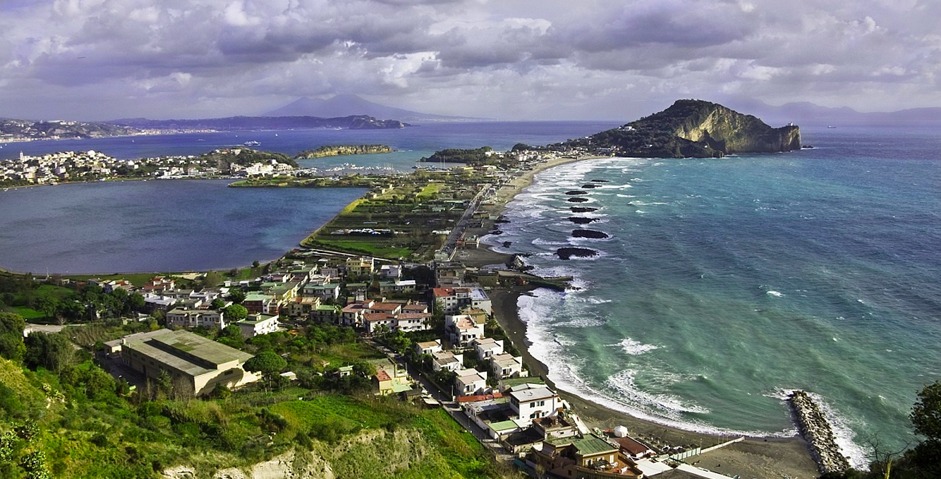
Marcus Acutius Faustinus was stationed at Misenum (now Miseno). This was the location of the Roman fleet, and the image shows Mt Vesuvius looming in the background.
21.05.24: Level 2; perfect tense [2]; the tense in context
Image #1: This tombstone inscription contains three perfect tense verbs, two of which will be discussed in the later posts.
D(is) M(anibus)
M(arco) ACVTIO
FAVSTINO MILES
CLA(ssis)
PRETORIAE MISENATI
TRIERAE CASTORAE
VIXIT AN(nis) LVI
MILITAVIT ANIS XXIII
CVRATORE* FECIT GE
NEIVM EPVLANIVM
PIVM
*cūrātor,
cūrātōris
[3/m]: the person who takes care or is in charge of something
____________________
To the spirits of the Underworld for Marcus Acutius
Faustinus. Soldier of
the
praetorian fleet of
Misenum,
of the trireme Castor.
He lived 56 years,
served 23 years.
[militō, militāre, militāvī (1): to serve in the military]
Arranged by [fēcit: he
made i.e. he arranged the construction of the tombstone]
Cn. Epulanius
Pius.
Notes:
[1] militavi; that is
the perfect tense of the verbs looked at in the previous post i.e. the first
conjugation and, like most of the 1st conjugation verbs, the stem is in -v-
mīlitō, mīlitāre,
mīlitāvī [1]: serve in the military
- mīlitāvit: he served
The other two show you
that, whatever the conjugation is, not all verbs have a perfect tense stem in
-v-:
[2] vīvō, vīvere, vīxī
[3]: live
- vīxit: he lived
[3] faciō, facere,
fēcī [3-iō]: do; make; arrange
- fēcit: (here) he ‘made’ (it) i.e. arranged (for the construction of the tomb)
However, it doesn’t
matter what the stem is: the endings will always be the same
fēcī: I did; I have done / made / built
fēcistī: you (sg.) did / have done etc.
fēcit: he / she / it did
fēcimus: we did
fēcistis: you (pl.) did
fēcērunt: they did
____________________
vīxī: I (have) lived
vīxistī: you (sg.) (have) lived
vīxit: he / she / it lived
vīximus: we lived
vīxistis: you (pl.) lived
vīxērunt: they lived
Roman tombstones often
tell you far more than the person’s name and how long they lived.
The other interesting
aspect of this tombstone is the reference to his having served with the fleet
at Misenum. Pliny the Elder was commander of the fleet at Misenum when Vesuvius
erupted, and Pliny the Younger makes specific reference to it in his account of
the disaster.
The ship was a
‘trireme’ [trirēmis, -e: having three banks of oars]; more information on Roman
ships is at:
https://www.perseus.tufts.edu/hopper/text?doc=Perseus:text:1999.04.0062:id=navis-harpers
It is quite unsual to
find this particular example because the words on tombstones are often
abbreviated whereas you see them in full on this one. If you would like to see
more examples, they’re at:
https://www.ostia-antica.org/.../pres.../centumcellae-07.htm
Image #2: fecit often appears in connection with the construction of public buildings. Agrippa is best known for building the Pantheon. Although the original structure burned down, it was rebuilt by emperor Hadrian, who kept Agrippa’s original inscription on the façade of the building.
M[ARCUS] AGRIPPA L[UCII] F[ILIUS] CO[N]S[UL] TERTIUM FECIT,
"Marcus Agrippa, son of Lucius, made [this building] when consul for the third time."


Subscribe to:
Posts (Atom)